CURRENT AFFAIRS | 11 MAY 2026
CLAT GK + DEFENCE & SCIENCE-TECHNOLOGY
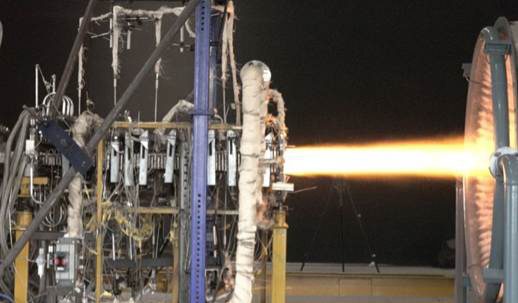
On Saturday May 9, 2026, DRDO’s Defence Research and Development Laboratory (DRDL), Hyderabad successfully ground-tested an actively cooled full-scale scramjet combustor for over 1,200 seconds — a quantum leap from the 120-second ignition test of January and the 700-second run that followed. The test was conducted at the Scramjet Connect Pipe Test (SCPT) facility using indigenously developed liquid hydrocarbon endothermic fuel and an advanced Thermal Barrier Coating (TBC) jointly developed by DRDL and the Department of Science and Technology. Defence Minister Rajnath Singh termed it “a significant development” — and a “solid foundation” for India’s hypersonic cruise missile programme.
Scramjets — Supersonic Combustion Ramjets — are the propulsion backbone of any sustained hypersonic flight. Unlike turbojets, they have no moving parts; combustion happens in supersonic airflow itself. The May 9 test puts India in the elite club of nations actively pushing toward operational hypersonic capability, currently dominated by the United States, Russia, and China. Speeds in this regime exceed Mach 5 (over 6,100 km/hr), with manoeuvring hypersonic glide vehicles capable of evading conventional ballistic missile defences like THAAD or S-400. The test also builds on India’s earlier Hypersonic Test Demonstrator Vehicle (HSTDV), which first flew successfully on September 7, 2020.
Constitutional / Legal Framework
The institutional ecosystem includes DRDO under the DRDO Society, established 1958; Strategic Forces Command (SFC), established 2003 under the Nuclear Command Authority chaired by the Prime Minister; the Atomic Energy Act 1962 §3; and India’s 2003 Nuclear Doctrine committing to “No First Use” (NFU), credible minimum deterrent, massive retaliation, and civilian command. Multilateral export-control regime memberships shape technology access: India joined the Missile Technology Control Regime (MTCR) in 2016, the Wassenaar Arrangement in 2017, and the Australia Group in 2018; the NSG bid remains blocked by China.
Why This Matters for CLAT 2027
Defence and S&T questions increasingly cluster around hypersonic technology, NFU doctrine, and strategic autonomy. Aspirants must distinguish a scramjet (combustion at Mach 2+ supersonic flow) from a ramjet (subsonic combustion) and a turbojet (mechanical compressors). Equally, hypersonic cruise missiles are NOT ICBMs — ICBMs travel Mach 23+ but on predictable ballistic arcs; hypersonic glide vehicles manoeuvre. Linkages to BrahMos (India-Russia JV, Mach 2.8 cruise), BrahMos-II (under development, targeting Mach 7), and the Strategic Forces Command will be tested across passages and principle-application items.
Key Facts at a Glance
| Aspect | Detail |
|---|---|
| Test date / location | May 9, 2026 — DRDL, Hyderabad |
| Duration | 1,200+ seconds (vs 700s in Jan) |
| Facility | SCPT (Scramjet Connect Pipe Test) |
| Hypersonic threshold | Mach 5+ (over 6,100 km/hr) |
| HSTDV first flight | Sep 7, 2020 |
| Operational hypersonic powers | USA, Russia, China |
Mnemonic
S-CRAMP = Scramjet Combustor Ramjet AeroPropulsion — no moving parts, supersonic combustion, Mach 5+ frontier.
Test Yourself — 10-Question Quiz
Practice Quiz — 10 CLAT-Style Questions
Click an option to reveal the answer and explanation.