CURRENT AFFAIRS | 02 OCTOBER 2026
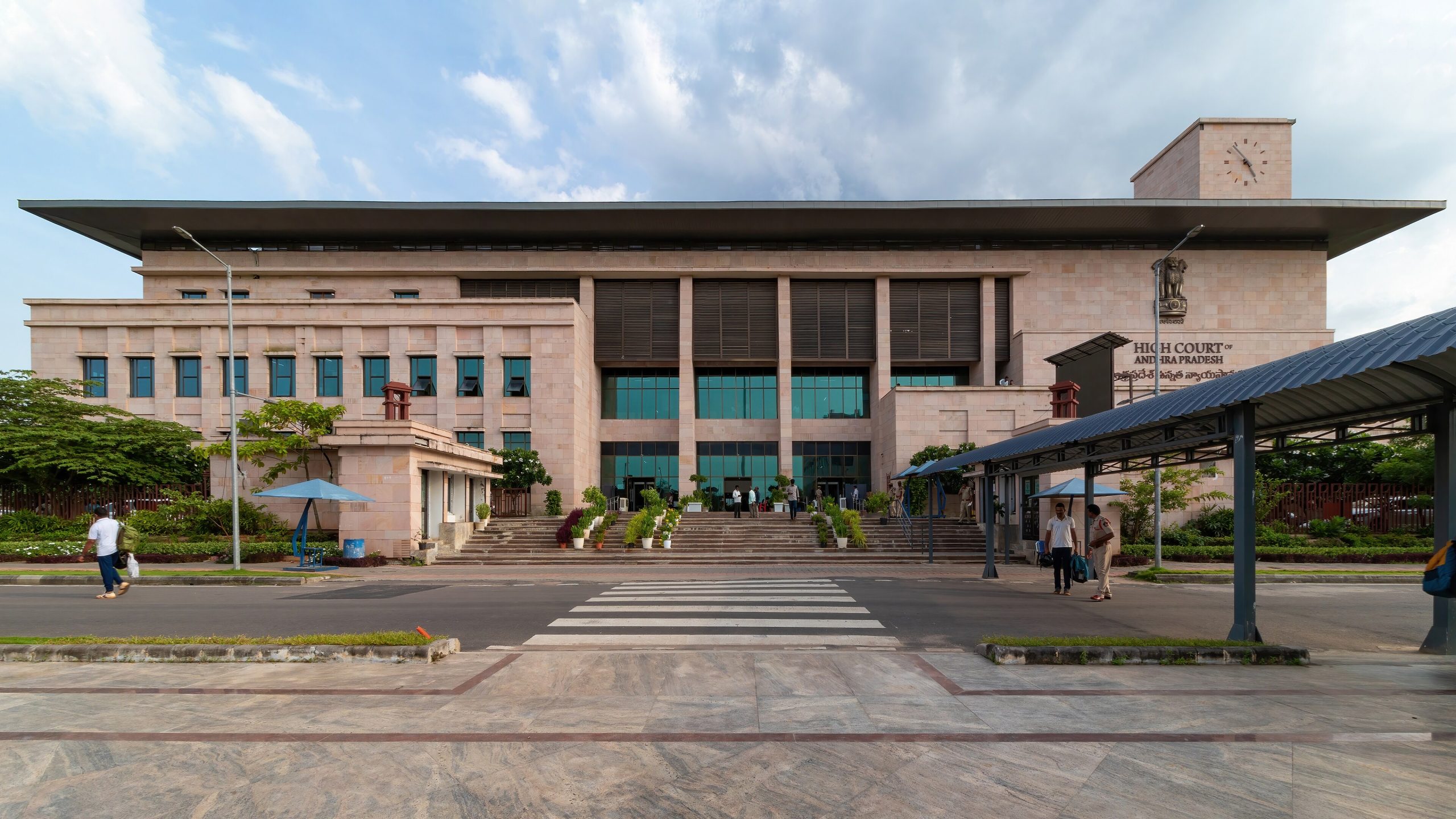
Andhra Pradesh High Court sets aside 34% BC quota in local bodies for breaching the 50% ceiling
On Thursday, 1 October 2026, a Division Bench of the Andhra Pradesh High Court set aside two Government Orders that had granted reservation to Backward Classes (BCs) in the State’s local bodies. The Bench, comprising Chief Justice Lisa Gill and Justice Challa Gunaranjan, struck down G.O. 105 and G.O. 1065, which provided 34% reservation to BCs in Panchayat Raj Institutions (PRIs) and 33.33% reservation in Urban Local Bodies (ULBs). The Court held that these quotas exceeded the 50% ceiling on total reservations laid down by the Supreme Court, a principle that lies at the heart of Indian reservation jurisprudence.
- Court: Division Bench, Andhra Pradesh High Court (CJ Lisa Gill & Justice Challa Gunaranjan).
- Orders struck down: G.O. 105 (34% BC quota in PRIs) and G.O. 1065 (33.33% BC quota in ULBs).
- Ground: the quotas breached the 50% reservation ceiling fixed by the Supreme Court.
- The empirical data from the ‘unified family survey’ cannot form the basis of a BC reservation declaration.
- State and State Election Commission directed to begin PRI & ULB elections, preferably within six weeks from 1 October.
Why the quotas fell: the 50% ceiling
The constitutional anchor of the judgment is the 50% ceiling on reservations, first firmly articulated by a nine-judge Bench of the Supreme Court in Indra Sawhney v. Union of India (1992), the celebrated Mandal Commission case. The Court there held that reservations under Article 16(4) should, as a rule, not exceed 50% of the available seats, so as to balance the mandate of equality of opportunity against the guarantee of formal equality under Articles 14 and 16(1). By granting 34% to BCs over and above the quotas already extended to Scheduled Castes and Scheduled Tribes, the impugned Government Orders pushed the aggregate figure past this threshold, rendering them constitutionally unsustainable.
Reservation in Panchayats flows from Article 243D and in Municipalities from Article 243T, both inserted by the 73rd and 74th Constitutional Amendments (1992). In K. Krishna Murthy v. Union of India (2010), the Supreme Court clarified that reservation in local bodies is constitutionally distinct from reservation in education and public employment under Articles 15(4) and 16(4), and that it must rest on contemporaneous empirical data.
The ‘triple test’ and the data problem
The High Court directed the State to revisit the BC percentage keeping in view Janhit Abhiyan v. Union of India (2022), and to proceed only after collecting data in compliance with Vikas Kishanrao Gawali v. State of Maharashtra (2021). In Gawali, the Supreme Court laid down the ‘triple test’ for OBC reservation in local bodies: first, the State must set up a dedicated Commission to conduct a rigorous empirical inquiry into the backwardness of local bodies; second, it must specify the proportion of reservation warranted; and third, the total reservation for SCs, STs and OBCs together must not exceed 50% of the total seats. The Andhra Pradesh Bench found that the empirical data drawn from the State’s ‘unified family survey’ could not form the basis of a valid BC reservation declaration.
Indra Sawhney (1992) fixed the 50% ceiling and upheld OBC reservation while excluding the ‘creamy layer’. Gawali (2021) crafted the triple test for OBC quotas in local bodies. Janhit Abhiyan (2022) upheld the 103rd Amendment granting 10% EWS reservation and observed that the 50% ceiling is not inflexible in the context of the economically weaker sections.
Elections cannot wait
Significantly, the Court directed the State Government and the State Election Commission (SEC) to commence PRI and ULB elections, preferably within six weeks from 1 October. It held that the existing electoral rolls on the qualifying date cannot be affected by a Special Intensive Revision (SIR) and cannot be cited as a reason to postpone elections. On the delimitation of municipalities, the Bench clarified that neither the Census Act, 1948 nor the Census Rules, 1990 prohibit the State from undertaking it. The ruling thus reinforces the constitutional value of timely local-self-government elections, protected by the fixed five-year term of panchayats under Article 243E and the independent authority of the SEC under Article 243K.
Local-body reservation is a recurring theme in CLAT’s legal-reasoning and GK sections. Candidates should be able to connect the 50% ceiling (Indra Sawhney), the triple test (Gawali), and the distinct constitutional basis of local-body quotas (K. Krishna Murthy) to the Part IX and Part IX-A machinery (Articles 243D, 243T, 243K, 243E). Expect comprehension passages that test whether you can apply the ceiling to a fresh fact-pattern.
Remember the quota cases as a ladder — “Sawhney → Krishna Murthy → Gawali → Janhit” (SKGJ): Sawhney fixed the ceiling, Krishna Murthy fixed the basis (data), Gawali fixed the test (triple), and Janhit tested the ceiling’s flexibility for EWS.
Practice Quiz — 10 CLAT-Style Questions
Click an option to reveal the answer and explanation.