What Happened
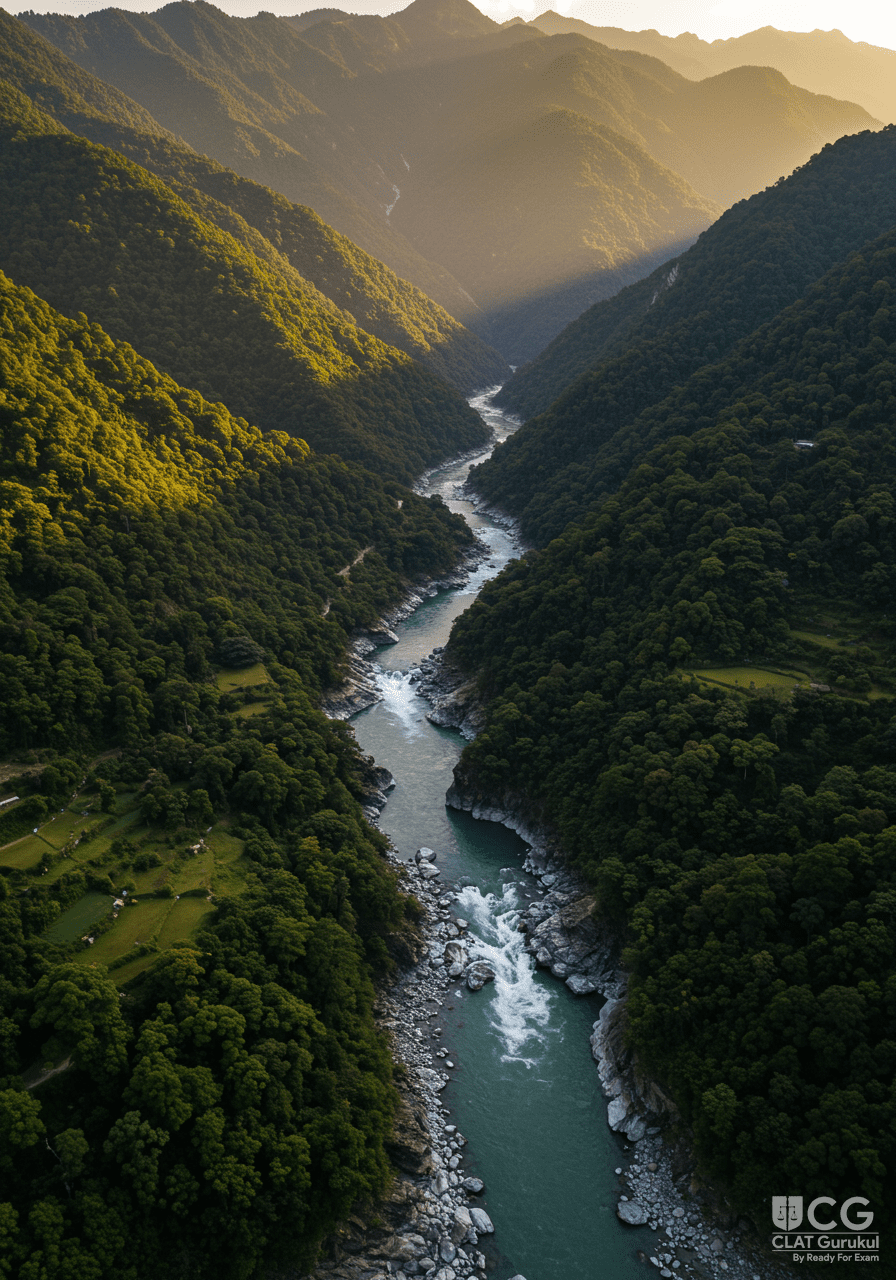
In an affidavit filed before the Supreme Court, the Union Government has stated that it is NOT in favour of any new hydroelectric projects on the Bhagirathi-Alakananda stretch of the Upper Ganga basin. The Centre’s position, set out in the long-pending Mool Chand Sharma matter, accepts the recommendations of the second Expert Body (EB-II), which reviewed 28 proposed hydel projects in the eco-sensitive Himalayan headwaters region.
Of the 28 projects reviewed, only 7 have been permitted to proceed — and even these subject to strict environmental safeguards, minimum environmental flow (e-flow) regimes, and continuous monitoring. The remaining 21 projects have been disallowed on grounds ranging from seismic vulnerability, glacial lake outburst flood (GLOF) risk, and irreversible damage to the river’s ecological flow. The affidavit cites the 2013 Kedarnath disaster as the inflection point behind this conservative stance.
Why It Matters
- Constitutional environmental jurisprudence: Article 21 (Right to a clean environment, read in Subhash Kumar and MC Mehta v UoI) and Article 48A (DPSP — protection and improvement of environment) together form the bedrock of judicial intervention in hydro-project clearances.
- Fundamental Duty of every citizen: Article 51A(g) imposes a Fundamental Duty on every citizen to protect and improve the natural environment including forests, lakes, rivers and wildlife.
- Statutory framework — Environment (Protection) Act, 1986: The umbrella legislation that empowers the Centre to declare eco-sensitive zones, regulate effluents, and impose conditions on industrial projects.
- Precedential weight of MC Mehta: The Ganga-pollution line of cases (Tanneries, Kanpur — 1988; Calcutta Tanneries — 1997) established the Polluter Pays Principle and the Precautionary Principle as binding Indian environmental law.
- Eco-sensitive zone framework: The Upper Ganga from Gaumukh to Uttarkashi (135 km) was declared an Eco-Sensitive Zone in December 2012 — making large hydro projects there an even higher hurdle.
Key Concepts & Provisions
- Article 21: Right to life includes the right to a wholesome, pollution-free environment (Subhash Kumar v State of Bihar, 1991).
- Article 48A — DPSP: Inserted by the 42nd Amendment (1976) — directs the State to endeavour to protect and improve the environment and to safeguard forests and wildlife.
- Article 51A(g) — Fundamental Duty: Also inserted by the 42nd Amendment — duty of every citizen to protect and improve the natural environment.
- Environment (Protection) Act, 1986: Enacted in the wake of the Bhopal Gas Tragedy; § 3 empowers the Centre to take “all such measures as it deems necessary” to protect the environment; § 5 grants the power to issue directions.
- MC Mehta v UoI (Ganga pollution, 1988): Justice E.S. Venkataramiah’s judgment established that polluting industries on the banks of the Ganga can be ordered shut, regardless of economic consequences. Source of the Polluter Pays Principle in Indian law.
- Expert Body-II: Constituted by MoEFCC in 2014 (after the 2013 Kedarnath flash floods) to comprehensively review hydroelectric projects in the Bhagirathi-Alakananda basin. Submitted its report in 2015.
- Environmental flow (e-flow): Minimum quantum of water that must flow uninterrupted in a riverbed downstream of any dam to maintain ecological function. The Centre has notified specific e-flow requirements for the Upper Ganga.
The CLAT Connection
This is one of the most testable environmental-law topics for CLAT 2027. Three angles to revise:
- Environmental jurisprudence passage: Article 21 + Article 48A + Article 51A(g) form the constitutional triangle — be ready for a comprehension question asking how DPSPs are made enforceable through Article 21.
- Legal Reasoning principle-fact: Apply the Precautionary Principle (Vellore Citizens v UoI, 1996) to a fact-pattern where a project’s environmental risk is uncertain but potentially catastrophic — burden of proof shifts to the developer.
- Static-current overlap: Remember the 42nd Amendment (1976) added both Article 48A and Article 51A; the Kedarnath floods occurred in June 2013; the Upper Ganga ESZ notification dates to December 2012; the Environment (Protection) Act was enacted in 1986 after Bhopal.
Quiz data empty after normalization.