What Happened
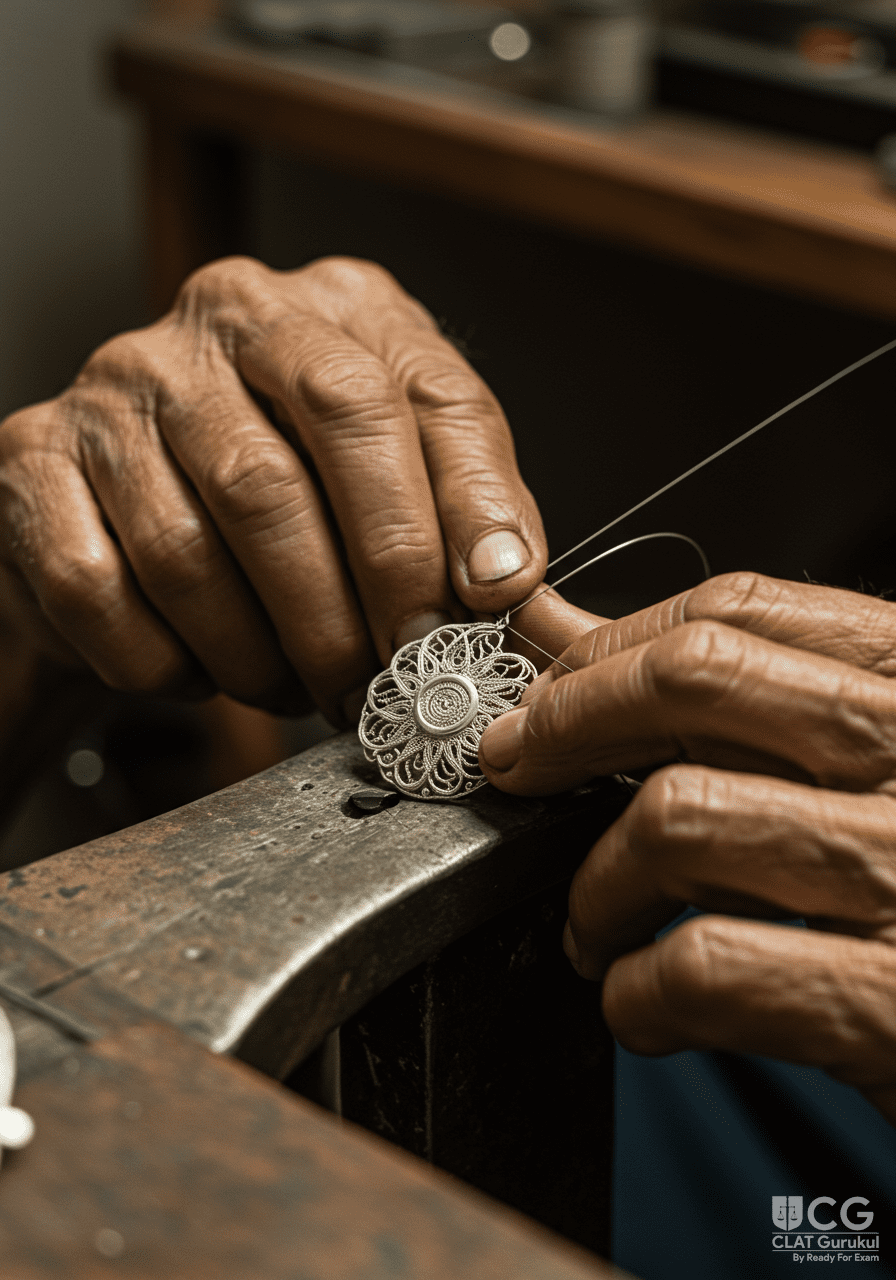
Odisha’s iconic Cuttack Silver Filigree — locally called Tarakasi, a GI-tagged craft over five centuries old — is facing an existential crisis. The artisan community, which numbered roughly 3,000 in 1996, has shrunk to under 500 today. The triggers: a 15% silver import duty that squeezes margins on the raw material, cheaper machine-made imitations, and shrinking apprenticeship pipelines. Industry bodies and the Odisha government have petitioned for a duty rationalisation and a craft-protection package.
Why It Matters
GI tags are meant to do what trademarks do for brands — protect provenance and reward producer communities. But a GI tag alone cannot offset macroeconomic costs. The Tarakasi story is a test of whether India’s GI Act 1999 + TRIPS Article 22 framework can be paired with fiscal and skill-development support to keep traditional knowledge economically viable. Article 51A(f) casts a Fundamental Duty on every citizen to value and preserve composite culture — Tarakasi’s decline is a measurable failure of that duty.
Key Concepts
- Tarakasi — Cuttack’s 500-year-old silver filigree craft.
- GI Act, 1999 — Geographical Indications of Goods (Registration and Protection) Act.
- Article 51A(f) — Fundamental Duty to preserve heritage and composite culture.
- TRIPS Article 22 — WTO framework defining and protecting GIs.
- WIPO — World Intellectual Property Organisation; Geneva.
- GI Registry, Chennai — under CGPDTM, Ministry of Commerce.
CLAT Connection
Legal Reasoning: GI Act 1999 — registration, infringement, passing-off; Polity: Article 51A(f) Fundamental Duty; Concurrent List Entry 23 (welfare of labour); International Law: TRIPS Art. 22 (general GI protection) vs Art. 23 (additional protection for wines & spirits) — note the carve-out; Current Affairs: Tea (Darjeeling) was India’s first GI in 2004; GK: other Odisha GIs — Kandhamal Haldi, Pattachitra, Konark stone carving. Expect MCQs on GI Act 1999, Article 51A, TRIPS 22 and WIPO.
Test Your Understanding
Practice Quiz — 10 CLAT-Style Questions
Click an option to reveal the answer and explanation.