CURRENT AFFAIRS | 25 JULY 2026
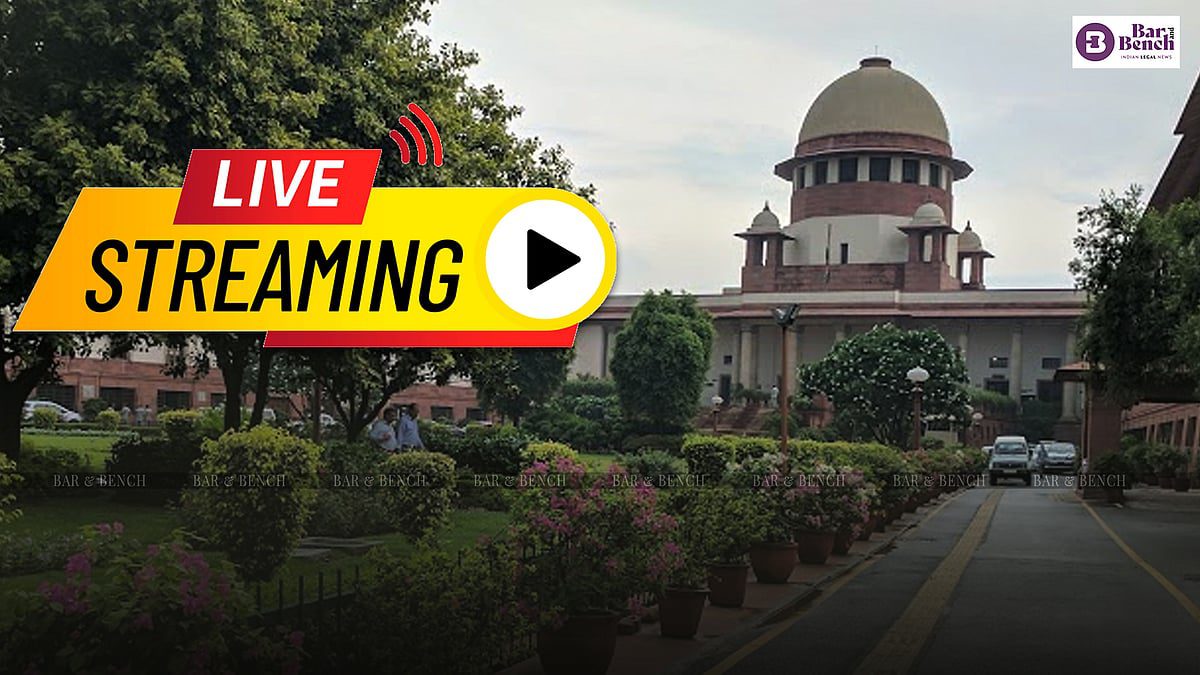
A three-judge Supreme Court bench led by CJI Surya Kant, with Justices Joymalya Bagchi and V. Mohana, passed an interim order on 24 July 2026 barring the recording, posting, reposting, editing, dissemination or monetisation of live-streamed court proceedings on social media without prior permission of the Registrar General (High Courts) or the Secretary General (Supreme Court).
What triggered the order
The Court was hearing a PIL by journalist Harshita Grover against the selective clipping and sensational captioning of courtroom videos. Remarking that courts cannot be reduced to a “24×7 entertainment channel”, the CJI stressed the dignity of proceedings. The Solicitor General warned that AI tools could manipulate edited courtroom clips to alter spoken words while preserving authentic lip movements. Crucially, the bench clarified that the order has no bearing on bona fide news reporting, and sought reports from High Courts on the impact of live-streaming.
Constitutional Framework
Art 19(1)(a) — Freedom of speech and expression, from which the ‘open court’ and access-to-justice principles flow.
Art 21 — Right to life and dignity, engaged by privacy and reputational harm from doctored clips.
Art 145 — Empowers the Supreme Court to frame rules regulating its own practice and procedure, including live-streaming.
The CLAT Angle
This is a high-yield legal reasoning problem: how do you balance open justice and press freedom against the dignity of courts and individual privacy? Watch for questions applying Swapnil Tripathi (live-streaming as open justice) and testing the distinction between protected news reporting and unregulated viral clipping.
Key Facts
| Bench | CJI Surya Kant, JJ Joymalya Bagchi & V. Mohana |
| Order type / Date | Interim order, 24 July 2026 |
| What is barred | Editing, posting, reposting, dissemination, monetisation of hearing clips |
| Permission from | Registrar General (HC) / Secretary General (SC) |
| Petitioner | Journalist Harshita Grover (PIL) |
| Carve-out | Bona fide news reporting unaffected |
Memory Hook
“CLIP needs a SLIP” — no Clip, Lift, Intercut or Post without a permission slip. Anchor case: Swapnil Tripathi = live-streaming; Mirajkar = open court.
Why it matters
Live-streaming was meant to widen access to justice, not to fuel viral misinformation. The order tries to preserve the openness recognised in Swapnil Tripathi while curbing sensationalism — a live example of the courts calibrating a fundamental right against competing public interests.
Test Yourself
Practice Quiz — 10 CLAT-Style Questions
Click an option to reveal the answer and explanation.