CURRENT AFFAIRS | 20 AUGUST 2026
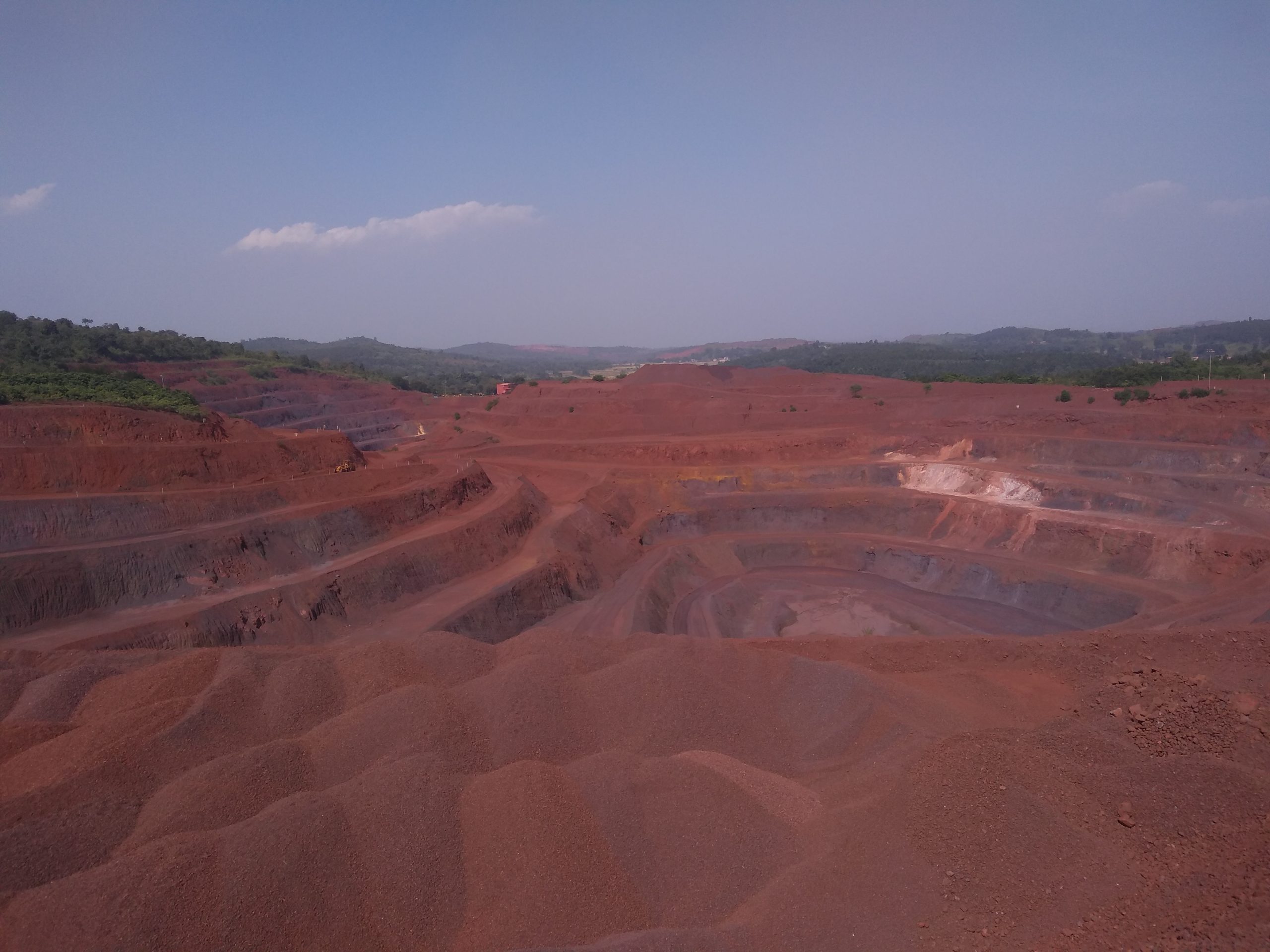
On 19 August 2026 the Ministry of Mines issued a detailed set of Frequently Asked Questions explaining the Mines and Minerals (Development and Regulation) Amendment Act, 2026. The FAQs address the single question that has dominated the debate around the law: does a central amendment touching the mining tax structure take money away from mineral-rich States? The Government’s answer is that it does not. States, it says, presently levy around 14 different taxes, charges, fees and other levies on mining — royalty, auction premium, dead rent, payments to District Mineral Foundations, GST and transit fees among them — and roughly 90 per cent of mining-sector revenue continues to accrue to the States. The stated purpose of the Act is a stable and rational tax structure so that mining projects, which lock in enormous capital for years, remain viable.
For a CLAT aspirant this is far more than a sectoral economic story. Mining sits on one of the sharpest fault lines in Indian federalism: minerals are physically located in States, but their regulation is drawn upwards to the Union by a constitutional device in the Seventh Schedule. Any change to who may tax what here is therefore a question about Article 246, the limits of State taxing power, and the aftermath of a major Constitution Bench decision. Expect this in GK, and its constitutional skeleton in legal reasoning.
Why minerals are a constitutional flashpoint
Legislative power in India is distributed by Article 246 read with the three Lists of the Seventh Schedule. Mining is unusual: the same subject appears in both Lists, with a built-in switch. Entry 23 of List II (State List) gives States the power to regulate mines and mineral development — but expressly subject to the provisions of List I. Entry 54 of List I (Union List) allows Parliament to take regulation of mines and mineral development under Union control “to the extent to which such regulation and development under the control of the Union is declared by Parliament by law to be expedient in the public interest”.
Parliament pulled that switch in Section 2 of the MMDR Act, 1957, declaring it expedient in the public interest that the Union take control of mineral regulation to the extent provided in the Act. To that extent, the State field under Entry 23 stands occupied. The taxation side is governed separately: Entry 50 of List II confers on States the power to tax mineral rights, but again with a rider — “subject to any limitations imposed by Parliament by law relating to mineral development”. That rider is the constitutional hinge on which the entire present controversy turns.
Constitutional / Legal Framework
Article 246 + Seventh Schedule govern the field. Entry 54, List I lets Parliament assume control of mineral regulation by declaration; Entry 23, List II leaves States a residual regulatory role subject to that declaration; Entry 50, List II gives States the power to tax mineral rights subject to limitations imposed by Parliament by a law relating to mineral development; and Entry 49, List II covers taxes on lands and buildings. In Mineral Area Development Authority v Steel Authority of India (2024), a nine-judge Constitution Bench held by 8:1 that royalty under Section 9 of the MMDR Act is not a tax but a contractual consideration, that States do possess legislative competence under Entry 50 to levy taxes on mineral rights and under Entry 49 to tax mineral-bearing lands, and it overruled the contrary reading in India Cement Ltd v State of Tamil Nadu (1990). Crucially, the Bench also affirmed that Entry 50 is the only taxation entry in the Constitution expressly made subject to a parliamentary limitation — meaning Parliament may, through a law relating to mineral development, circumscribe that State power. Also relevant is Article 39(b), the Directive Principle requiring that the material resources of the community be so distributed as best to subserve the common good.
The revenue question the FAQs answer
The Government’s defence is built on numbers. Over the past decade, the FAQs state, the States’ share in total mineral revenue — coal and non-coal combined — has risen by roughly 28 percentage points, reaching about ₹1,14,549.28 crore in 2025-26. Since the auction regime began in 2015, States have received more than ₹7 lakh crore from the mining sector including coal. Today approximately 96 per cent of mining-sector revenue accrues to States, with the Centre receiving around 4 per cent through GST. State mineral revenue alone has grown by roughly 354 per cent over the decade to about ₹82,366 crore in 2025-26. States will, the Ministry insists, continue to receive royalty, auction premium, DMF contributions and their share of GST unchanged.
The concern the Act responds to is the opposite one. Some States, the FAQs note, have introduced fresh taxes on mineral-bearing lands, in certain cases as high as 20 per cent, imposing an additional financial burden that falls heavily on Government companies. The Ministry’s economic argument is a cascading-cost one: minerals are the primary raw material for steel, power, cement and infrastructure, so a heavy levy at extraction inflates input costs down the chain and finally raises the cost of living. Its legal argument is about certainty — investors need to know their liability upfront, and old or uncertain demands imposed retrospectively or all at once would seriously disrupt the sector.
Key Facts
| Parent statute | Mines and Minerals (Development and Regulation) Act, 1957 |
| Levies on mining | About 14 types — royalty, auction premium, dead rent, DMF, GST, transit fees |
| Share to States | Approx. 90% (the figure the release states three times, and the one tied to the Act’s guarantee that State revenue will not fall). The same release separately says about 96%, with the Centre taking about 4% via GST — quote 90% unless a question specifies GST-inclusive sector revenue. |
| Blocks auctioned since 2015 | 723 major mineral blocks across 17 States; 141 coal mines |
| Leading States | Rajasthan 140, Madhya Pradesh 127, Odisha 76 |
| Global rank | 2nd limestone, 3rd zinc, 4th iron ore, 5th bauxite |
| Critical minerals | NCMM approved 29 January 2025, outlay ₹16,300 crore up to FY 2030-31 |
A decade of auction-led reform
The 2026 amendment is the latest layer on a structure laid in 2015. That year’s amendment ended discretionary allocation of mineral concessions and replaced it with competitive e-auction. Since then 723 major mineral blocks have been auctioned across 17 States, led by Rajasthan with 140, Madhya Pradesh with 127 and Odisha with 76; in coal, 141 mines have been auctioned and 23 operationalised. FY 2025-26 was the best year yet, with a record 212 blocks auctioned and 36 operationalised. Of about 725 blocks auctioned there have been 300 unique bidders, and 337 unique companies hold working leases — figures offered to rebut the charge that the law favours a few corporations.
Production has followed: the value of major mineral output rose 26.8 per cent in FY 2025-26, iron ore reached a record 313 million tonnes and limestone 484 million tonnes, coal output crossed one billion tonnes in each of the last two years, and non-coal production has nearly tripled since 2014. The 2015 amendment also created the District Mineral Foundation mechanism under the MMDR Act to share mining benefits with affected populations. 656 DMFs now exist, including 106 in aspirational districts, funded through the Pradhan Mantri Khanij Kshetra Kalyan Yojana (PMKKKY); the entire collection is spent locally on roads, hospitals, schools and drinking water as decided by the district administration.
The CLAT Angle
Three layers are testable here. Static polity: the pairing of Entry 54 List I with Entry 23 List II, and the unique wording of Entry 50 List II. A legal-reasoning passage can hand you the bare text of Entry 50 and ask whether Parliament may curtail a State mineral levy — the answer lies in the phrase “subject to any limitations imposed by Parliament by law relating to mineral development”. Case law: MADA v SAIL (2024) — nine judges, 8:1, royalty is not a tax, India Cement overruled. Current affairs: the 2026 Amendment Act, the roughly 14 State levies, the 90 per cent share, and the 2015 reforms — e-auction, DMF, PMKKKY. Watch the standard trap of confusing royalty (consideration for extraction), dead rent (minimum payment whether or not the mine is worked) and auction premium (the bid-determined share of value).
Critical minerals and the import-dependence problem
The fiscal debate has a strategic edge. Lithium, cobalt, rare earths and similar inputs are indispensable to batteries, electronics and defence, and India imports most of them. The National Critical Mineral Mission (NCMM), approved on 29 January 2025 with an outlay of ₹16,300 crore including ₹2,600 crore of budgetary support up to FY 2030-31, is the policy answer. The Geological Survey of India and the exploration trust under the MMDR Act are working towards 1,200 critical mineral projects; of 777 projects sanctioned at ₹3,828.52 crore, 255 concern critical minerals. A 2025 amendment allows the trust to fund exploration abroad, and Khanij Bidesh India Limited (KABIL) has secured exclusive lithium exploration rights in Argentina.
Downstream capacity is being built alongside. A ₹1,500 crore incentive scheme for critical mineral recycling launched on 2 October 2025 has drawn 58 entities pledging 850 thousand tonnes per annum of capacity against a 270 Kt target; Critical Mineral Processing Parks are supported in Andhra Pradesh, Gujarat, Odisha and Maharashtra with ₹500 crore; and basic customs duty has been removed on critical minerals, lithium-ion battery scrap and processing capital goods across three successive Budgets. Exploration activity itself has grown nearly 200 times since 2014, with 51 private agencies notified for the work. Operationally, the cap on mineral sales from captive mines has been removed and a Unified Mining Portal now tracks each block from auction to operation.
Why it matters
Read whole, the 2026 amendment attempts to resolve a hard federal problem: a Constitution Bench has confirmed that States may tax mineral rights, while the same text permits Parliament to limit that power through a law relating to mineral development. Whether fiscal predictability for investors should outweigh the fiscal autonomy of mineral-rich States is exactly the tension CLAT passages are built around. Keep both halves in view — the Government’s revenue-neutrality claim, and the federalism objection that a central law narrowing a List II taxing entry, however lawfully, still narrows it.
Memory Hook / Mnemonic
For the entries, remember “54 controls, 23 concedes, 50 taxes — but 50 is on a leash.” Entry 54 (List I) lets the Union take control, Entry 23 (List II) yields to it, Entry 50 (List II) lets States tax mineral rights but only so far as Parliament permits. For the 2024 judgment: “MADA said royalty is not a tax, and sent India Cement packing.” For the reform chronology: 2015 = Auction + DMF; 2025 = Critical Minerals Mission; 2026 = Tax certainty.
Practice Quiz — 10 CLAT-Style Questions
Click an option to reveal the answer and explanation.