
CURRENT AFFAIRS | 22 MAY 2026
In a counter-affidavit filed before the Supreme Court on 19 May 2026, the Union Ministry of Environment, Forest and Climate Change told the Court it will not permit any new hydroelectric projects (HEPs) on the Alaknanda and Bhagirathi rivers — the two headstreams of the Ganga that meet at Devprayag in Uttarakhand. Only seven existing projects, of which four are operational and three are at “substantial physical and financial” stages of completion, will be allowed to proceed. The matter was listed for further hearing on 20 May 2026.
This is the culmination of a thirteen-year saga of expert reports, intra-ministry disagreement, fresh disasters, and judicial scrutiny — all of it sitting at the intersection of environmental law, federalism, and climate vulnerability in the Indian Himalayan region.
How we got here: the Kedarnath trigger
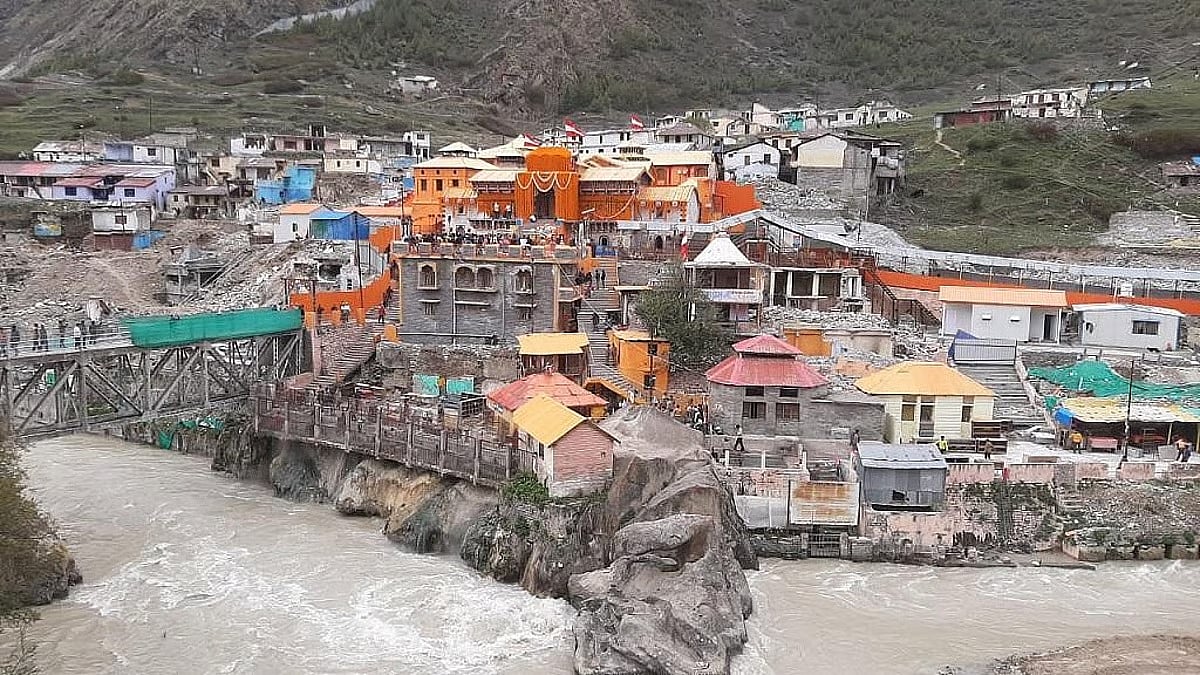
The June 2013 Kedarnath flash floods killed thousands and devastated the upper Ganga valley. Several existing HEPs in the Alaknanda and Mandakini basins were damaged. In the aftermath, the Supreme Court — hearing a writ petition by Alaknanda Hydro Power Co. Ltd. and connected matters — directed the Centre to constitute an Expert Body to scrutinise the cumulative impact of HEPs on the upper Ganga river basin.
The first such body, EB-I (2013-14), was chaired by environmentalist Ravi Chopra. Its report recommended scrapping 23 of 24 projects under review on grounds of biodiversity impact, seismic vulnerability, and lack of cumulative impact assessment. The Ministry of Environment, Forests & Climate Change (MoEFCC), the Central Electricity Authority, and the Central Water Commission disagreed with much of the Chopra report. The matter went back to the SC.
In 2015, the SC permitted six project developers to make representations. A second Expert Body, EB-II (2014-15), was constituted. Its report leaned the other way — finding that hydropower had a minimal environmental footprint and could not be causally linked to the 2013 disaster. The intra-ministry split persisted. In 2024, the SC directed that a fresh inter-ministerial committee be set up, chaired by Cabinet Secretary T V Somanathan, to arrive at consensus. The Centre’s 2026 affidavit is the output of that long process.
Constitutional & Environmental-Law Framework
Article 48A — Directive Principle (added by the 42nd Amendment, 1976): “The State shall endeavour to protect and improve the environment and to safeguard the forests and wildlife of the country.”
Article 51A(g) — Fundamental Duty: “to protect and improve the natural environment including forests, lakes, rivers and wildlife, and to have compassion for living creatures.”
Article 21 — Right to life. Subhash Kumar v State of Bihar (1991) held the right to a clean environment is part of Article 21. Subsequent cases — MC Mehta series, Vellore Citizens Welfare Forum (1996), Indian Council for Enviro-Legal Action (1996) — built on this.
Environment (Protection) Act, 1986 — the umbrella statute, enacted after the Bhopal gas tragedy. The EIA Notification 2006 was issued under this Act and governs environmental clearance for industrial and infrastructure projects, including HEPs.
Forest (Conservation) Act, 1980 — requires Centre’s prior approval for diversion of forest land for non-forest use, including dam construction.
Wildlife (Protection) Act, 1972 — protects critical wildlife habitats; many proposed HEPs in upper Ganga overlap with eco-sensitive zones around the Nanda Devi Biosphere Reserve and Valley of Flowers National Park.
Why the upper Ganga basin is so fragile
The Indian Himalayan region is a young, seismically active fold mountain system in Zone IV and Zone V of the Seismic Zoning Map. The Alaknanda and Bhagirathi basins sit in a region with a documented earthquake history including the 1991 Uttarkashi, 1999 Chamoli, and 2015 Nepal-Gorkha events. Glacial Lake Outburst Floods (GLOFs), landslides, and slope failure are recurrent. Crucially, the upper Himalayan ecosystem hosts endemic biodiversity — including the snow leopard, musk deer, and dozens of medicinal plant species — that depends on connected riverine corridors.
Three disasters since the 2013 Kedarnath event have reinforced the case for restraint: (a) Rishi Ganga flood, 7 February 2021 — a glacial debris flow destroyed the Rishi Ganga HEP and the under-construction Tapovan-Vishnugad HEP, killing over 200 people; (b) Joshimath subsidence, January 2023 — land sinking in the holy town near several HEPs forced evacuation of hundreds of families; (c) Sikkim GLOF, October 2023 — the Lhonak Lake burst, destroyed the Teesta-III dam, and killed over a hundred. Most recently the Dharali landslide in 2024 underscored the recurring vulnerability.
CLAT 2027 Angle
Environmental jurisprudence is one of the most fertile CLAT topics. Expect to see this story in: (a) legal-reasoning passages testing the precautionary principle and polluter pays principle from Vellore Citizens; (b) polity MCQs on Article 48A, 51A(g), and Article 21 as developed in Subhash Kumar; (c) factual MCQs on the EIA Notification 2006 (when revised 2020 draft proposed reduced consultation — that draft was contested in Vanashakti v Union of India); and (d) the Forest (Conservation) Act, 1980, including the 2023 Amendment.
The federalism dimension
HEPs in Uttarakhand sit at a peculiar federal junction. Forest clearance under the FCA 1980 is a central subject. Environmental clearance under the EIA Notification 2006 is also central. But water and irrigation are state subjects (Entry 17, List II). Hydropower revenues accrue substantially to the State. So a “no new HEPs” decision involves a Centre-State trade-off: the Centre exercises its environmental veto, the State foregoes royalty and rural electrification gains.
Uttarakhand’s response to the 2026 affidavit will matter. The state government has historically pushed for additional hydropower as a development driver. The Centre’s affidavit notes that the seven approved projects together provide adequate generation capacity for current planning horizons, and additional capacity should come from non-hydro renewable sources — solar, wind, small-hydro under 25 MW (which is treated as renewable under MNRE classification).
Key Facts — Upper Ganga HEP Decision
| Affected basins | Alaknanda + Bhagirathi (confluence at Devprayag, Uttarakhand) |
| Permitted projects | 7 — including Tehri PSP, Tapovan Vishnugad, Vishnugad Pipalkoti, Singoli Bhatwari, Phata Byung, Madhyamaheshwar, Kaliganga-II |
| Trigger event | 2013 Kedarnath flash floods (June 2013) |
| Expert Body I chair | Ravi Chopra (2013-14) — recommended scrapping 23 of 24 projects |
| 2024 inter-ministerial chair | Cabinet Secretary T V Somanathan |
Mnemonic — Environmental Articles: “48-51A(g)-21”
Article 48A — State’s DPSP duty. Article 51A(g) — citizens’ Fundamental Duty. Article 21 — Subhash Kumar (1991) right to clean environment. Three pillars of Indian environmental constitutionalism.
Test yourself
Practice Quiz — 10 CLAT-Style Questions
Click an option to reveal the answer and explanation.
Why this matters for CLAT 2027
Environmental constitutionalism is among the most heavily tested areas in CLAT-style legal-reasoning passages. The upper Ganga HEP affidavit gives you a fact-pattern that spans every major doctrine. Spend revision time on the following three layers.
One — the trio of environmental constitutional provisions. Article 48A was added by the 42nd Amendment (1976) — a DPSP duty on the State. Article 51A(g), also added by the 42nd Amendment, is a Fundamental Duty on citizens. Article 21 is the operating provision: Subhash Kumar v State of Bihar (1991) held the right to live in a clean and healthy environment is implicit in the right to life. MC Mehta v Union of India through the 1980s-2000s extended this to Ganga pollution (the Ganga Action Plan litigation), vehicular pollution in Delhi (CNG conversion), and industrial pollution in Taj Trapezium.
Two — the three core environmental principles laid down in Vellore Citizens Welfare Forum v Union of India (1996). The Supreme Court held that the polluter pays principle, the precautionary principle, and the principle of sustainable development are part of customary international law and have been absorbed into Indian environmental jurisprudence. The precautionary principle places the burden on the project proponent to prove environmental safety, not on the regulator to prove harm. This shifts the evidentiary burden in HEP cases meaningfully.
Three — statute architecture. The Environment (Protection) Act, 1986, sits at the apex, with the EIA Notification 2006 as its principal rule. The Forest (Conservation) Act, 1980 (amended in 2023, which narrowed the definition of “forest” — a controversial reform that is itself before the SC in Ashok Kumar Sharma v Union of India), governs land diversion. The Wildlife (Protection) Act, 1972, governs critical habitats. For HEPs in the Himalayan eco-sensitive zone, all three clearances are required.
Read the Centre’s affidavit through this lens. The State is not banning hydropower; it is exercising the precautionary principle in a fragile zone after multiple disasters. It is invoking Article 48A. It is honouring Article 51A(g). And it is being supervised by the Supreme Court under Article 32 / Article 21. For CLAT 2027, this is the textbook fact-pattern for environmental-law reasoning. Don’t skim it. Annotate it.