
CURRENT AFFAIRS | 22 MAY 2026
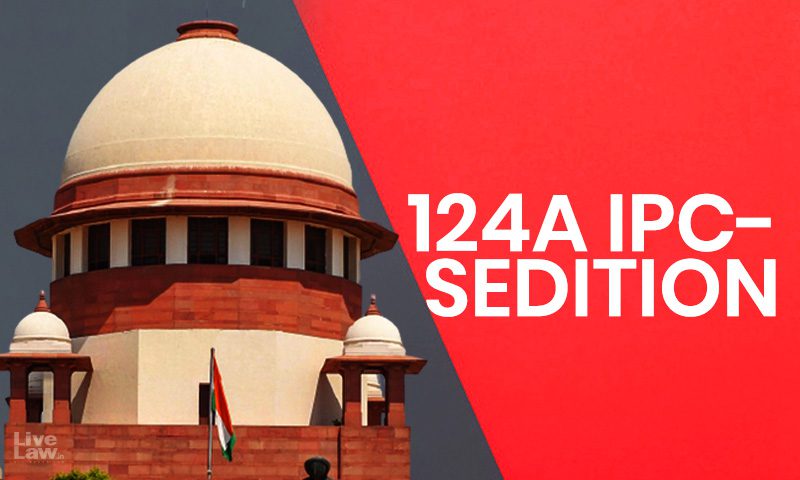
The colonial-era sedition law lives on a ventilator — but the Supreme Court on 21 May 2026 took a step that begins to disconnect parts of the patient from life support. A three-judge bench led by Chief Justice of India Surya Kant, with Justices N V Anjaria and Vipul M Pancholi, clarified that the four-year-old freeze on Section 124A of the Indian Penal Code does not bar pending trials, appeals, and other proceedings from being heard on merits — provided the accused himself raises no objection.
The clarification came on a plea by one Kamran, a 2017 convict under the Unlawful Activities (Prevention) Act read with Section 124A IPC. Kamran has been in jail for 17 years; his criminal appeal sits pending before the Madhya Pradesh High Court, frozen since the Supreme Court’s 11 May 2022 interim order in S.G. Vombatkere v Union of India directed all 124A proceedings be kept “in abeyance.” For Kamran — and for many other accused — the stay had become a sentence of indefinite limbo. The SC’s 21 May 2026 ruling rewrites that calculus.
Background — the 2022 freeze and what triggered it
In S.G. Vombatkere, the Supreme Court was asked to revisit the constitutionality of Section 124A IPC. The provision criminalised whoever “by words, either spoken or written, or by signs, or by visible representation, or otherwise, brings or attempts to bring into hatred or contempt, or excites or attempts to excite disaffection towards, the Government established by law in India.” It carried life imprisonment or three years and a fine. On 11 May 2022, a bench of then-CJI N V Ramana directed that “all pending trials, appeals and proceedings with respect to the charge framed under Section 124A IPC be kept in abeyance” while the Union of India re-examined the colonial-era law.
What followed was structural: the Union introduced the Bharatiya Nyaya Sanhita, 2023, which from 1 July 2024 replaced the entire Indian Penal Code. Section 124A IPC stood repealed prospectively. In its place, Section 152 of the BNS criminalised “acts endangering sovereignty, unity and integrity of India” — a narrower, more carefully drafted offence requiring incitement of secession, armed rebellion, or subversive activity, or encouragement of separatist feelings. Even so, every pre-1 July 2024 case continued under 124A by virtue of Section 6 of the General Clauses Act, 1897 — the savings clause that preserves rights, liabilities and pending proceedings under a repealed statute.
Constitutional Framework
Section 124A IPC — sedition. Repealed prospectively from 1 July 2024 with the Bharatiya Nyaya Sanhita coming into force. Continues to govern offences alleged to have been committed before that date by force of the General Clauses Act, 1897.
Section 152 BNS, 2023 — acts endangering sovereignty, unity and integrity of India. Narrower than 124A; requires incitement to secession, armed rebellion, subversive activity, or encouragement of separatist sentiments.
Article 19(1)(a) of the Constitution — freedom of speech and expression. Article 19(2) — reasonable restrictions on grounds including sovereignty and integrity, public order, decency, contempt of court, defamation, incitement to offence.
Kedar Nath Singh v State of Bihar (1962) — the foundational sedition judgment. A five-judge Constitution Bench upheld 124A but read it down: only speech with a “tendency to incite violence” or “public disorder” attracts the section. Mere criticism of the government is not sedition.
S.G. Vombatkere v Union of India (2022) — interim order keeping all 124A proceedings in abeyance.
What the Court said on 21 May 2026
The bench led by CJI Surya Kant began with first principles. The 2022 order, the Court said, was a protective measure — designed to spare individuals continued prosecution under a law whose constitutionality the executive itself was reconsidering. It was never meant to operate as a permanent stay where the accused himself wishes to proceed. Where the accused, his counsel, or his appeal seeks decision on merits, “there shall be no impediment for the courts to decide such matters on merits and in accordance with law.”
The Court then specifically requested the Madhya Pradesh High Court to take up Kamran’s appeal, along with connected matters, and decide on merits. The 17-year incarceration had functioned as a punishment de facto without conviction de jure — a circumstance the Court found constitutionally untenable.
CLAT 2027 Angle
Sedition has been a CLAT staple since 2012. Expect this story to surface in three formats: (a) a legal-reasoning comprehension testing whether a given fact-pattern (criticism of government policy, calls for boycott, etc.) attracts 124A under the Kedar Nath “tendency to incite violence” test; (b) a polity MCQ on Article 19(1)(a) reasonable restrictions; (c) a statutory-interpretation question on Section 6 of the General Clauses Act and how it preserves pre-2024 offences under a repealed IPC.
Why this matters for the savings-clause doctrine
The 21 May 2026 ruling indirectly clarifies an unsettled question: when a statute is repealed and replaced by a new one, what becomes of pending proceedings under the old? Section 6 of the General Clauses Act, 1897, preserves: (a) anything done or suffered under the repealed enactment; (b) any right, privilege, obligation or liability acquired, accrued or incurred; (c) any penalty, forfeiture or punishment incurred; and (d) any investigation, legal proceeding or remedy in respect of any such right, privilege, obligation, liability, penalty, forfeiture or punishment. These continue “as if the repealing Act had not been passed.”
The Bharatiya Nyaya Sanhita itself contains a savings provision mirroring this. The combined effect: every chargesheet, trial, conviction or appeal under Section 124A IPC for an offence alleged to have occurred before 1 July 2024 remains governed by the IPC text. The SC’s 2022 abeyance ran alongside this — paused but not extinguished. Today’s ruling allows the paused proceedings to resume where the accused chooses.
Key Facts — Sedition Law Timeline
| 1860 | IPC enacted (Sec 124A inserted by 1870 amendment) |
| 1962 | Kedar Nath Singh — read down to “incitement to violence” |
| 11 May 2022 | Vombatkere interim order — all 124A proceedings in abeyance |
| 1 July 2024 | BNS in force; 124A IPC prospectively repealed |
| 21 May 2026 | SC clarifies — pending 124A cases can proceed if accused has no objection |
Mnemonic — Kedar Nath ratio: “TIP”
Sedition under Section 124A only where speech has a Tendency to Incite violence or Public disorder. Mere criticism of the Government is not sedition — protected by Article 19(1)(a).
Test yourself
Practice Quiz — 10 CLAT-Style Questions
Click an option to reveal the answer and explanation.
Why this matters for CLAT 2027
Three connected doctrines deserve focused revision. First, free speech jurisprudence under Article 19(1)(a). Romesh Thappar v State of Madras (1950), Shreya Singhal v Union of India (2015 — striking down Section 66A IT Act), and Kedar Nath Singh (1962) form the core triad. Add Bilal Ahmed Kaloo v State of A.P. (1997) — where mere statements without incitement to violence were held not to attract sedition — and Balwant Singh v State of Punjab (1995) — where casual slogans were not held seditious in the absence of a violent response.
Second, the doctrine of “reasonable restrictions” under Article 19(2). The 1951 First Amendment added “public order,” “friendly relations with foreign States,” and “incitement to an offence.” Sedition fits within “public order” — but only as read down by Kedar Nath. Aspirants should remember the eight grounds under 19(2): sovereignty and integrity, security of State, friendly relations with foreign States, public order, decency or morality, contempt of court, defamation, incitement to offence.
Third, statutory interpretation. Section 6, General Clauses Act, is one of the most frequently tested provisions in legal aptitude — covering the effect of repeal, savings of rights, and continuation of legal proceedings. Pair it with the BNS Section 358 savings clause, which mirrors the General Clauses Act in keeping pre-1 July 2024 prosecutions alive.
Two things deserve emphasis in your exam revision. First, sedition has not been struck down. It has been replaced prospectively by BNS Section 152, and held in abeyance for pending cases — but the offence as drafted in 1870 still governs pre-July-2024 conduct. Second, the SC has not closed the constitutional question of whether 124A survives Article 19(1)(a) scrutiny in full; Vombatkere remains pending on merits. The 21 May 2026 order is procedural, not substantive. The constitutional knife is still on the table.