CURRENT AFFAIRS | 22 MAY 2026
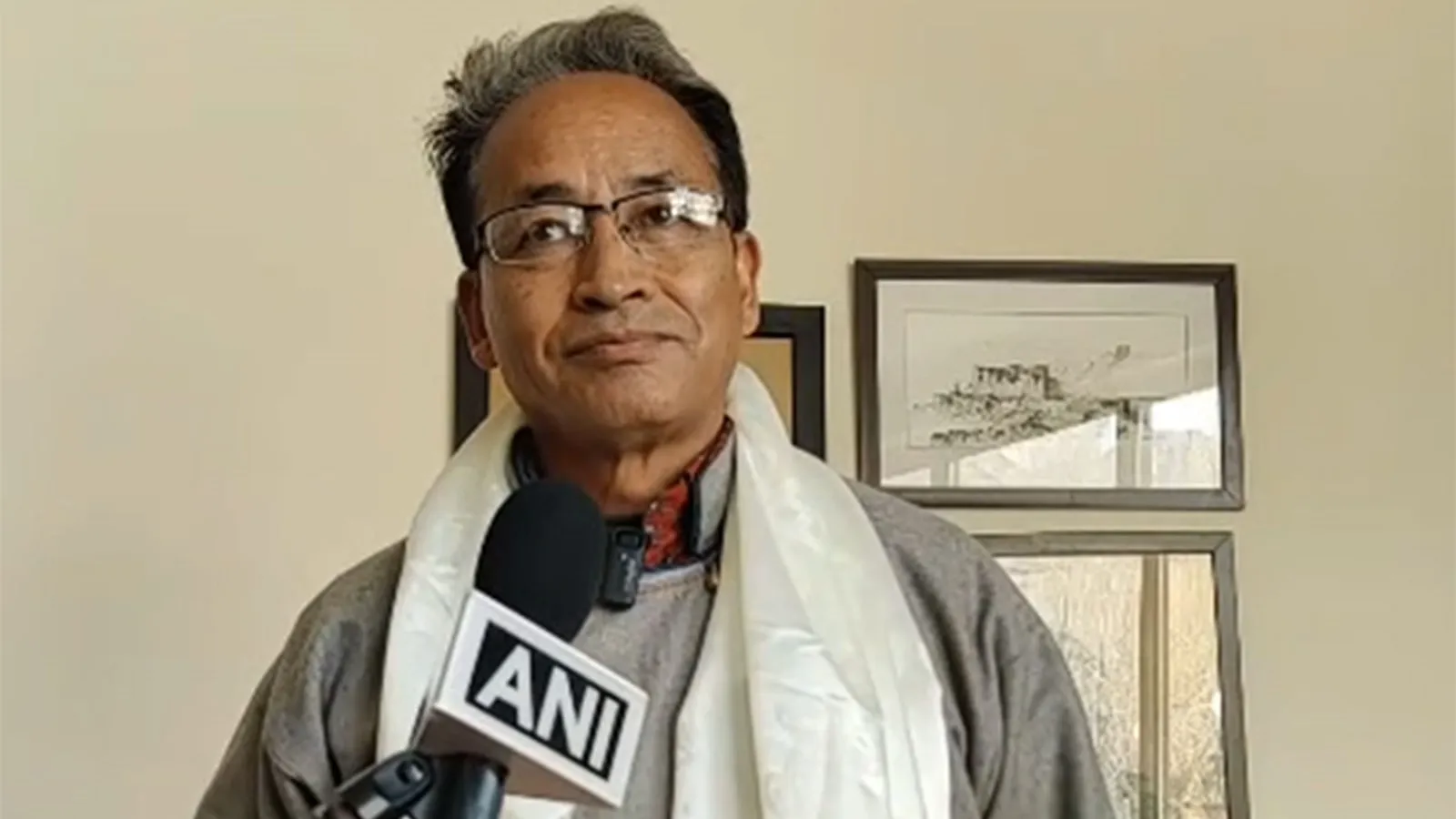
Writing in The Indian Express on 22 May 2026, Ladakhi educationist Sonam Wangchuk argued that the Centre’s recent move to create four new districts in Ladakh — Nubra, Changthang, Sham, and Zanskar — while welcome, “cannot substitute for political agency.” His op-ed lands on the morning of formal talks between the Union Home Ministry, the Apex Body Leh, and the Kargil Democratic Alliance (KDA), where Sonam Wangchuk himself joins the official negotiating table for the first time. The demand on the table is decades old in spirit but constitutionally specific: inclusion of Ladakh under the Sixth Schedule of the Constitution.
This is the most important PIL-adjacent constitutional moment for Ladakh since the abrogation of Article 370 in August 2019. For CLAT 2027 aspirants, the case ties together Schedule structure, tribal autonomy, statehood jurisprudence, and the J&K Reorganisation Act 2019. Let’s break it down.
The constitutional question
When Ladakh was carved out as a Union Territory without a legislature on 5 August 2019 through the Jammu & Kashmir Reorganisation Act, 2019, Ladakhi groups across Leh (Buddhist-majority) and Kargil (Muslim-majority) came together with a four-point demand: full statehood, Sixth Schedule status, separate Lok Sabha seats for Leh and Kargil, and a public service commission. The Sixth Schedule demand is the constitutional anchor.
Constitutional Framework
Article 244(1) — Fifth Schedule: scheduled areas in states other than Assam, Meghalaya, Tripura and Mizoram. Governor-led administration, Tribes Advisory Councils.
Article 244(2) read with the Sixth Schedule — autonomous district councils (ADCs) in tribal areas of Assam, Meghalaya, Tripura and Mizoram. ADCs have legislative powers over land, forests, agriculture, inheritance, marriage and social customs of Scheduled Tribes, plus judicial powers through Village/District Councils.
Article 244A — autonomous state within Assam (used for North Cachar Hills and Karbi Anglong).
Article 371 family — special provisions for Maharashtra, Gujarat, Nagaland, Assam, Manipur, Andhra/Telangana, Sikkim, Mizoram, Arunachal, Goa, Karnataka. None currently extends to Ladakh.
J&K Reorganisation Act, 2019 — Section 3 carved Ladakh as a UT without legislature; existing LAHDCs (Leh and Kargil Hill Councils) continue under the Ladakh Autonomous Hill Development Council Acts of 1995 and 1997, which are statutory — not constitutional — safeguards.
Why the Sixth Schedule and not the Fifth?
The Fifth Schedule gives the Governor sweeping discretion over scheduled areas — a colonial-era model. The Sixth Schedule, by contrast, devolves legislative autonomy to elected District and Regional Councils. The North-East Frontier Tract that became Arunachal, NEFA arrangements that became Mizoram, and the Karbi-Dimasa councils all evolved via Sixth Schedule architecture. Ladakhi groups argue this is the precise template needed to protect tribal land, language, and culture against demographic shifts that statehood-without-safeguards or UT-status-without-legislature would expose them to.
The BJP’s 2019 Lok Sabha manifesto and its 2020 Ladakh Hill Council manifesto both explicitly promised Sixth Schedule inclusion for Ladakh. Yet between 2019 and 2026 successive Home Ministry High-Powered Committees have stopped short of recommending it, citing constitutional design — Sixth Schedule’s existing reach is restricted to four north-eastern states.
The Wangchuk trajectory: hunger strike to NSA to negotiating table
Sonam Wangchuk’s “climate fast” in early 2024 drew national attention. Repeated padyatras and statehood marches followed. On the eve of one such march in September 2025, multiple protesters died in police firing at Leh — the worst protest casualty in Ladakh since the UT was created. In March 2026, Sonam Wangchuk was arrested under the National Security Act, 1980 (NSA) and lodged at Jodhpur Central Jail. His wife, Geetanjali Angmo, moved the Supreme Court challenging the preventive detention. The Centre revoked the NSA order on 14 March 2026 ahead of the SC hearing. Today, 22 May 2026, he sits at the negotiation table.
CLAT 2027 Angle
This story will appear in CLAT current affairs and legal reasoning passages in three forms: (a) a comprehension on Sixth Schedule vs Fifth Schedule vs Article 371; (b) a legal-reasoning principle on preventive detention under the NSA and Article 22; and (c) a polity factual question on the J&K Reorganisation Act, 2019 — specifically the distinction between UTs with and without legislatures (Delhi, Puducherry, J&K versus Ladakh, A&N, etc.).
The statehood comparison: smaller populations, full states
A recurring counter-argument to Ladakh statehood is population — Ladakh has roughly 3 lakh residents. But the constitutional precedent cuts the other way: Sikkim attained statehood in 1975 with about 2 lakh, Arunachal in 1987 with about 5 lakh, Mizoram in 1987 with about 5 lakh. All three received Sixth-Schedule-style or Article 371-special-status safeguards alongside statehood.
Key Facts — Ladakh Constitutional Status
| UT status from | 5 August 2019 (J&K Reorganisation Act 2019) |
| Districts (May 2026) | Six — Leh, Kargil + new: Nubra, Changthang, Sham, Zanskar |
| Tribal population share | ~97% (Census 2011) |
| Existing autonomy | Statutory LAHDCs (Leh 1995, Kargil 1997) |
| Demand | Sixth Schedule (Art 244(2)) + statehood + 2 LS seats + UPSC equivalent |
| Pang renewable potential | 13 GW solar/wind in Changthang region |
Mnemonic — Sixth Schedule states: “ATMM”
Assam · Tripura · Meghalaya · Mizoram. Four states. Ladakh’s demand is to become the fifth jurisdiction under Article 244(2).
Test yourself
Practice Quiz — 10 CLAT-Style Questions
Click an option to reveal the answer and explanation.
Why this matters for CLAT 2027
The Ladakh question sits at the intersection of three CLAT-tested doctrines. First, the structure of Schedules — Fifth and Sixth are not interchangeable, and the difference between Governor-mediated administration and elected ADC self-government is a reliable distinction in factual MCQs. Memorise the “ATMM” mnemonic: Assam, Tripura, Meghalaya, Mizoram. The Fifth Schedule covers ten states including Andhra, Chhattisgarh, Gujarat, Himachal, Jharkhand, MP, Maharashtra, Odisha, Rajasthan and Telangana. Note that Nagaland (Art 371A), Mizoram (Art 371G), Arunachal (Art 371H) and Sikkim (Art 371F) also carry special-status provisions running parallel to Schedule architecture.
Second, the J&K Reorganisation Act, 2019, is itself a CLAT topic. The Act bifurcated the erstwhile state into two UTs — J&K (with legislature) and Ladakh (without). The constitutional validity of this exercise was challenged in In Re: Article 370 of the Constitution, decided 11 December 2023, where a Constitution Bench led by Chief Justice D Y Chandrachud upheld the abrogation but expressly directed restoration of statehood to J&K “as soon as possible.” Ladakh’s UT status was not before the Court but the judgment’s reasoning — that Art 370 was always temporary and that Parliament has plenary power to reorganise states under Article 3 — undergirds the present negotiations.
Third, preventive detention jurisprudence. The NSA, 1980, permits detention without trial up to 12 months on grounds of internal security or public order. Article 22(4)-(7) carves preventive detention out of the protections of Article 22(1)-(3). The Supreme Court in Rekha v State of Tamil Nadu (2011) and Banka Sneha Sheela v State of Telangana (2021) has insisted on strict procedural compliance — supply of grounds within five days, reference to an Advisory Board within three weeks, written communication in the detenu’s language. Sonam Wangchuk’s wife’s petition raised precisely these grounds. The Centre’s revocation of the detention order on the eve of SC hearing suggests it would not survive judicial scrutiny.
For aspirants who like to compress an exam-ready note: Ladakh is a UT-without-legislature carved by the J&K Reorganisation Act 2019, its tribal population is ~97%, and the constitutional safeguard demanded is Sixth Schedule status under Article 244(2) — which today covers only ATMM. Sonam Wangchuk’s editorial reframes the constitutional debate as one about political agency, not administrative tinkering. Districts are administration. Sixth Schedule is sovereignty over land, custom and culture. That is the line CLAT will test.