CURRENT AFFAIRS | 22 MAY 2026
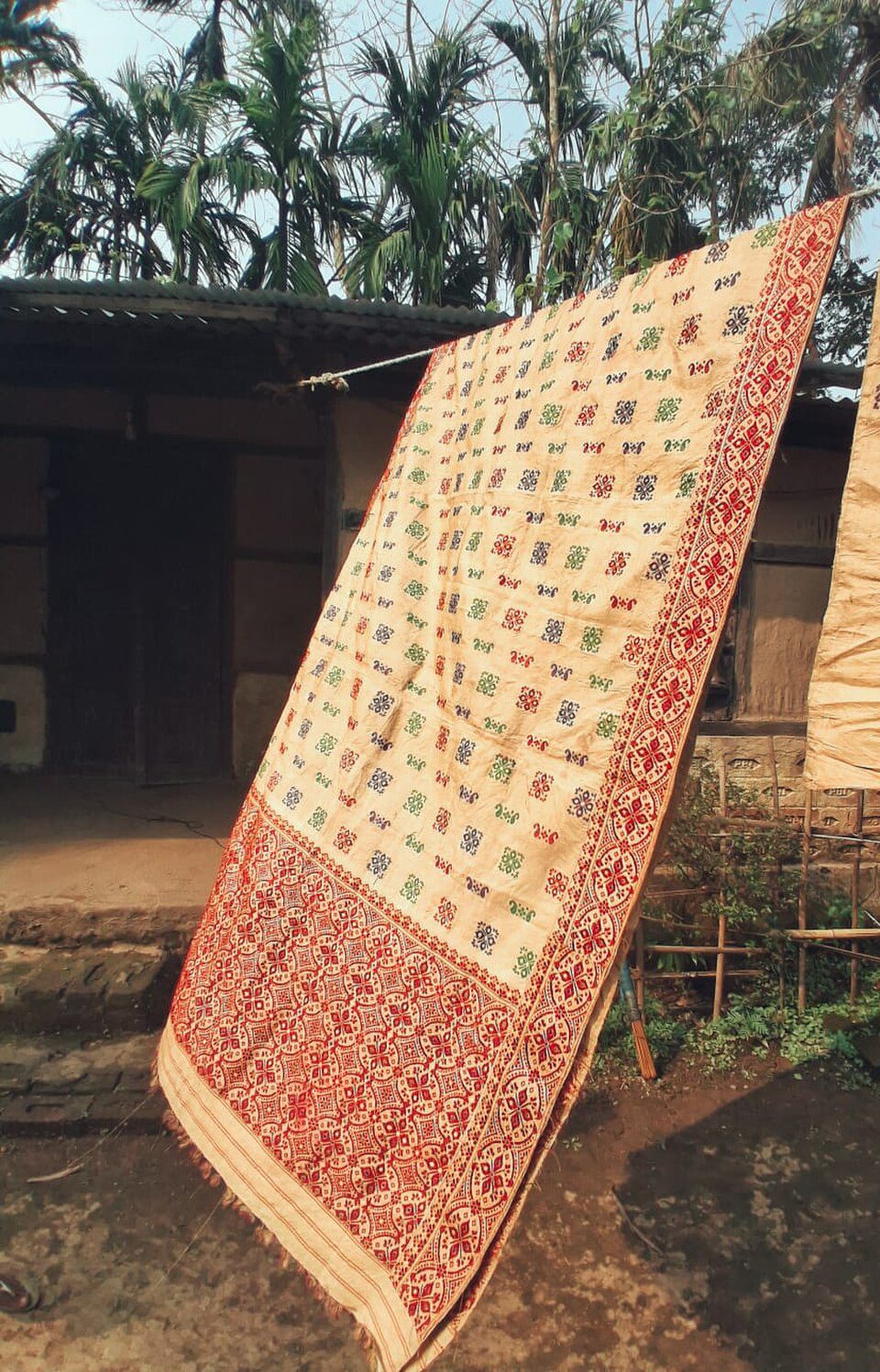
On his five-nation tour (UAE–Sweden–Norway–Netherlands–Italy) in May 2026, PM Narendra Modi presented carefully curated gifts to world leaders that draw exclusively from India’s GI-tagged crafts and protected indigenous flora — a “heritage diplomacy” template now codified jointly by the Ministry of External Affairs and the Ministry of Culture. The gifts ranged from Manipur’s Shirui Lily silk stoles and Assam’s Muga golden silk to Rajasthan’s Meenakari and Kundan earrings, Gujarat’s silver Rogan Tree of Life painting and Sikkim’s pressed-orchid paperweight.
This is more than ceremonial. Each gift carries a Geographical Indication (GI) tag — a legal recognition under the Geographical Indications of Goods (Registration and Protection) Act, 1999 — and many draw on biodiversity protected under the Biological Diversity Act, 2002. The diplomatic intent is to convert intangible cultural heritage into a tangible global brand, while strengthening domestic protections for artisans, weavers and conservation-dependent communities.
Key Gifts at a Glance
| Italian PM Giorgia Meloni | Muga silk stole (Assam) + Shirui Lily silk stole (Manipur) |
| King Willem-Alexander & Queen Maxima (Netherlands) | Jaipur Blue Pottery + Meenakari & Kundan earrings (Rajasthan) |
| Norwegian PM Jonas Gahr Store | Pressed-orchid paperweight (Sikkim orchids) |
| Swedish PM Ulf Kristersson | Santiniketan messenger bag (Tagore connection) |
| UAE President Sheikh Mohamed bin Zayed Al Nahyan | Silver Rogan painting (Tree of Life, Kutch, Gujarat) |
| FAO DG Dr Qu Dongyu | Palakkad red rice + millet bars |
Constitutional, Statutory & IP Framework
- Geographical Indications of Goods (Registration and Protection) Act, 1999 — registers GI tags. Muga silk, Meenakari, Kundan, Rogan painting, Mithila Madhubani all registered under this Act. Administered by GI Registry, Chennai.
- Article 29(1) — protects the right of any section of citizens to conserve distinct language, script or culture.
- Article 51A(f) — Fundamental Duty to value and preserve the rich heritage of our composite culture.
- Biological Diversity Act, 2002 — prevents biopiracy; regulates access to indigenous genetic resources (e.g. Shirui Lily) through the National Biodiversity Authority.
- Wildlife (Protection) Act, 1972 — Schedule VI — specified plants whose collection, possession and trade are regulated.
Shirui Lily — Why It Carries Meaning
The Lilium mackliniae — Shirui Lily — is endemic to Shirui Kashong Peak, Ukhrul district, Manipur. It blooms only between May and June, only on this single mountain. It is the state flower of Manipur, classified as Critically Endangered, and protected under Schedule VI of the Wildlife Protection Act 1972 and the Biological Diversity Act 2002. By gifting a silk stole inspired by its bell-shaped pink-white form (not the flower itself) to the Italian PM, PM Modi telegraphed both India’s biodiversity uniqueness and the legal framework that protects it from biopiracy.
Mnemonic — ‘GI-SHIRUI’
GI Act 1999 · Indigenous flora (Biological Diversity Act 2002) · Shirui Lily (Manipur) · Heritage diplomacy · International soft power · Rajasthan Meenakari + Kundan · UAE Rogan (Kutch) · Inspired by Article 29 + 51A(f)
GI Tags — How the Legal Architecture Works
A Geographical Indication tag identifies goods as originating from a definite geographical area, where a given quality, reputation or characteristic is essentially attributable to that origin. Under the GI Act 1999, registration is granted by the GI Registry in Chennai for a 10-year renewable term. Registered proprietors and authorised users can sue for infringement; sale of falsely-labelled GI goods attracts criminal penalty under Sec. 39.
India has GI-registered over 600 products since the Act came into force in 2003. Some famous ones: Darjeeling tea (the first GI), Basmati rice, Tirupati Laddu, Kanchipuram silk, Pochampally Ikat, Mysore silk, Banarasi silk, Madhubani painting, Channapatna toys, Naga Mircha, Bandel cheese. The diplomatic gifts list — Muga silk, Meenakari, Kundan, Rogan painting — are all GI registered.
Biological Diversity Act & Biopiracy
The Biological Diversity Act 2002 was enacted to give effect to the UN Convention on Biological Diversity (1992). It establishes the National Biodiversity Authority (NBA), State Biodiversity Boards and Biodiversity Management Committees at the local level. Section 3 prohibits foreign nationals and bodies from obtaining biological resources or associated traditional knowledge without prior NBA approval. Section 6 prohibits IP claims (including GI registration) on inventions based on Indian biological resources without NBA permission. The Act has been a critical tool in defeating biopiracy — most famously in the Neem patent revocation (2005) and the Turmeric patent revocation (1997).
Cultural Diplomacy as Soft Power
The diplomatic-gift strategy reflects a broader Indian soft-power doctrine. By presenting GI-tagged crafts, India simultaneously: (1) showcases artisan communities to global media; (2) generates international demand for Indian crafts; (3) operationalises Articles 29 and 51A(f) — preserving distinct cultural heritage; and (4) demonstrates compliance with international IP regimes (TRIPS, Paris Convention). Critics note that the actual income reaching artisans remains thin — a tension that the Ministry of Textiles and the Office of Development Commissioner (Handicrafts) are trying to address through artisan registries and direct procurement.
Practice Quiz — 10 CLAT-Style Questions
Click an option to reveal the answer and explanation.
Why This Matters for CLAT 2027
This story sits at the meeting point of multiple CLAT-favourite themes — intellectual property, biodiversity, constitutional culture provisions, and Indian foreign policy. First, IP law. CLAT increasingly tests GI tags — what they are, how they differ from trademarks and patents, and what remedies are available for infringement. A trademark identifies a brand; a patent protects an invention; a GI identifies the geographic origin of a product whose quality is essentially tied to that place. GI cannot be assigned, only used by authorised producers. The differences are textbook MCQ fodder.
Second, the biopiracy line of cases. Neem (1995-2005), Turmeric (1995-1997) and Basmati (1997-2002) — each saw foreign patents on Indian traditional knowledge revoked through prior-art evidence. The Traditional Knowledge Digital Library (TKDL) — set up by CSIR and AYUSH — now catalogues India’s traditional knowledge to pre-empt biopiracy. Schedule VI plants under the Wildlife Protection Act 1972, and the NBA approval regime under the Biological Diversity Act 2002, complete the legal mesh. Legal Reasoning passages on biopiracy are now standard in advanced CLAT material.
Third, the constitutional anchor. Article 29(1) protects the right of any section of citizens to conserve distinct language, script or culture. Article 51A(f) imposes a Fundamental Duty to value and preserve composite cultural heritage. Together, they form the constitutional basis for cultural protection — which in turn justifies the GI Act 1999 and the Biodiversity Act 2002. A passage asking “where does the State’s duty to protect Muga silk come from?” lets candidates trace the chain — from a fundamental duty (Art 51A(f)), through enabling legislation (GI Act 1999), to administrative implementation (GI Registry).
Fourth, international law. The TRIPS Agreement (1995, WTO) sets the floor for IP protection, including GIs under Articles 22-24. India’s Geographical Indications of Goods Act 1999 was enacted to make Indian law TRIPS-compliant. The Convention on Biological Diversity (1992) underpins the Biodiversity Act 2002. The Nagoya Protocol (2010) on access and benefit-sharing further constrains how nations may use each other’s genetic resources. Understanding the international-domestic interface is a CLAT-AILET frontier.
Fifth, soft power and Indian foreign policy. The notion of “heritage diplomacy” — pioneered by the MEA-Culture Ministry coordination — fits into a broader frame of India’s soft-power doctrine (Yoga Day, International Film Festival of India, ICCR scholarships, Ramayana diplomacy). Diplomatic-history questions in CLAT GK often test these threads.
For CLAT 2027 aspirants, the takeaway: every Shirui Lily stole is also a constitutional, statutory, IP and international-law artefact. Train your eye to read the law inside the heritage.