CURRENT AFFAIRS | 22 MAY 2026
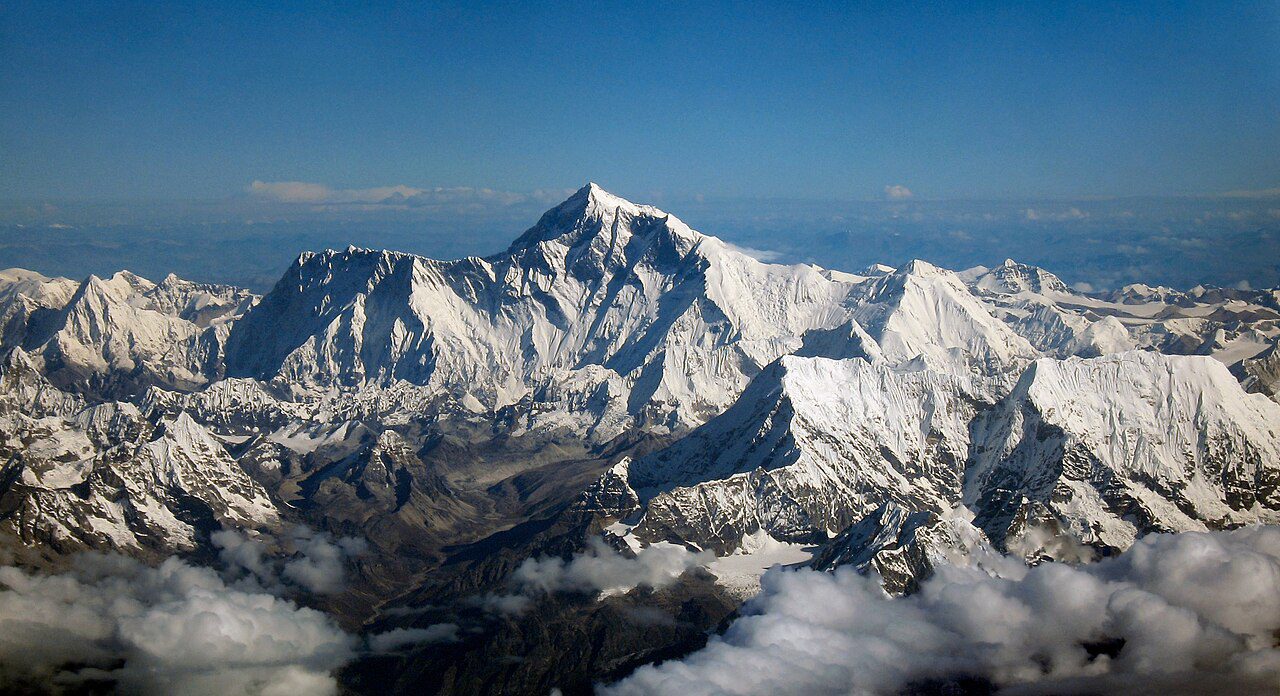
The Border Security Force (BSF) on 21 May 2026 announced that its first-ever all-women mountaineering team successfully scaled the summit of Mount Everest (8,848.86 m) on the Thursday morning — completing a high-altitude mission that coincides with the Force’s Diamond Jubilee (1965–2026) and the 150th anniversary of India’s National Song, Vande Mataram. The expedition, christened Mission Vande Mataram, was flagged off from the BSF Headquarters in New Delhi on 6 April 2026 by Director General Praveen Kumar.
The team that reached the summit comprised: Constable Kouser Fatima from Ladakh, Constable Munmun Ghosh from West Bengal, Constable Rabeka Singh from Uttarakhand, and Constable Tsering Chorol from Kargil. The five-member expedition was led by Deputy Commandant Loveraj Singh Dharamshaktu — a Padma Shri recipient who has himself summited Everest seven times. From the summit, the team unfurled the Tricolour, sang Vande Mataram and held a radio interaction with BSF DG Praveen Kumar.
Key Facts at a Glance
| Summit date | 21 May 2026 (Thursday morning) |
| Mountain | Mount Everest — 8,848.86 m |
| Mission name | Mission Vande Mataram |
| Force milestone | BSF Diamond Jubilee (60 years, 1965–2026) |
| Cultural anchor | 150th anniversary of Vande Mataram (1875) |
| Team leader | Deputy Commandant Loveraj Singh Dharamshaktu |
| Flag-off | 6 April 2026, New Delhi, by DG Praveen Kumar |
Constitutional & Statutory Framework
- BSF Act, 1968 — establishes BSF as a Union Armed Force of the Union of India under Ministry of Home Affairs.
- Article 246 + Union List Entry 1 — Defence of India and every part thereof is an exclusive Union subject.
- Article 33 — empowers Parliament to modify Fundamental Rights as applied to members of armed forces, police forces, intelligence agencies, etc.
- Article 51A (Fundamental Duties) — duty of every citizen to defend the country and render national service.
- Central Armed Police Forces (CAPFs) — BSF, CRPF, CISF, ITBP, SSB, NSG, Assam Rifles — under MHA.
BSF — From 1965 Raising to Diamond Jubilee
The BSF was raised on 1 December 1965, in the wake of the India-Pakistan war that year. Before BSF, India’s borders were guarded by state armed police battalions — which proved inadequate. BSF unified frontier guarding into a single Central Armed Police Force. Today it secures roughly 6,300 km of international borders with Pakistan and Bangladesh, makes ~2.7 lakh personnel India’s largest CAPF, and has expanded into anti-naxal operations, internal security, and high-altitude mountaineering. The Diamond Jubilee year — 60 years on — is being marked by a series of legacy missions, of which the all-women Everest expedition is the flagship.
Mnemonic — ‘BSF-VANDE’
BSF Act 1968 · Summit 21 May 2026 · Four women constables · Vande Mataram (150 yrs) · Article 33 (FR modification) · Nehru-era CAPF (1965 raising) · Diamond Jubilee · Everest 8,848.86 m
Article 33 — The Constitutional Special Case for Forces
Members of the armed forces and paramilitary do not enjoy Fundamental Rights in the same form as civilians. Article 33 empowers Parliament to restrict or abrogate FRs in their application to such forces, “to ensure the proper discharge of their duties and the maintenance of discipline among them”. The BSF Act 1968 — read with the BSF Rules — operationalises this: it permits BSF Court trials, summary punishments, restrictions on political association, and limits on the right to form associations.
The Supreme Court in R Viswan v UoI (1983) upheld the validity of such restrictions, holding that the special-duty character of armed and paramilitary forces justifies a different rights regime. More recently, Babita Puniya v Union of India (2020) moved in the opposite direction — granting permanent commission to women officers in the Indian Army, ending decades of structural exclusion. Babita Puniya is now a doctrinal anchor for gender equality in uniformed services.
CAPFs — India’s Paramilitary Architecture
India has seven CAPFs (Central Armed Police Forces) under the Ministry of Home Affairs: BSF, CRPF (internal security), CISF (industrial security), ITBP (Indo-Tibetan border), SSB (Indo-Nepal/Indo-Bhutan), NSG (anti-terror, hostage rescue) and Assam Rifles (under MHA-Army dual control). The constitutional anchor is Union List Entry 1 (Defence) and Entry 2 (Naval, Military and Air Forces, etc., of the Union). MHA administers the seven CAPFs through the Department of Border Management and Internal Security. The CAPFs together number well over 10 lakh personnel — making India’s paramilitary apparatus one of the largest in the world.
Practice Quiz — 10 CLAT-Style Questions
Click an option to reveal the answer and explanation.
Why This Matters for CLAT 2027
The BSF women’s Everest summit is a layered story that touches several CLAT-favoured doctrines. First, Article 33. This is one of the most under-prepared constitutional provisions in mass coaching — yet it appears frequently in Legal Reasoning passages. The conceptual hook: while Articles 14, 19, 21 etc. apply to “all persons” (or “citizens”), Article 33 lets Parliament modify these rights for armed forces members. CLAT often tests whether a candidate spots that Parliament — not the Executive — has this power, and whether it extends to paramilitary CAPFs (yes, it does — see the BSF Act 1968).
Second, the gender-equality thread. The Supreme Court’s judgment in Babita Puniya v UoI (2020) ordered permanent commission for women officers in the Army — finally ending the “structural disadvantage” that confined women to Short Service Commission. The reasoning relied on Articles 14 and 16 (equality, non-discrimination). CLAT 2023 and 2024 both carried Babita Puniya passages. The BSF Everest summit is a parallel real-world demonstration that combat-adjacent roles in CAPFs are also opening up.
Third, the constitutional federal division. Defence is exclusively Union (Entry 1, Union List). State governments cannot raise armed forces — only state armed police battalions. BSF, like all CAPFs, is a Union force. This is sometimes confused with “police” (which is a State List subject, Entry 2). The distinction matters: when CAPFs are deployed in a state for internal security, the legal framework is the Union’s, not the state’s — though deployment requires state concurrence or central direction.
Fourth, the symbolic layer. Sang from the Everest summit, Vande Mataram is a charged constitutional symbol. The Constituent Assembly debates (24 January 1950, Dr Rajendra Prasad’s statement) recognised Vande Mataram as having “equal status” with Jana Gana Mana. The 150th-anniversary year has produced multiple legal questions — from the recent Bengal madrasa direction to the BSF symbolism. Aspirants who track these stories integrate flag, song and emblem law into their constitutional toolkit.
Fifth, CAPF organisational law is a niche but rewarding study area. Each CAPF has its own Act — BSF Act 1968, CRPF Act 1949, CISF Act 1968, ITBP Act 1992, SSB Act, NSG Act 1986. Each operates under MHA but with differing roles. Questions on which CAPF does what — and which Act governs each — appear with surprising frequency.
For CLAT 2027 aspirants, the BSF Everest story is not just news. It is a constitutional moment — Article 33, Babita Puniya, federal division of defence powers, and the gender-equality jurisprudence all sit beneath the summit photograph.