
CURRENT AFFAIRS | 12 MAY 2026
CLAT GK + CLAT GK + DEFENCE & ENERGY SECURITY
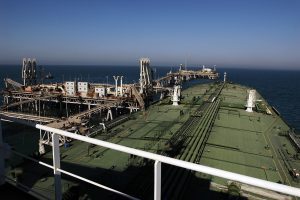
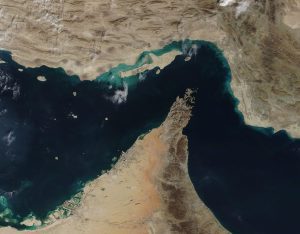
Defence Minister Rajnath Singh chaired a high-level Group of Ministers (GoM) on May 11, 2026 to assess India’s exposure to the escalating West Asia crisis. The empowered panel — including Ashwini Vaishnaw (Railways & IT), Hardeep Singh Puri (Petroleum) and Sarbananda Sonowal (Ports & Shipping) — reviewed crude oil, natural gas, LPG, fertiliser and shipping-route vulnerabilities. The numbers are sobering yet stable: India has approximately 60 days of crude oil cover, 60 days of natural gas, and 45 days of LPG cooking gas in inventory.
Of these, only the dedicated Strategic Petroleum Reserve (SPR) — operated by Indian Strategic Petroleum Reserves Ltd (ISPRL), a special purpose vehicle under the Ministry of Petroleum & Natural Gas — carries 5.33 million metric tonnes (MMT) of crude across three sites: Visakhapatnam (1.33 MMT), Mangaluru (1.5 MMT) and Padur (2.5 MMT). That equates to roughly 9.5 days of net imports — sufficient for short-term shock-absorption but well below the International Energy Agency’s 90-day strategic stocks benchmark applicable to its members. India, importantly, is not a full IEA member — only an “Association” country since March 2017.
Constitutional / Legal Framework
Three statutes and one constitutional anchor frame India’s energy security architecture. The Petroleum Act 1934 regulates storage and transport; the Essential Commodities Act 1955 §3 empowers the Centre to control production, supply and distribution of petroleum products in emergencies; Article 73 of the Constitution makes the Union’s executive power co-extensive with its legislative power, allowing Groups of Ministers (GoMs) to coordinate inter-ministerial responses without fresh parliamentary mandate. ISPRL was incorporated in 2004 under the Companies Act with MoP&NG as parent, and operates Phase I (5.33 MMT) commissioned 2018; Phase II adds 6.5 MMT at Chandikhol, Odisha (4 MMT) and Padur II (2.5 MMT).
Why This Matters for CLAT 2027
CLAT Defence + Polity passages routinely test (a) the executive power of GoMs under Article 73, (b) SPR architecture and ISPRL ownership, and (c) India’s IEA status. Most-tested traps: India is NOT a full IEA member (Association status only, since 2017) — so the 90-day rule does not legally bind India. Aspirants must distinguish “commercial crude inventory” (held by IOC, BPCL, HPCL, refiners) from “strategic petroleum reserve” (sovereign, held by ISPRL). Legal reasoning may pair this with the Petroleum and Natural Gas Regulatory Board Act 2006 and PNGRB’s tariff-setting powers.
Key Facts at a Glance
| Aspect | Detail |
|---|---|
| GoM chaired by | Rajnath Singh (Def Min) |
| Date | May 11, 2026 |
| Crude oil cushion | 60 days |
| Natural gas cushion | 60 days |
| LPG cushion | 45 days |
| SPR Phase I capacity | 5.33 MMT (3 sites) |
| SPR sites | Visakhapatnam, Mangaluru, Padur |
| SPR days of net imports | ~9.5 days |
| ISPRL incorporated | 2004 (under MoP&NG) |
| IEA status | Association country (Mar 2017) |
| IEA strategic stocks rule | 90 days (not binding on India) |
Mnemonic
60-60-45 = Crude 60d + Gas 60d + LPG 45d. SPR: V-M-P (Visakha, Mangaluru, Padur) = 5.33 MMT. IEA = Association, NOT member.
Test Yourself — 10-Question Quiz
Practice Quiz — 10 CLAT-Style Questions
Click an option to reveal the answer and explanation.