CURRENT AFFAIRS | 12 MAY 2026
CLAT GK + CLAT GK + HISTORY & CULTURE
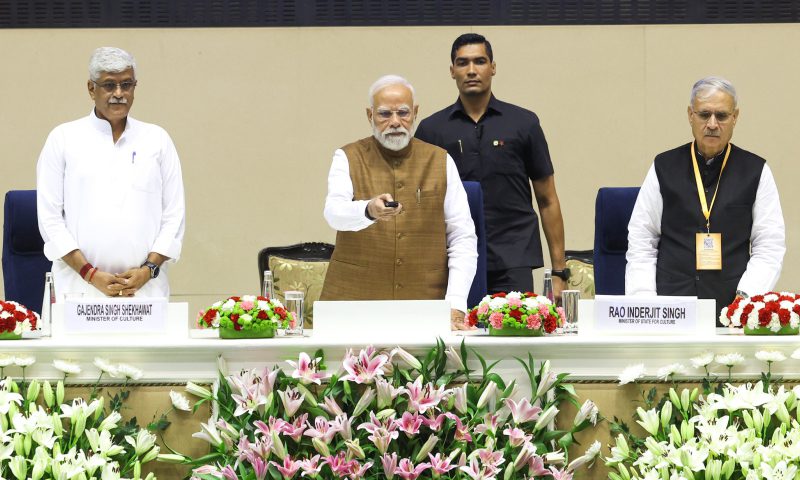
Prime Minister Narendra Modi led the Somnath Amrut Mahotsav at the Somnath temple in Veraval, Gujarat on May 11, 2026, marking 75 years since the reconstructed temple was consecrated by President Dr Rajendra Prasad on May 11, 1951. In a speech weaving multiple historical strands, the PM invoked the Pokhran-II nuclear tests of May 11, 1998 (Operation Shakti, observed annually as National Technology Day), Sardar Vallabhbhai Patel’s 1947 vow to restore Somnath, and the 1842 Ellenborough Proclamation — when British Governor-General Lord Ellenborough claimed to have “brought back” the gates of Somnath from Ghazni after the First Afghan War.
The Ellenborough episode is a peculiar footnote in British-Indian history. The gates, paraded back through Punjab in a grand procession, were later confirmed to be of Egyptian-Arab origin, never Indian — an embarrassment that triggered a censure motion in the British House of Commons, with Thomas Macaulay among the critics. The original 11th-century temple was famously raided by Mahmud of Ghazni in 1026 CE, an event that became foundational to the medieval temple-iconoclasm narrative. The Saurashtra government, under Patel’s directive, constituted the Somnath Trust in 1949, with reconstruction completed in 1951 — a few months before Patel’s death.
Constitutional / Legal Framework
Two legal instruments anchor Somnath’s modern status. The Places of Worship (Special Provisions) Act 1991, enacted by the Narasimha Rao government, freezes the religious character of all places of worship as it existed on 15 August 1947 (§3 prohibits conversion; §4 declares the religious character as on Independence Day unchangeable; Ayodhya was the only carved-out exception). The Supreme Court in M Siddiq (D) Thr Lrs v Mahant Suresh Das (2019 — the Ayodhya verdict) reaffirmed the Act’s constitutional validity. Somnath itself was reconstructed before 1991 and was a state-led project; the 1949 trust under the Saurashtra government remains the legal owner today.
Why This Matters for CLAT 2027
Somnath sits at the intersection of three CLAT-grade question categories. History: Mahmud of Ghazni’s 1026 raid, Sardar Patel’s role, Rajendra Prasad’s consecration (1951). Polity/Law: Places of Worship Act 1991 — its scope, exceptions, and the SC’s reaffirmation in M Siddiq (2019). British India: Ellenborough Proclamation 1842 and the House of Commons censure motion (the Act of 1842 also produced the famous Macaulay speech). Aspirants should also know that the 11 May 1998 Pokhran-II tests (Operation Shakti, led by Dr APJ Abdul Kalam and Dr R Chidambaram) gave India its “nuclear weapons state” status, prompting Pakistan’s Chagai-I tests on 28 May 1998.
Key Facts at a Glance
| Aspect | Detail |
|---|---|
| Mahotsav venue | Somnath temple, Veraval |
| Date | May 11, 2026 |
| Years since reconstruction | 75 (1951-2026) |
| Consecrated by | Dr Rajendra Prasad, 11 May 1951 |
| Mahmud of Ghazni raid | 1026 CE |
| Ellenborough Proclamation | 1842 (First Afghan War) |
| Somnath Trust formed | 1949 (Saurashtra govt) |
| Places of Worship Act | 1991 (Narasimha Rao govt) |
| Act’s cut-off date | 15 August 1947 |
| Ayodhya exception | Carved out of §4 of the Act |
| Pokhran-II date | 11 May 1998 (Op Shakti) |
Mnemonic
1026-1842-1951-1998-2026 = Ghazni raid → Ellenborough gates → Patel reconstruction → Pokhran-II → Amrut Mahotsav.
Test Yourself — 10-Question Quiz
Practice Quiz — 10 CLAT-Style Questions
Click an option to reveal the answer and explanation.