CURRENT AFFAIRS | MAY 14, 2026
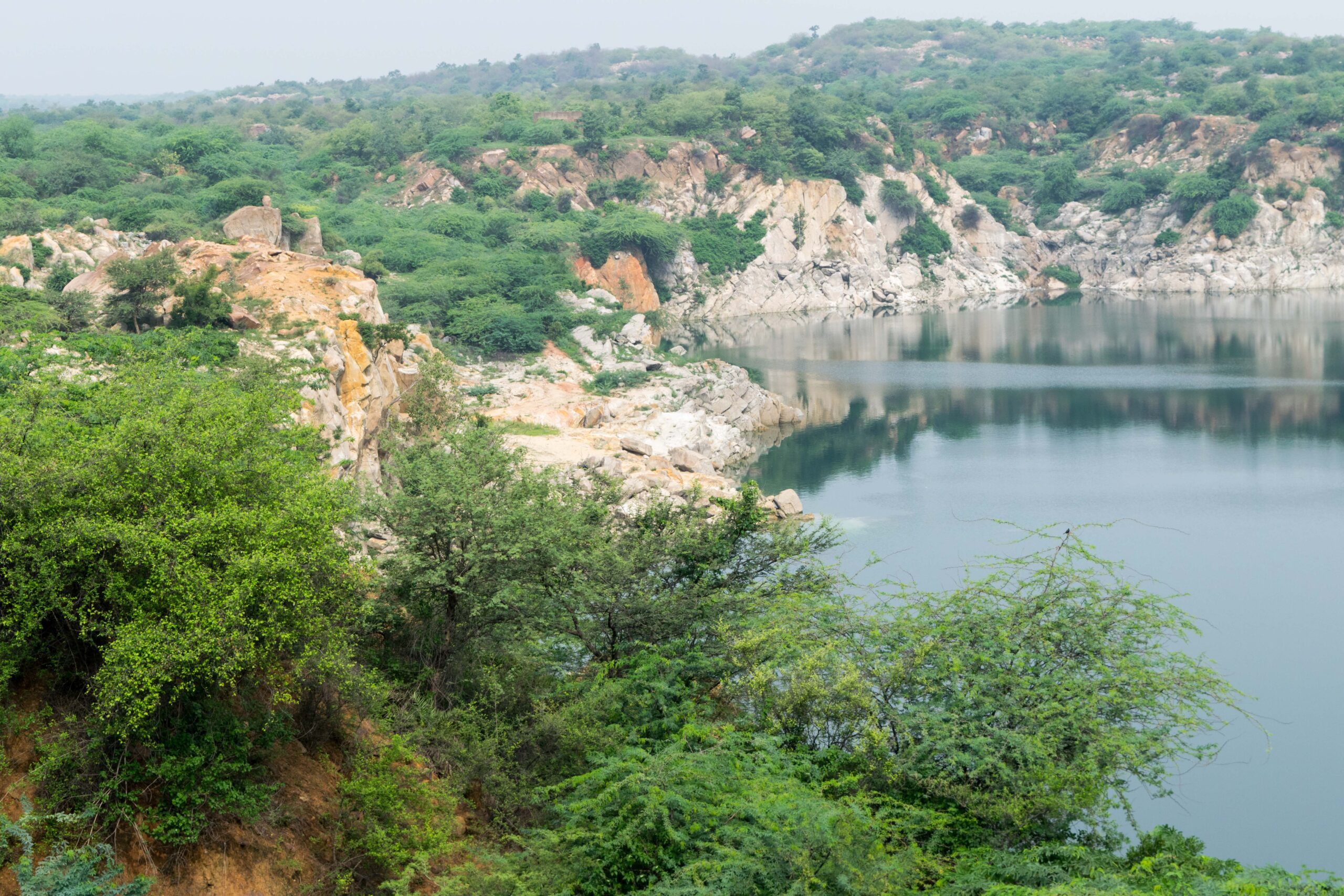
Delhi’s only protected forest is being silently swallowed by a foreign tree. A newly released 10-year management plan by the Wildlife Institute of India (WII) for the Asola Bhatti Wildlife Sanctuary reveals that the invasive Mexican mesquite — Prosopis Juliflora, locally called vilayati keekar — now blankets 63.48% (~12 sq km) of the sanctuary’s 18.41 sq km area. Native vegetation is gasping at just 18.83%, while rocky outcrops cover 14.07%, the invasive shrub Lantana Camara 1.55%, and water bodies barely 0.76%.
For a sanctuary that is the last green lung of Delhi’s Southern Aravalli Ridge, these numbers describe a quiet ecological collapse — and a constitutional and statutory test of how India balances development, protected-area governance, and the right to a healthy environment under Article 21.
1. Article 48A (DPSP) — State shall endeavour to protect and improve the environment and safeguard forests and wildlife.
2. Article 51A(g) — Fundamental duty to protect and improve natural environment including forests, lakes, rivers and wildlife.
3. Article 21 — Right to a clean and healthy environment, as read in Subhash Kumar v. State of Bihar (1991).
4. Wild Life (Protection) Act, 1972 — Sections 18–26A constitute a sanctuary by State notification; alterations need NBWL clearance.
5. Forest (Conservation) Act, 1980 (renamed Van Adhiniyam, 2023) — Section 2 bars non-forest use of forest land without Central approval.
6. Environment (Protection) Act, 1986 — Umbrella statute; ESZ notifications around sanctuaries are issued under it.
7. Biological Diversity Act, 2002 — Regulates use of invasive alien species; NBA empowered to advise.
8. Entry 17A, Concurrent List (42nd Amendment, 1976) — Forests as a concurrent subject.
The WII plan calls for phased mechanical removal of Prosopis combined with assisted regeneration of native Aravalli species like Anogeissus pendula (dhok) and Boswellia serrata (salai). But removal is fraught — the deep-rooted shrub regenerates from broken stumps, and any large-scale uprooting can destabilise the thin Aravalli soil. The plan also flags an unrelated but compounding pressure: around 20,000 rhesus macaques have been dumped into the sanctuary from across Delhi over the years, now exceeding its carrying capacity and driving them into nearby villages.
1. WPA-1972 doctrine — Sanctuary vs. National Park vs. Conservation Reserve vs. Community Reserve (Section 36A/36C added by 2002 Amendment).
2. NGT Act, 2010 — Principal Bench Delhi has heard multiple Aravalli encroachment matters under Sections 14–15.
3. MC Mehta v. Kamal Nath (1997) — Public Trust Doctrine; State as trustee of natural resources.
4. TN Godavarman v. Union of India (1996 onwards) — Continuing mandamus; SC’s expanded definition of ‘forest’ covers any land that is forest by dictionary meaning.
5. Vellore Citizens Welfare Forum v. UoI (1996) — Sustainable development + Precautionary + Polluter Pays as part of Article 21.
6. In Re: Construction of Park v. UoI (Aravalli ban, 2018) — SC ban on construction in Aravalli notified forest areas.
7. Section 4 / 17 PIL — Environmental groups have locus standi in epistolary jurisdiction under Article 32 / 226.
The Prosopis story is itself a colonial inheritance. The British introduced it in the 1930s to green Delhi’s bare ridge and provide fuelwood. It grew faster than anyone planned for, displaced native flora, depleted groundwater, and reduced biodiversity by emitting allelopathic chemicals that prevent other plants from germinating in the same soil. The economic loss across India is estimated in thousands of crores. Yet, it cannot be uprooted overnight — local livelihoods depend on its fuelwood and charcoal.
– Total area: 18.41 sq km (Delhi’s only WLS).
– Prosopis Juliflora cover: 63.48%.
– Native vegetation: 18.83%.
– Rock outcrop: 14.07%.
– Lantana Camara: 1.55%.
– Water bodies: 0.76%.
– Bare ground: 0.28%.
– Plan duration: 10 years (prepared by WII Dehradun).
– Macaque relocation: ~20,000 (now over capacity).
– Notification: Sanctuary status under WPA-1972, Sections 18-26A.
– Lies in: Southern Ridge, Delhi (Aravalli range).
For aspirants, the larger frame matters: this is a protected-area-governance story, an invasive-alien-species story, and a federal-environmental-law story rolled into one — and almost every one of those threads has been litigated before the Supreme Court, the National Green Tribunal, and the Delhi High Court.
Practice Quiz — 10 CLAT-Style Questions
Click an option to reveal the answer and explanation.