
CURRENT AFFAIRS | MAY 14, 2026
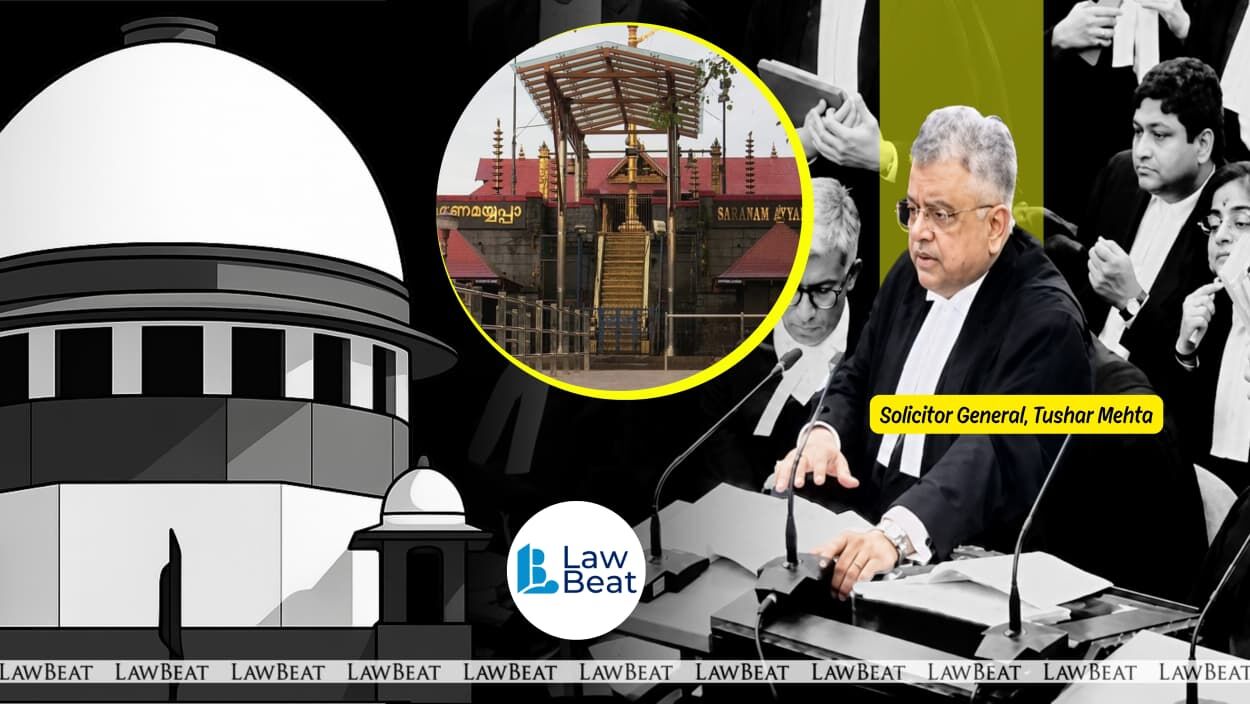
A 9-judge Constitution Bench of the Supreme Court, led by Chief Justice Surya Kant, on Wednesday wrapped up arguments in the long-pending Sabarimala reference and reserved its order on a clutch of questions about how far courts may go in reforming religious practice. Solicitor General Tushar Mehta, appearing for the Union, told the Bench that the Constitution did not create “a secular court as the reformatory overlord of the religious traditions of 1.4 billion citizens” — and that the framers had instead entrusted the mechanism of religious reform to the legislature, “to be exercised at the pace at which a democratic society arrives at consensus”.
The reference touches the core triangle of Articles 25, 26 and the Essential Religious Practices (ERP) doctrine. Article 25(1) protects freedom of conscience and free profession, practice and propagation of religion, subject to public order, morality and health, and to the other provisions of Part III. Article 26 grants every religious denomination the right to manage its own affairs in matters of religion. The ERP test, traced to the 7-judge Bench in Commissioner, HRE v L.T. Swamiar (Shirur Mutt, 1954), allows courts to ask whether a contested practice is “essential” to the faith — and is itself now under fresh scrutiny.
The Bench comprises CJI Surya Kant and Justices B V Nagarathna, M M Sundresh, Ahsanuddin Amanullah, Aravind Kumar, Augustine George Masih, Prasanna B Varale, R Mahadevan and Joymalya Bagchi. Justice Bagchi, during the hearing, observed that religious practice has “nothing to do with the majoritarian principle” — pushing back at the suggestion that constitutional courts can simply count heads inside a faith group to validate or invalidate a custom. The questions were referred from the 2018 Indian Young Lawyers Association v State of Kerala verdict, which had opened Sabarimala to women aged 10-50 by a 4:1 majority.
For CLAT 2027 legal-reasoning sets, this is a one-stop revision spine for Articles 25-28 (Right to Freedom of Religion), the ERP test, separation of powers, and the role of constitutional morality vs religious morality. Watch for principle-and-fact passages that test whether you can apply Shirur Mutt, Sardar Syedna (Dawoodi Bohra), Durgah Committee, and the Sabarimala 2018 ratio to fresh facts — including Muslim and Parsi women’s entry pleas that this Bench also flagged.
SG Mehta’s framing — that reform of religion is a legislative function — pulls the case onto familiar separation-of-powers terrain. Petitioners had argued that constitutional morality must override exclusionary religious customs; the Union’s counter is that the Constitution itself locates the reform power in Parliament and state legislatures, not in writ courts. The Bench’s order, when delivered, is expected to reshape the ERP test, fix the locus standi of non-devotee petitioners, and clarify whether Article 25’s “morality” means constitutional morality or denominational morality.
| Bench strength | 9 judges (Constitution Bench) |
| Led by | CJI Surya Kant |
| Union counsel | SG Tushar Mehta |
| Core articles | Arts 25, 26, 14, 17 |
| Doctrines tested | ERP test (Shirur Mutt 1954), constitutional morality |
Surya Kant Bench · Art 25/26 freedoms · Reform to legislature · Ayyappa Naishtika Brahmachari · Legislative pace, not judicial overlord.
Practice Quiz — 10 CLAT-Style Questions
Click an option to reveal the answer and explanation.