CURRENT AFFAIRS | MAY 18, 2026
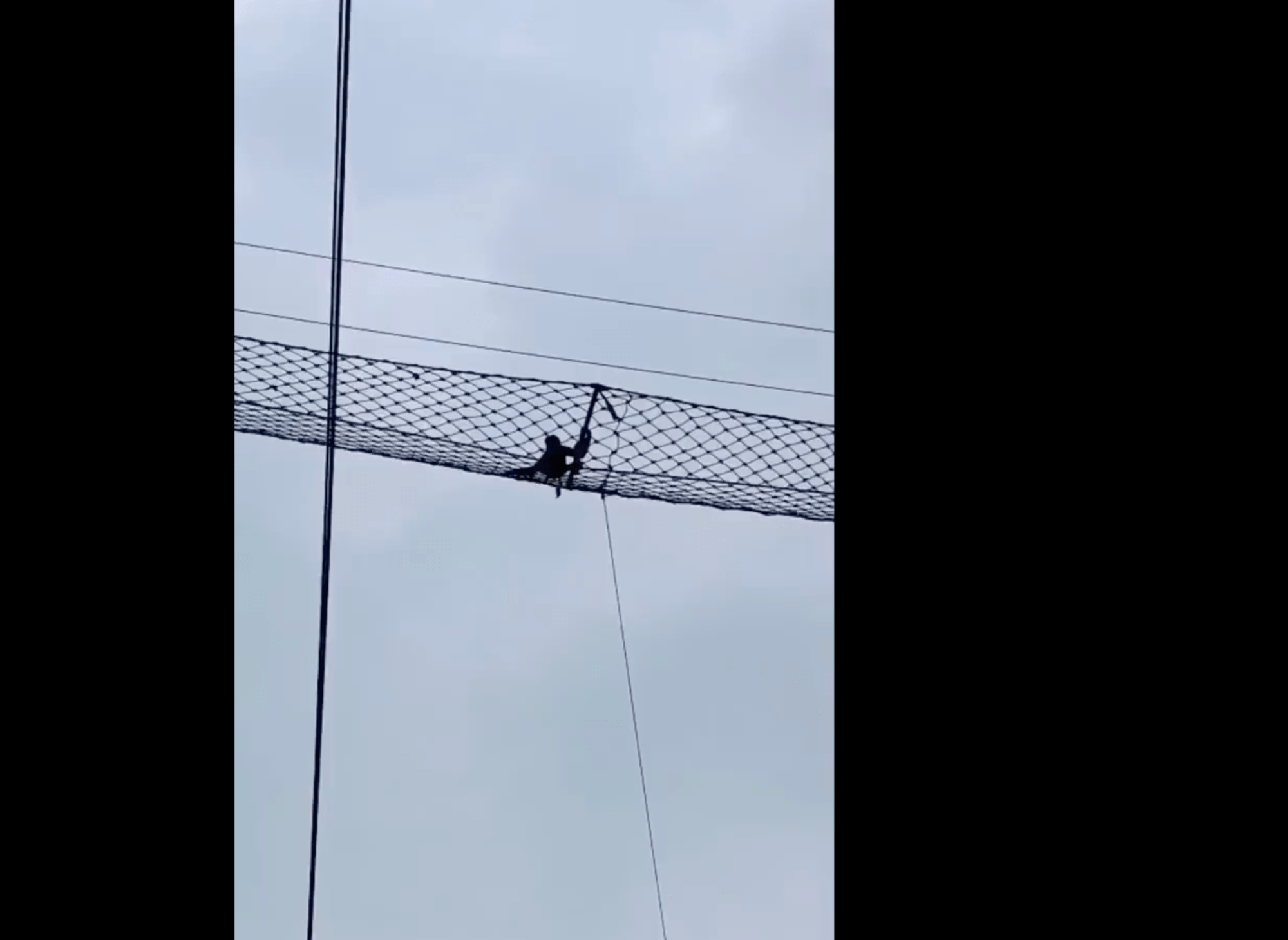
In a global first for primate conservation, the western hoolock gibbon (Hoolock hoolock) — India’s only ape species — has been photographed using an artificial canopy bridge to cross over an active railway line in Assam’s Hollongapar Gibbon Sanctuary. The image, captured by Wildlife Institute of India (WII) researchers in May 2026, marks the first time anywhere in the world that any gibbon species has been documented adopting a man-made bridge over a railway track. For CLAT aspirants, the story sits at the intersection of wildlife law, environmental jurisprudence, and the doctrine of intergenerational equity that underpins India’s biodiversity statutes.
What Happened: The Bridge, the Sanctuary, the Species
Hollongapar Gibbon Sanctuary, a 21 sq km protected area in Jorhat district, Assam, holds roughly 120–130 western hoolock gibbons — a globally Endangered (IUCN) and Schedule I (Wildlife Protection Act, 1972) species. The sanctuary is bisected by the Lumding–Dibrugarh broad-gauge railway, which fragments the canopy that arboreal gibbons depend on for movement (gibbons rarely descend to the ground, where they are vulnerable to leopards and feral dogs).
From 2022 onwards, the Wildlife Institute of India installed five double-rope canopy bridges — low-stretch nylon ropes with fail-safe nets — at strategic crossing points above the railway. For nearly four years the bridges went unused. The May 2026 capture finally confirmed that gibbons have learnt the route.
Constitutional & Statutory Framework
- Article 48A (DPSP): State’s duty to protect environment, forests and wildlife.
- Article 51A(g): Fundamental duty of every citizen to protect and improve the natural environment.
- Wildlife (Protection) Act, 1972: Hoolock hoolock listed in Schedule I (highest protection); Section 9 prohibits hunting; Section 38V vests powers in Chief Wildlife Warden.
- Forest (Conservation) Act, 1980: Central approval mandatory for diversion of forest land for non-forest purposes including railway expansion.
- Biological Diversity Act, 2002: Establishes National Biodiversity Authority; recognises gibbon as a key species.
- CITES Appendix I: All gibbons listed — international commercial trade prohibited.
CLAT Angle — Wildlife Jurisprudence to Remember
- T.N. Godavarman Thirumulpad v Union of India (1996): Continuing mandamus; expanded definition of “forest” to all dictionary-meaning forests.
- Centre for Environmental Law (WWF-I) v Union of India: Species-protection jurisprudence; “species best interest” standard.
- Public Trust Doctrine (M.C. Mehta v Kamal Nath) applies to natural habitats and protected areas.
- Intergenerational equity and precautionary principle — both invoked routinely in habitat-fragmentation cases.
Key Facts Table
| Species | Western Hoolock Gibbon (Hoolock hoolock) — India’s only ape |
| Sanctuary | Hollongapar Gibbon Sanctuary, Jorhat, Assam (~21 sq km) |
| Population | ~120–130 individuals |
| Implementing Body | Wildlife Institute of India (WII), Dehradun |
| WPA Schedule | Schedule I — highest protection |
| IUCN Status | Endangered |
Mnemonic — GIBBON-BRIDGE
Genus Hoolock · India’s only ape · Both Assam & Arunachal · Bridges over rails · Only Hollongapar studied · Net-safe canopy ropes · Bundled five ropes · Resident WII project · Iconic Schedule-I · Down to ~130 individuals · Globally first · Endangered (IUCN)
Test Yourself — 10 MCQs on Hoolock Gibbon Canopy Bridge
Practice Quiz — 10 CLAT-Style Questions
Click an option to reveal the answer and explanation.