CURRENT AFFAIRS | 1 JUNE 2026
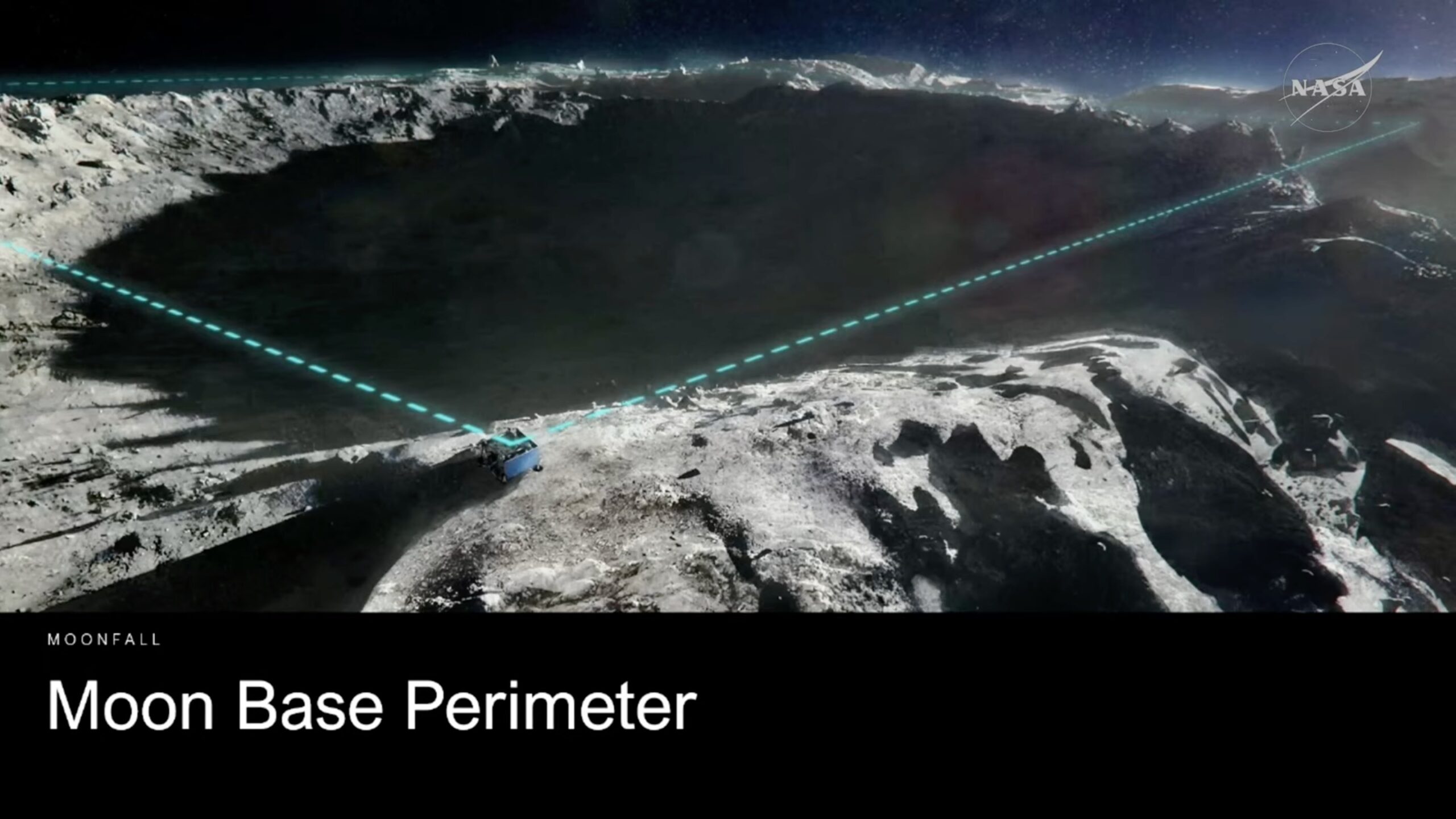
NASA has unveiled a three-phase roadmap to build a sustained human presence at the lunar South Pole by 2032. Phase 1 (through 2029) targets surface access and initial experiments; Phase 2 establishes initial operating capability including nuclear power installations; Phase 3 — post-2032 — envisions a semi-permanent crewed base spanning hundreds of square miles. The South Pole was chosen for permanently shadowed craters with water ice deposits (split-able into H₂ and O₂ for rocket fuel and life support) and adjacent peaks with near-continuous solar illumination.
Blue Origin (Jeff Bezos’s aerospace company) leads heavy-lift rockets, the Blue Moon lander and early infrastructure. China and Russia are pushing back with their International Lunar Research Station (ILRS) targeting 2035. The legal architecture is contested: the Outer Space Treaty 1967 bars national appropriation, while the US-led Artemis Accords 2020 (which India joined in June 2023) permit “safety zones” around resource extraction — a concept critics call inconsistent with OST.
⚖️ International Space Law Framework
- Outer Space Treaty 1967 — foundational; bars national appropriation of celestial bodies; India ratified 1982
- Rescue Agreement 1968 — astronaut rescue and return
- Liability Convention 1972 — state liability for damage by space objects
- Registration Convention 1976 — registration of launches
- Moon Agreement 1979 — declares Moon “common heritage of mankind”; only ~18 parties, India NOT a party
- Artemis Accords 2020 — non-binding, 50+ signatories; India joined June 2023
🎯 CLAT 2027 Angle
Space law is one of the freshest CLAT GK domains. Expect questions on which treaty India is/isn’t party to, the Article II OST non-appropriation principle, “safety zones” controversy, and ISRO milestones — Chandrayaan-3 (Aug 23, 2023, first south-pole soft-landing), Chandrayaan-4 (2027 sample return), Gaganyaan (manned 2026-27).
📊 Key Facts at a Glance
| Item | Detail |
|---|---|
| Moon base target | Semi-permanent after 2032 |
| Location | Lunar South Pole |
| Why South Pole | Water ice + solar peaks |
| Lead private partner | Blue Origin (Blue Moon) |
| China-Russia ILRS | Target 2035 |
| OST signed / India ratified | 1967 / 1982 |
| India joined Artemis | June 2023 |
| Chandrayaan-3 landing | Aug 23, 2023 (south pole) |
🧠 Mnemonic + Key Treaties
Mnemonic — “OST-1967-Artemis-2023”: Outer Space Treaty 1967 + India joined Artemis Accords June 2023.
Treaty stack: OST (1967) → Rescue (1968) → Liability (1972) → Registration (1976) → Moon Agreement (1979) → Artemis Accords (2020). India is party to the first four, NOT the Moon Agreement, signatory to Artemis Accords. The COPUOS (UN Committee on Peaceful Uses of Outer Space) administers most.
Practice Quiz — 10 CLAT-Style Questions
Click an option to reveal the answer and explanation.