CURRENT AFFAIRS | 01 OCTOBER 2026
The Supreme Court’s Deepavali Ruling — No Total Ban, But Conditions Apply
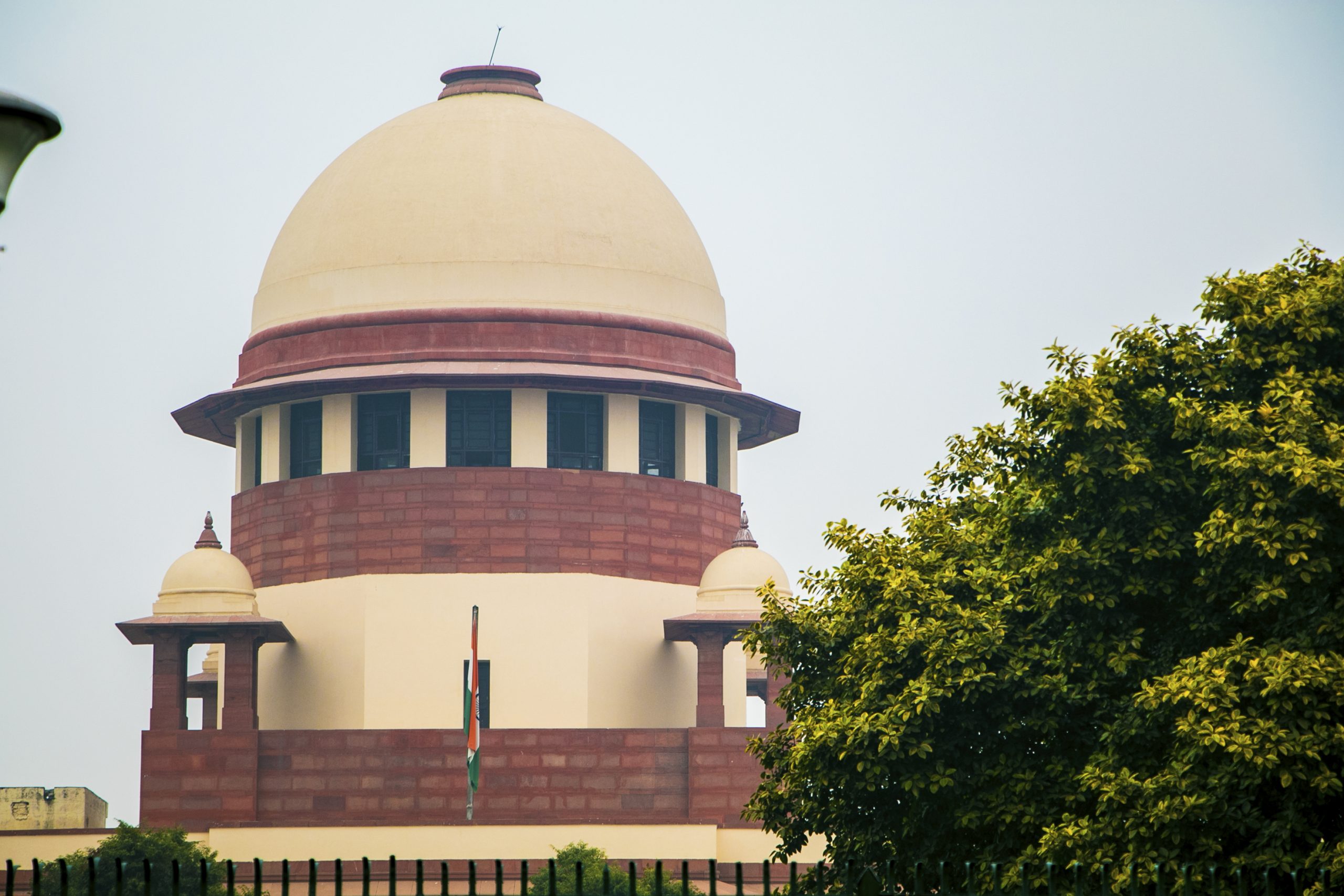
On October 1, 2026, The Hindu reported that a Supreme Court bench led by Justice M.M. Sundresh ruled out a complete ban on firecrackers for the upcoming Deepavali festival. Instead, the court charted a middle path: a conditional relaxation permitting only CSIR-NEERI certified green and low-emission crackers. The ruling is significant both as a public health milestone and as a constitutional law development that CLAT aspirants must understand deeply.
The issue is deceptively simple on the surface — can the State restrict the use of firecrackers? — but opens into a rich constitutional debate between competing fundamental rights: the right to a clean environment under Article 21 and the freedom to practise religion under Article 25.
CSIR-NEERI (Council of Scientific and Industrial Research — National Environmental Engineering Research Institute), headquartered in Nagpur, developed a range of green crackers (SWAS, SAFAL, and STAR crackers) that emit approximately 30% less PM2.5 particulate matter compared to conventional crackers. Critically, they are barium-free — conventional crackers use barium nitrate for green flames, a compound linked to respiratory and neurological harm.
The Constitutional Balancing Act: Art. 21 vs Art. 25
This case exemplifies the most intellectually rich type of constitutional question — a genuine conflict between two fundamental rights, both granted by Part III of the Constitution.
Article 21 guarantees the right to life. The Supreme Court, beginning with Maneka Gandhi v. Union of India (1978), has progressively expanded this to include the right to live in a clean and unpolluted environment — crystallised in MC Mehta v. Union of India.
Article 25 grants every person the freedom of conscience and the right to freely profess, practise, and propagate religion, subject to public order, morality, and health. The celebration of Deepavali with firecrackers has religious and cultural dimensions that courts have generally been reluctant to entirely suppress.
The foundational case is Arjun Gopal v. Union of India (2018), where the Supreme Court imposed restrictions on firecrackers in Delhi-NCR — a complete ban on conventional crackers with permission only for green crackers during a two-hour window (8–10 PM). The court recognised the right to burst crackers as part of cultural and religious practice but held that it must yield where it infringes the right to breathe clean air, particularly for vulnerable populations. The 2026 ruling follows this reasoning nationally.
Why Delhi and the Nation Have Different Rules
Delhi and the National Capital Region have had their own separate firecracker regime since 2018, administered jointly by the Supreme Court, the National Green Tribunal (NGT), and the Central Pollution Control Board (CPCB). The October 1 ruling addresses the national position — what applies in cities and towns outside the NCR’s specific regime. The court maintained that the baseline for the entire country is now: if you burst crackers, they must be CSIR-NEERI certified green crackers within permitted time windows.
CPCB (Central Pollution Control Board) monitors air quality and enforces the Environment (Protection) Act 1986 nationally. NGT (National Green Tribunal), established under the NGT Act 2010, has jurisdiction over environmental disputes. The Supreme Court exercises supervisory jurisdiction over both, particularly where constitutional rights are implicated. This layered structure means that a firecracker ban could come from any of these bodies — an important point for CLAT passage-based questions.
The Directive Principle Connection: Art. 48A
Article 48A (added by the 42nd Constitutional Amendment in 1976) directs the State to endeavour to protect and improve the environment. The Environment (Protection) Act 1986, enacted under Art. 253 read with Entry 13 of the Union List and Art. 48A, is the primary legislation authorising the Central Government to take measures to protect and improve the environment.
1. Art. 21 scope — includes right to clean air, established in MC Mehta. 2. Art. 25 — protects religious practice but yields to public health (Art. 25(1) expressly says “subject to public order, morality and health”). 3. Arjun Gopal 2018 — the 2026 ruling follows and extends its logic nationally. 4. CSIR-NEERI — the certification body; 30% less PM2.5, barium-free. 5. NGT Act 2010 — the tribunal’s enabling law; created because conventional courts were too slow for environmental cases requiring scientific expertise.
Practice Quiz — 10 CLAT-Style Questions
Click an option to reveal the answer and explanation.