CURRENT AFFAIRS | 16 MAY 2026
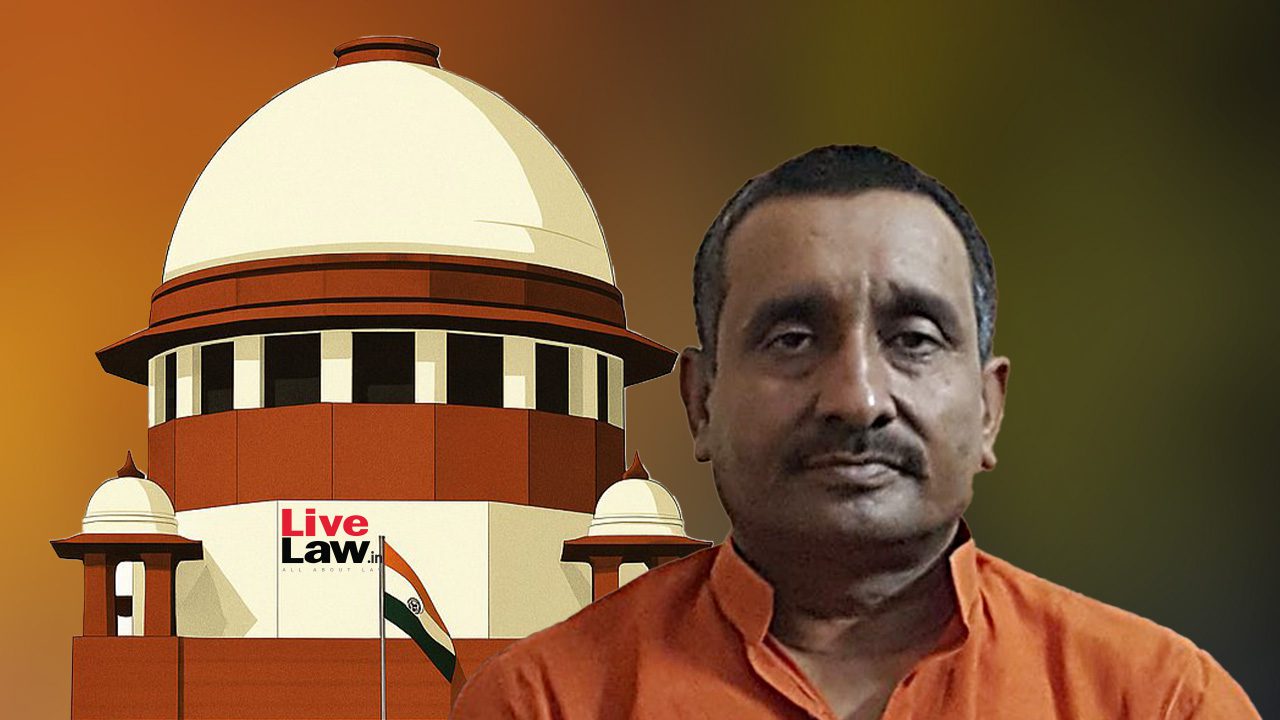
A Supreme Court bench led by CJI Surya Kant and Justice Joymalya Bagchi on Friday, 15 May 2026, set aside the Delhi High Court order of 23 December 2025 that had suspended the life sentence of former BJP MLA Kuldeep Singh Sengar in the Unnao rape case and released him on bail. CJI Surya Kant termed the High Court’s view ‘hypertechnical’, observing that POCSO is ‘a legislation which is not only penal but also one which protects children’.
Solicitor General Tushar Mehta, appearing for the CBI, argued that the bar on cognisance of public servants under Section 197 CrPC cannot apply because ‘an MLA does not bring him under the ambit of a public servant as defined under IPC’. Justice Joymalya Bagchi added that the High Court ‘may make an endeavour to decide the matter finally as early as possible’. Former MLA Kuldeep Singh Sengar was convicted in December 2019 for raping a minor.
Constitutional & Statutory Framework
- POCSO Act, 2012: Sections 4, 5 and 6 cover penetrative and aggravated penetrative sexual assault on children. 2019 amendment raised minimum punishment for aggravated penetrative assault to 20 years extending to life (remainder of natural life), with death in the gravest cases.
- Section 197 CrPC (now BNSS, 2023): Bars cognisance of offences by ‘public servants’ acting in official capacity without prior sanction. The IPC definition (Section 21) and BNS, 2023 definition do NOT cover sitting MLAs unless acting in a state-conferred public capacity.
- State of Karnataka v Hemareddy (1981): Section 197 protection applies only where the act has a ‘reasonable nexus’ with the discharge of official duty.
- Sakshi v Union of India (2004): Laid the foundation for child-sensitive trial procedures, later codified in POCSO.
- Article 21: Right to life and dignity of survivors — Nipun Saxena v Union of India (2018) prohibits revealing identity of POCSO victims.
Why This Matters for CLAT 2027
This ruling is a high-probability Legal Reasoning passage. CLAT setters will likely test:
- Public-servant doctrine under Section 197 — distinguishing an MLA from a civil servant under the IPC definition.
- Suspension of sentence vs. bail — Section 389 CrPC / corresponding BNSS provision.
- POCSO presumption under Sections 29 and 30 — reverse onus and proof of culpable mental state.
- HC powers under Section 482 CrPC and ‘hypertechnical’ reasoning.
- Cross-link with the recent 2024 Bharatiya Nyaya Sanhita — child sexual offences now appear in BNS and BNSS.
Key Facts at a Glance
| Item | Detail |
|---|---|
| Date of SC order | 15 May 2026 |
| Bench | CJI Surya Kant and Justice Joymalya Bagchi |
| Appellant in HC | Former BJP MLA Kuldeep Singh Sengar |
| HC bail order date | 23 December 2025 |
| Conviction | December 2019 (Unnao rape of a minor, POCSO) |
| For CBI | Solicitor General Tushar Mehta |
| CJI’s description of HC view | ‘Hypertechnical’ |
CLAT Memory Mnemonic — “P-O-C-S-O F-I-R-M”
POCSO Act, 2012 — Official duty test (Hemareddy) — CJI Surya Kant + Justice Joymalya Bagchi bench — Section 197 CrPC inapplicable to MLAs — One-line ‘hypertechnical’ rebuke — Final disposal directed — IPC public-servant definition narrow — Reverse onus under Sec 29 POCSO — Minor victim, Article 21 dignity.
Quick CLAT Drill
Ten CLAT-style MCQs on POCSO, Section 197, the BNSS replacement of the CrPC, and landmark Supreme Court precedents on the public-servant doctrine.
Practice Quiz — 10 CLAT-Style Questions
Click an option to reveal the answer and explanation.
Sources: Supreme Court order dated 15 May 2026; LiveLaw and Bar & Bench reports.