
CURRENT AFFAIRS | MAY 18, 2026
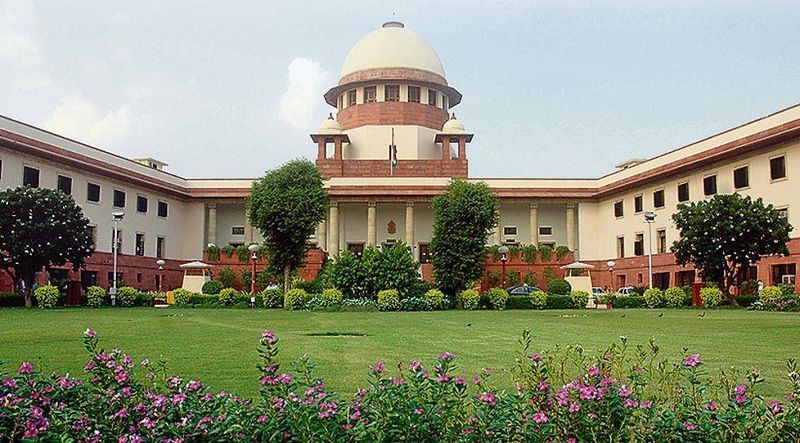
On 16 May 2026, President Droupadi Murmu promulgated the Supreme Court (Number of Judges) Amendment Ordinance, 2026, raising the sanctioned strength of the apex court from 34 to 38 judges — the first expansion since the 2019 Amendment Act took strength from 31 to 34. With pendency in the Supreme Court touching 92,823 cases by the end of April, the Centre has invoked the urgency route under Article 123. For CLAT 2027 aspirants, this single development braids together three favourite testing areas: the Ordinance-making power, the architecture of judicial appointments, and the politics of pendency.
Constitutional Framework
- Article 124(1): There shall be a Supreme Court of India consisting of a Chief Justice and, until Parliament prescribes a larger number, of not more than seven other Judges.
- Article 124(2): Every Judge of the Supreme Court shall be appointed by the President by warrant under his hand and seal after consultation with such of the Judges of the Supreme Court and of the High Courts as the President may deem necessary.
- Article 123: Power of President to promulgate Ordinances when Parliament is not in session — must be laid before both Houses within six weeks of reassembly, else ceases to operate.
- Parent statute amended: Supreme Court (Number of Judges) Act, 1956 — previously amended in 1960, 1977, 1986, 2008 and 2019.
- Collegium jurisprudence: Second Judges Case, SCAORA v. Union of India (1993); Third Judges Case (1998); NJAC struck down in SCAORA v. Union of India (2015).
- Ordinance abuse doctrine: DC Wadhwa v. State of Bihar (1987) and Krishna Kumar Singh v. State of Bihar (2017, 7-Judge) — re-promulgation is a fraud on the Constitution.
CLAT Angle
CLAT examiners love overlaps. This story sits at the intersection of Polity, Legal Reasoning and Current Affairs. Expect a passage on the Ordinance route, followed by an inference question on whether the Centre could re-promulgate the Ordinance if Parliament fails to enact it. Expect a parallel question on whether the executive’s role in deciding the number of judges (statutory) is constitutionally distinct from the Collegium’s role in selecting who the judges are (constitutional convention). A trap option will conflate Art. 124(2) consultation with Art. 124(2A) — only the latter deals with composition rules.
Key Facts at a Glance
| Ordinance | Supreme Court (Number of Judges) Amendment Ordinance, 2026 |
| Promulgated | 16 May 2026 (gazetted same day) |
| Cabinet clearance | 5 May 2026 |
| Old strength | 34 (1 CJI + 33 puisne) |
| New strength | 38 (1 CJI + 37 puisne) |
| Last expansion | 2019 Amendment Act (31 → 34) |
| Stated rationale | SC pendency 92,823 cases (as of 30 April 2026) |
Mnemonic — Remember It Forever
FROM 34 TO 38 — “Four Republic-Old Memories”: Murmu’s Ordinance, May 16, 2026.
Four new seats. Republic-old means India’s republic origin year (1956 — the parent Act). Murmu signed. Mid-May. Memorise the chain: 16-May-2026 → Ord. → 1956 Act → 38.
Take the Quiz
Test your understanding with this 10-question quiz built for CLAT-style multi-pass reasoning.
Practice Quiz — 10 CLAT-Style Questions
Click an option to reveal the answer and explanation.