Bombay HC Quashes Externment Order: Constitutional Limits on Policing Dissent
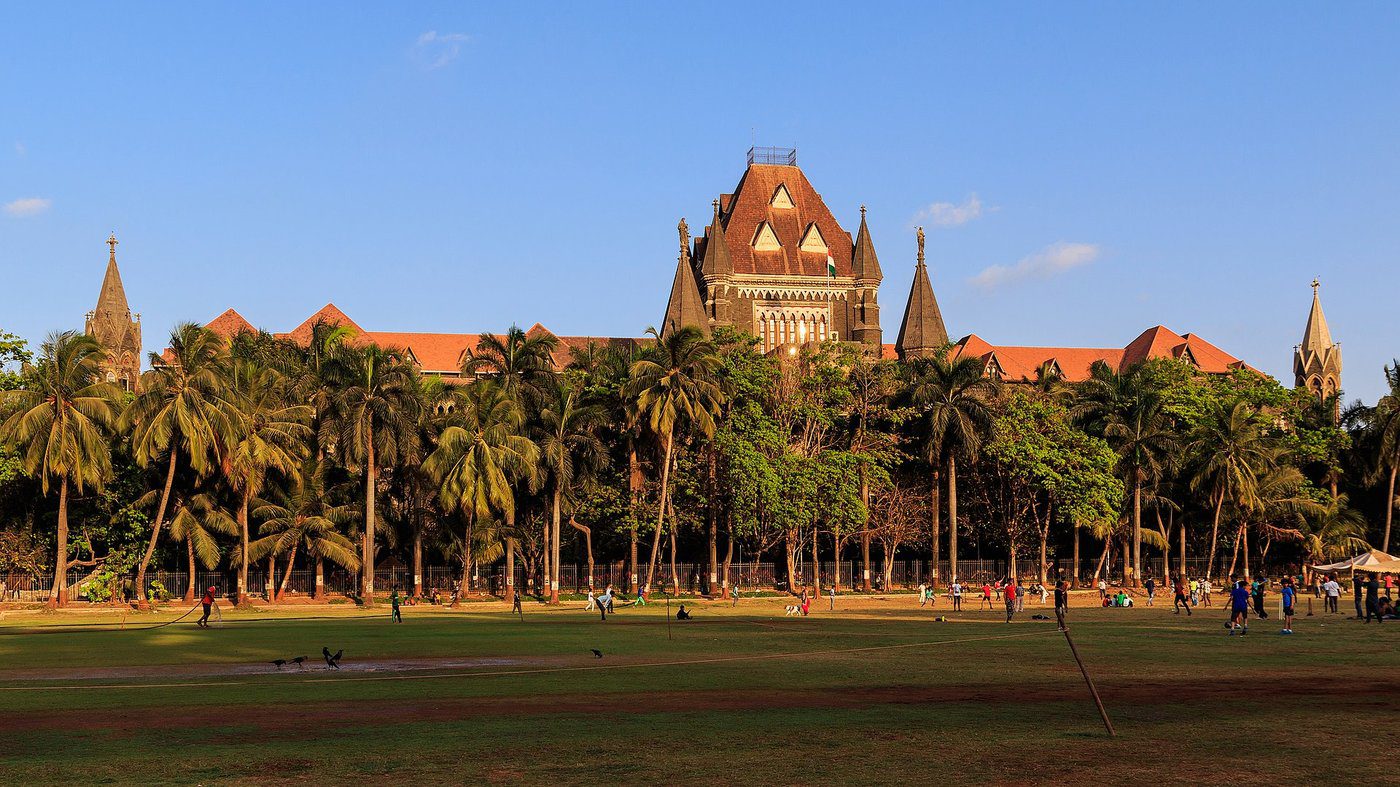
A recent ruling by the Bombay High Court serves as a timely reminder that fundamental rights enshrined in the Constitution are not merely aspirational guarantees — they impose concrete obligations on the State and its agencies. A single-judge bench (Justice Madhav J Jamdar) quashed an externment order issued under the Maharashtra Police Act against an individual who had been externed for approximately seven months for organising protests. The court held that peaceful protest is a constitutionally protected activity, and that the police power of externment — an extraordinary executive measure — must clear a high threshold before it can be deployed to curtail such activity.
This judgment is significant not only for what it decides in the immediate case, but for the broader constitutional doctrine it affirms: that the right to protest flows from Articles 19(1)(a) and 19(1)(b) of the Constitution; that restrictions on these rights must satisfy the test of reasonableness and proportionality; and that the judiciary acts as a constitutional bulwark against executive overreach. For CLAT aspirants, the ruling offers a concentrated dose of fundamental rights jurisprudence — covering speech and assembly, their permissible limits, and the doctrine of proportionality in constitutional review.
Article 19(1)(a) and (b): The Twin Freedoms That Protect Protest
The Constitution of India guarantees, under Article 19(1)(a), the freedom of speech and expression to every citizen. This right has been interpreted expansively by the Supreme Court to cover not just spoken or written words, but symbolic expression — including demonstrations, rallies, and public protests. The act of assembling to voice collective grievance against a government policy or action is itself a communicative act, and therefore falls within the ambit of Article 19(1)(a).
Simultaneously, Article 19(1)(b) guarantees the right to assemble peaceably and without arms. This provision protects the collective dimension of free expression — the right of citizens to come together in a public space to articulate shared concerns. Together, Articles 19(1)(a) and 19(1)(b) constitute the constitutional architecture of the right to protest. Courts have consistently held that the right to dissent, to disagree with state policy, and to make that disagreement visible in public space is an essential feature of a democratic republic.
Reasonable Restrictions: Articles 19(2) and 19(3)
The freedoms under Article 19(1) are not absolute. The Constitution permits the State to impose reasonable restrictions on them, but only on specified grounds and only if the restriction is proportionate to the harm sought to be prevented.
Under Article 19(2), the State may restrict freedom of speech and expression in the interests of the sovereignty and integrity of India, the security of the State, friendly relations with foreign States, public order, decency or morality, contempt of court, defamation, or incitement to an offence. Similarly, Article 19(3) permits restrictions on the right of assembly in the interests of the sovereignty and integrity of India or public order. The critical phrase in both provisions is reasonable restrictions. Reasonableness is not determined by the State’s subjective belief that a restriction is necessary; it is assessed by courts applying objective criteria.
The constitutional test, refined over decades of judicial interpretation, requires that: (i) the restriction must be authorised by law; (ii) it must fall within a permissible ground under Article 19(2) or 19(3); (iii) there must be a proximate, not remote, nexus between the restriction and the harm sought to be prevented; and (iv) the restriction must not be wider in scope or duration than is strictly necessary. This is where the proportionality doctrine becomes essential.
The Proportionality Doctrine in Constitutional Review
The doctrine of proportionality requires that the means chosen by the State to achieve a legitimate aim must not be disproportionate to the harm they cause to fundamental rights. In the context of protest rights, the doctrine asks: was it necessary to use this particular power (externment) to address the asserted danger, or were less drastic measures available? Could the objective of maintaining public order have been achieved by lesser restrictions — for instance, conditions on the manner of assembly — rather than banishing the person from an entire area for months?
The Bombay High Court’s reasoning in quashing the externment order reflects the proportionality framework: an externee who has been organising protests must be shown to pose a genuine danger to public safety or property before such a drastic remedy can be applied. Mere participation in or organisation of protests, which is constitutionally protected conduct, cannot by itself justify the extraordinary step of externment. When the State relies on externment to silence a protester, it must demonstrate that the individual’s presence in the area constitutes a real and credible threat — not simply that their activities are inconvenient or disruptive to public administration.
Externment: An Extraordinary Executive Power Under State Police Acts
Externment is a preventive, non-punitive executive measure by which a person is ordered to leave a particular area and prohibited from re-entering it for a specified period. It is authorised under state police legislation — in Maharashtra’s case, the Maharashtra Police Act — and does not require a trial or conviction. Because it bypasses the criminal justice process and imposes significant restrictions on personal liberty and movement, courts scrutinise externment orders with particular care.
Several features of externment make it constitutionally sensitive. First, it restricts the freedom of movement protected under Article 19(1)(d). Second, it engages Article 21 — the right to life and personal liberty — since the Supreme Court has held that the right to live with dignity includes the right to reside and settle in any part of India. Third, where the target of an externment order is someone engaged in protest activity, it directly impinges upon Articles 19(1)(a) and (b). For this reason, courts insist that externment orders must be grounded in specific, credible material demonstrating that the person’s conduct is of a nature that poses a genuine threat — not merely that the person is politically active or has participated in agitation.
The chilling effect doctrine is particularly relevant here. A chilling effect arises when the exercise of a state power — even if nominally lawful — has the foreseeable consequence of deterring people from exercising their constitutional rights. An externment order against a protester sends a signal not merely to the individual concerned, but to all persons in the community who might wish to organise or participate in similar activity. Courts therefore treat executive action with a chilling effect on fundamental rights as requiring heightened justification.
Article 21 and the Right to Protest
The Supreme Court has progressively expanded Article 21 — which guarantees that no person shall be deprived of life or personal liberty except according to procedure established by law — to encompass a wide range of civil and political rights. In the landmark Ramlila Maidan Incident case (2012), the Supreme Court reaffirmed that the right to peaceful protest is a fundamental right, and that dispersal of peaceful assemblies by police action must meet strict constitutional standards. The court in that case emphasised that the State cannot use its policing powers to suppress legitimate political expression. These principles inform the Bombay High Court’s approach in the present ruling.
The relationship between Article 21 and protest rights is this: even where the State purports to act under a validly enacted law such as the Maharashtra Police Act, the procedure it follows must be fair, reasonable, and not arbitrary. An externment order passed without adequate material, or to suppress constitutionally protected conduct, fails this test and must be struck down.
Judicial Review of Executive and Police Action
The ruling illustrates the core function of judicial review of executive action. The power of courts to examine whether executive decisions — including those made by the police — conform to constitutional requirements is a foundational principle of Indian constitutional law. Courts are not merely spectators; they are institutional guardians of fundamental rights. When a person’s constitutional rights are affected by an executive order, the affected party can approach the High Court under Article 226 (writ jurisdiction), and the court will examine whether the order is intra vires — within the law and consistent with constitutional guarantees.
The principle that police power must be exercised to serve citizens, not silence dissent, is foundational. The police derive their powers from the legislature; those powers exist to protect public safety and order, not to suppress political expression. When policing exceeds these boundaries — when it is used instrumentally to shut down lawful protest rather than to manage genuine public order threats — the courts must and do intervene.
Why This Matters for CLAT
- Article 19 fundamentals: CLAT Legal Reasoning passages regularly test the distinction between Article 19(1)(a) (speech/expression) and 19(1)(b) (peaceful assembly), and the grounds for reasonable restrictions under Articles 19(2) and 19(3). This judgment deploys all these provisions in a single fact situation — ideal for passage-based questions.
- Proportionality doctrine: Questions frequently require candidates to identify whether a state restriction is proportionate. The externment-vs-protest scenario is a clean illustration: an extraordinary power used against constitutionally protected activity almost always fails the proportionality test.
- Externment and preventive powers: Understanding the distinction between punitive criminal law and preventive police powers (like externment, detention, and section 144 orders) is tested in Legal Reasoning; this ruling clarifies why courts are especially vigilant about preventive powers.
- Chilling effect: The concept that state action can suppress rights not just by direct prohibition but by creating a climate of fear is a doctrinal concept that appears in passage-based questions; know it by name and be able to apply it.
- Courts as constitutional bulwark: The idea that High Courts and the Supreme Court serve as protectors of fundamental rights against executive overreach — through writ jurisdiction under Articles 226 and 32 — is a recurring theme in CLAT GK and Legal Reasoning sections.
Conclusion
The Bombay High Court’s ruling in this externment matter is a compact and instructive exercise in applied constitutional law. It demonstrates that Articles 19(1)(a) and 19(1)(b) protect the right to organise and participate in peaceful protest; that restrictions on these rights — whether by externment or any other executive measure — must satisfy the tests of legality, permissible grounds, proximate connection to harm, and proportionality; and that courts will not defer to police assertions of necessity where the underlying activity is constitutionally protected. The ruling also affirms a deeper institutional principle: that in a constitutional democracy, the police are accountable to the law and to the courts, and that the judiciary’s role is precisely to correct executive overreach that impinges on fundamental freedoms. For CLAT aspirants, this judgment is a reminder that doctrine is not abstract — it lives in the courts’ daily work of holding the State to its constitutional commitments.
Test Yourself — Daily Quiz
Practice Quiz — 10 CLAT-Style Questions
Click an option to reveal the answer and explanation.