Current Affairs International Relations International Organisation CLAT 2027 CLAT GK
13 May 2026 · Source: The Indian Express, Delhi Edition · Reuters · PIB · Live Law
India and Vietnam on 12 May 2026 elevated their bilateral ties to an Enhanced Comprehensive Strategic Partnership (ECSP) during Vietnamese President Tô Lâm’s three-day state visit to New Delhi. The two countries signed 11 agreements ranging from semiconductor cooperation and rare-earth processing to civil-nuclear energy and counter-terrorism. Bilateral trade, which crossed $16 billion in FY 2025–26, is now targeted to reach $25 billion by 2030.
📌 Key Facts at a Glance
- ECSP is India’s highest bilateral tier — held by only Russia, Japan, UAE and now Vietnam
- Bilateral trade: $16 bn (FY 25–26) → $25 bn target by 2030
- 11 agreements signed; flagship areas: defence, semiconductors, rare earths, civil nuclear
- Vietnam first joined India’s Strategic Partnership tier in 2007, upgraded to CSP in 2016
- Joint statement explicitly invoked UNCLOS 1982 and ‘freedom of navigation’ in the South China Sea
Background
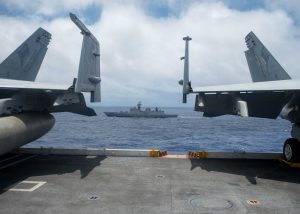
India will supply a second batch of BrahMos supersonic cruise missiles (after the 2022 deal worth $375 million) and is finalising the transfer of one additional Kilo-class submarine and a frigate-grade vessel. The two navies will conduct annual exercises in the South China Sea, sending a calibrated signal to Beijing.
Main Analysis
Semiconductors and rare earths
Vietnam, a top-10 global rare-earth holder, has agreed to a joint Critical Minerals Working Group with India. A consortium led by Tata-VinFast will co-invest in a $1.5 billion fabrication unit in Da Nang, supporting India’s Semiconductor Mission and Vietnam’s electronics manufacturing push.
Civil nuclear cooperation
Vietnam, which restarted its nuclear power programme in 2025, will receive Indian technical assistance, training and PHWR-design consultation under a separate agreement with the Department of Atomic Energy. This is the third country (after Sri Lanka and Bangladesh) to engage with India’s PHWR pathway.
Indo-Pacific signalling
The joint statement explicitly referenced ‘respect for UNCLOS 1982 and freedom of navigation in the South China Sea’ — language closely mirroring the Quad’s positions and quietly directed at Beijing. A new direct flight Hanoi–Bengaluru launches in July; visa-on-arrival for Vietnamese tourists has been extended to 60 days.
🎯 Key Takeaways
- Enhanced CSP — India’s top bilateral category, now held by only 4 countries
- Trade: $16 bn (current) → $25 bn (2030 target)
- Defence focus: BrahMos batch 2, additional Kilo-class submarine, joint SCS naval drills
- Critical minerals + semiconductor manufacturing — $1.5 bn fab unit in Da Nang
- Joint statement language on UNCLOS + ‘freedom of navigation’ = quiet China-balancing posture
📚 Glossary
- Act East Policy
- India’s foreign policy doctrine renamed in 2014 (from Look East), deepening engagement with ASEAN and East Asian nations beyond trade to include defence and cultural diplomacy.
- UNCLOS
- UN Convention on the Law of the Sea (1982); cornerstone treaty governing maritime boundaries, Exclusive Economic Zones (EEZ), and freedom of navigation.
- Enhanced CSP
- India’s diplomatic hierarchy: Strategic → Comprehensive Strategic → Enhanced Comprehensive Strategic. Each tier brings deeper defence-industrial integration.
- BrahMos
- Indo-Russian joint-venture supersonic cruise missile (Mach 2.8–3.0); export version sold to the Philippines (2022) and Vietnam (2026).
Test Yourself — 10 MCQs
Attempt the 10-question quiz below. Answers and explanations reveal after each click.
Practice Quiz — 10 CLAT-Style Questions
Click an option to reveal the answer and explanation.
CLAT Gurukul · By Ready For Exam · Bihar’s premier coaching for CLAT 2027 · Mentor Helpline: 7033005444