CURRENT AFFAIRS | MAY 18, 2026
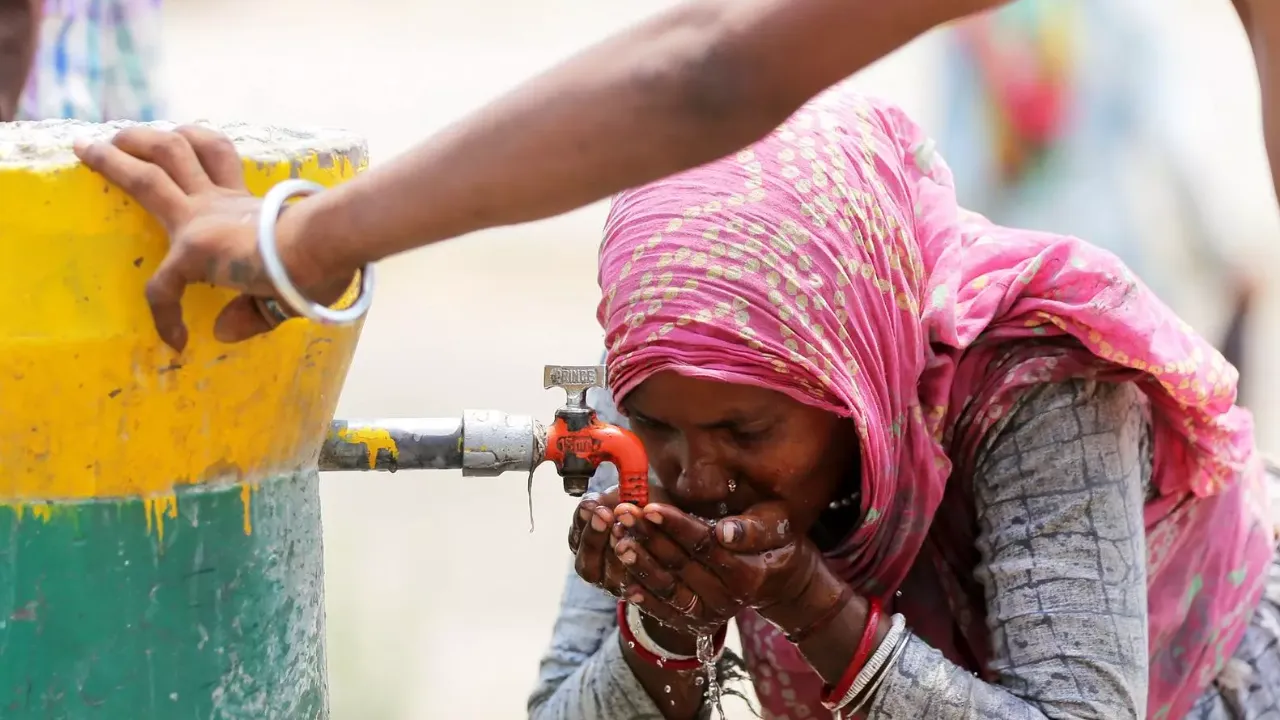
Four years into Jal Jeevan Mission (JJM), the Union government has closed a costly loophole. New Operational Guidelines 2.0, issued after the Union Cabinet extended the mission to March 2028, list 11 categories of inadmissible expenditure — most importantly, the long-controversial “tender premium” (the amount a bidder quotes above the estimated cost) is no longer reimbursable from the Centre’s share. The audit trail is sharp: ₹16,839 crore in cost escalation across 14,586 schemes — a 14.58% rise over estimated cost. For CLAT 2027, this is a cooperative-federalism story with constitutional, statutory and SDG dimensions.
What Changed: From JJM 1.0 to JJM 2.0
Jal Jeevan Mission was launched on 15 August 2019 with a 2024 target of Har Ghar Jal. The Cabinet has now extended the deadline to March 2028. With the extension came Operational Guidelines 2.0, which insert tender premium, vehicles, tea/coffee, pandal charges, construction of office or conference halls, guest houses, residential buildings, FDI in funds, expenditure beyond sanctioned cost without prior approval, salary payments beyond cadre strength, O&M expenses, and the use of mission funds for urban/sectoral water-supply revenue into the inadmissible list.
Constitutional & Statutory Framework
- Article 282: Centre’s power to make grants for any public purpose — constitutional basis for centrally sponsored schemes.
- Article 280: Finance Commission recommends devolution.
- Article 243G + Eleventh Schedule, Entry 11: Drinking water as a Panchayati Raj subject.
- 73rd Constitutional Amendment, 1992: Constitutionalised Panchayati Raj (effective 24 April 1993).
- National Water Policy, 2012: Prioritises safe drinking water.
- SDG 6: Clean Water & Sanitation by 2030.
CLAT Angle — Federalism + Fiscal Devolution
- Cost-sharing pattern: 50:50 with most States; 90:10 with NE & Himalayan States; 100% for UTs without legislature.
- Cooperative federalism debate — can the Centre unilaterally tighten reimbursement criteria mid-mission?
- Public trust doctrine over groundwater (M.C. Mehta v Kamal Nath).
- State Water Mission and Village Water & Sanitation Committee (VWSC) as Gram Panchayat sub-committee.
Key Facts Table
| Mission launched | 15 August 2019 |
| Implementing ministry | Ministry of Jal Shakti |
| New deadline | March 2028 (FY28) |
| Centre’s share so far | ~₹2.08 lakh crore (Phase 1) |
| Cost escalation flagged | ₹16,839 cr / 14.58% |
| Schemes audited | 14,586 |
Mnemonic — TENDER
Tender premium banned · Extended to 2028 · No cost-escalation Centre-funds · Devolution recalibrated · Eleven new inadmissibles · Recurring O&M restrictions
Test Yourself — 10 MCQs on Jal Jeevan Mission 2.0
Practice Quiz — 10 CLAT-Style Questions
Click an option to reveal the answer and explanation.