CURRENT AFFAIRS | 17 JUNE 2026
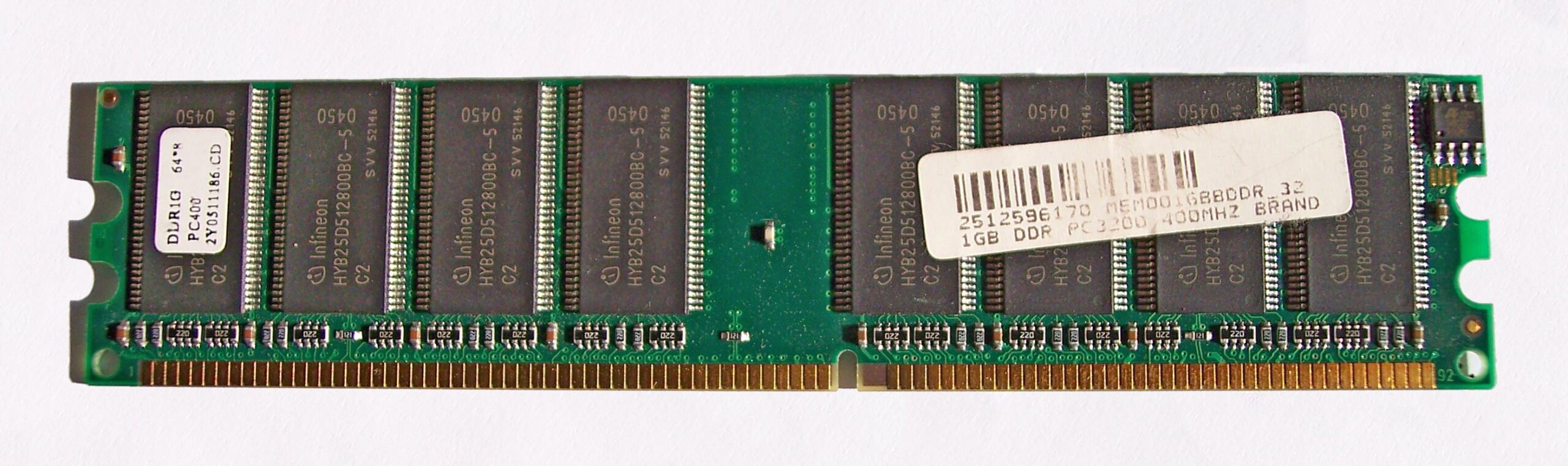
A quiet but persistent price rise across nine everyday gadgets – refrigerators, air conditioners, washing machines, smartphones, laptops, televisions, electric batteries, earphones and pen drives – has a single common cause: memory chips. Specifically, the price of DRAM (Dynamic Random Access Memory) has been climbing for months, and because these items, though only about 1% of India’s Consumer Price Index (CPI) basket, are bought by millions, the increase is now nudging headline retail inflation.
The root driver is the global Artificial Intelligence investment super-cycle. Demand for AI servers – powered by chips from companies such as Nvidia – has exploded, and these servers need HBM (High Bandwidth Memory). To make more HBM, leading manufacturers (TSMC, Samsung and SK Hynix) have diverted fabrication capacity away from ordinary DRAM, tightening supply just as consumer demand recovers. The result is a textbook supply-side squeeze: less DRAM available for phones and laptops, so its price rises and feeds through into final goods.
The scale is striking. Gartner estimates a 130% surge in combined DRAM and SSD prices by end-2026, with PC prices up about 17% and smartphone prices up about 13% versus 2025. Counterpoint Research projects that by the fourth quarter of 2026, memory could make up roughly 43% of the bill of materials (BOM) of a sub-Rs 20,000 smartphone. With CPI inflation already around 3.94%, even a 1%-weight category matters when it rises this sharply. In effect, consumers are “quietly paying for the AI boom” – a vivid example of how a global technology cycle transmits into domestic prices, a transmission mechanism the Reserve Bank of India’s Monetary Policy Committee must watch.
Inflation is a sustained rise in the general price level, measured in India chiefly by the CPI (retail, the RBI’s target) and the WPI (wholesale). Under the flexible inflation-targeting framework, the RBI’s Monetary Policy Committee (MPC) sets the repo rate to keep CPI inflation within a 4% (+/-2%) band. Supply-side, imported, cost-push pressures – like a global chip shortage – are harder for monetary policy to tame than demand-side inflation. The India Semiconductor Mission is the policy response aimed at building domestic chip capacity and reducing such import dependence.
This story bundles several high-yield current-affairs and static themes: CPI vs WPI, the RBI-MPC’s inflation-targeting mandate, supply chains, and the India Semiconductor Mission. Expect questions on the difference between cost-push and demand-pull inflation, on who sets the repo rate, and on report-issuing bodies (Gartner, Counterpoint). The “AI super-cycle feeding inflation” angle is exactly the kind of cause-and-effect reasoning CLAT’s GK and quantitative passages reward.
| Core component | DRAM (Dynamic Random Access Memory) |
| Items affected | 9 electronics (fridge, AC, washing machine, smartphone, laptop, TV, battery, earphones, pen drive) |
| Share of CPI basket | About 1% |
| Gartner estimate | 130% surge in DRAM+SSD prices by end-2026 |
| Price impact | PC +17%, smartphone +13% vs 2025 |
| AI server memory | HBM (High Bandwidth Memory) |
| Key suppliers | TSMC, Samsung, SK Hynix |
| CPI inflation | About 3.94% |
Remember “D-R-A-M” = Demand for AI, Re-routed capacity to HBM, A 1% basket, Monetary policy can’t fix supply-side. The chip that stores your data is now storing inflation too.
Why This Matters for CLAT: The episode is a clean illustration of how globalisation transmits price shocks – a single technology boom on one continent raises a consumer’s electricity-and-electronics bill on another. For CLAT 2027 aspirants it ties micro (BOM cost of a phone) to macro (headline CPI and RBI policy), trains you to separate supply-side from demand-side inflation, and reinforces why India’s Semiconductor Mission is framed as strategic, not merely industrial.
Practice Quiz — 10 CLAT-Style Questions
Click an option to reveal the answer and explanation.