CURRENT AFFAIRS | 31 JULY 2026
The Union Cabinet has approved a ₹3,030-crore Central Sector Scheme called BHAVYA-Rasayan — short for Bharat Audyogik Vikas Yojana (Rasayan) — to set up three greenfield chemical parks across the country. Announced in the Union Budget for FY 2026-27 and cleared by the Cabinet, the scheme is a fresh push to make India a manufacturing hub for chemicals and to cut its heavy import dependence. For CLAT aspirants, it is a rich scheme-and-economy story that also tests a favourite polity distinction: Central Sector vs Centrally Sponsored Schemes.
What exactly has been approved?
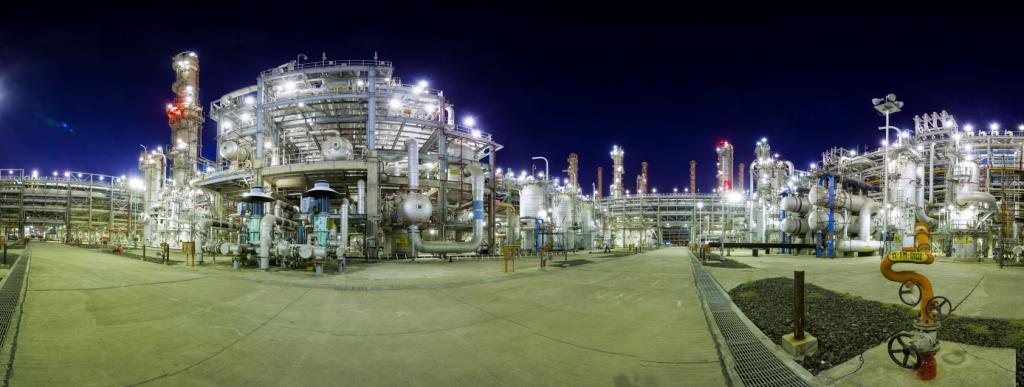
BHAVYA-Rasayan will facilitate the creation of three dedicated chemical parks — large industrial clusters where chemical and petrochemical units share common infrastructure like effluent treatment, utilities, roads and logistics. The scheme carries a total outlay of ₹3,030 crore (₹3,000 crore for common infrastructure and basic utilities inside the parks, plus ₹30 crore for administration) and will run for five years, from FY 2026-27 to FY 2030-31.
The parks will be developed by State Governments through a Challenge Route (states compete on the strength of their proposals). The Centre will provide a grant of up to ₹1,000 crore per park, subject to a minimum contribution of ₹500 crore by the concerned State Government. Each park must have a minimum contiguous, encumbrance-free area of about 8 sq km (roughly 2,000 acres).
Why chemicals, and why parks?
India is a net importer of chemicals, running a persistent trade deficit in the sector despite being a large consumer. Bulk drugs, specialty chemicals, petrochemical intermediates and agrochemicals are often imported — frequently from a single dominant supplier — creating supply-chain vulnerability. Clustering manufacturers in dedicated parks lowers costs (shared utilities and effluent treatment), speeds up approvals, and creates the scale needed to plug India into global value chains. The model draws on the earlier PCPIR concept — Petroleum, Chemicals and Petrochemical Investment Regions — such as those at Dahej (Gujarat), Visakhapatnam (Andhra Pradesh) and Paradeep (Odisha).
BHAVYA-Rasayan is a Central Sector Scheme — meaning it is 100% funded by the Union Government and implemented on subjects within the Union’s domain. This differs from a Centrally Sponsored Scheme, where the Centre and States share costs in a fixed ratio (e.g. 60:40). Here, the State’s mandatory ₹500-crore minimum contribution is a design choice reflecting cooperative federalism, not a cost-sharing formula. Industrial development and trade sit largely in the Union and Concurrent domains, and schemes like this operate under the government’s Make in India / Atmanirbhar Bharat policy framework rather than a specific statute.
Central Sector vs Centrally Sponsored — the exam favourite
This is where the polity marks lie. A Central Sector Scheme (CSS-central) is fully financed by the Union and usually covers subjects in the Union List; examples include schemes run directly by central ministries. A Centrally Sponsored Scheme is jointly funded by the Centre and States (e.g. MGNREGA, PM Awas Yojana, Samagra Shiksha), typically on subjects in the State or Concurrent Lists, with the Centre setting guidelines and the States implementing.
BHAVYA-Rasayan is a Central Sector Scheme — the ₹1,000-crore central grant per park is Union money — but the requirement that States chip in at least ₹500 crore and lead the actual park development gives it a cooperative, federal flavour.
Why the chemical sector is strategic
Chemicals are the invisible foundation of a modern economy. Pharmaceuticals depend on bulk drugs and intermediates; agriculture relies on fertilisers, pesticides and agrochemicals; textiles, paints, plastics, electronics and automobiles all consume specialty and commodity chemicals. India is among the world’s largest chemical markets, yet it imports a significant share of these inputs — often from a single dominant supplier — which exposes domestic industry to price shocks and supply disruptions.
By building integrated chemical parks, the government hopes to create economies of scale: shared effluent-treatment plants and utilities lower the cost and environmental burden for each unit, plug-and-play plots cut project timelines, and clustering anchors and ancillary units together strengthens the whole value chain. This is the same logic that made industrial clusters — from Tiruppur’s textiles to Gujarat’s petrochemicals — globally competitive.
The environmental and execution challenge
Chemical manufacturing is pollution-intensive, so these parks must be designed with robust environmental safeguards — common effluent treatment, hazardous-waste handling and buffer zones — under laws like the Environment (Protection) Act, 1986 and the Water and Air Acts, with clearances from pollution-control boards. Land acquisition, local consent and community concerns about health and safety will shape how smoothly the parks come up. The scheme’s success will ultimately hinge on state execution — acquiring encumbrance-free land, building infrastructure on time, and attracting credible anchor investors to make the clusters viable.
CLAT loves the Central Sector vs Centrally Sponsored distinction — it appears in polity/finance passages and static GK alike. A passage may describe BHAVYA-Rasayan and ask you to classify it, or to apply a rule such as “in a Central Sector Scheme, the Union bears the full cost” to a hypothetical. You should also be ready for the greenfield vs brownfield distinction, and the logic of the PLI/Make in India philosophy — using targeted government support to build domestic manufacturing capacity and reduce import reliance.
Expected benefits
The government expects the scheme to promote development across the entire chemical value chain — upstream (raw materials), downstream (finished products) and ancillary industries — while attracting both domestic and foreign investment, expanding production capacity, and generating employment. If successful, it would reduce the chemical trade deficit and strengthen India’s position in a strategically important sector.
| Scheme | BHAVYA-Rasayan (Bharat Audyogik Vikas Yojana – Rasayan) |
| Type | Central Sector Scheme (100% Union-funded) |
| Outlay | ₹3,030 crore |
| Parks | 3 greenfield chemical parks |
| Central grant | Up to ₹1,000 cr/park (State min. ₹500 cr) |
| Period | FY 2026-27 to FY 2030-31 |
The bigger picture
BHAVYA-Rasayan fits a wider pattern of industrial-policy schemes — Production-Linked Incentives, semiconductor missions, bulk-drug parks — that use targeted state support to build domestic capacity in sectors where India has historically depended on imports. The chemical sector, foundational to pharmaceuticals, agriculture, textiles and manufacturing, is a logical candidate. Whether the parks deliver will depend on state execution, land acquisition and the ability to attract anchor investors.
“BHAVYA-Rasayan = ₹3,030 cr • 3 chemical parks • ₹1,000 cr/park • Central Sector.” Think of the three 3s: 3,030 crore, 3 parks, and a 30-31 finish year (FY 2030-31). And the split: Centre up to ₹1,000 cr, State at least ₹500 cr per park.
It is also worth placing the scheme in its budgetary context. Announced in the Union Budget for FY 2026-27 and cleared by the Cabinet soon after, BHAVYA-Rasayan reflects a deliberate shift from broad, thinly-spread subsidies toward targeted, infrastructure-led industrial policy — spending public money on the shared backbone (roads, utilities, effluent treatment) that private investors will not build alone, then letting industry bring the capital and jobs. Whether this crowds in the intended domestic and foreign investment will be the real test of the “Challenge Route” model, in which states must compete with credible, investor-ready proposals.
For CLAT, anchor the numbers (₹3,030 crore, 3 parks, ₹1,000 cr Centre / ₹500 cr State) and the classification (Central Sector Scheme), and connect the scheme to the Make in India / Atmanirbhar Bharat narrative and the chemical trade deficit it is designed to close.
Practice Quiz — 10 CLAT-Style Questions
Click an option to reveal the answer and explanation.