CURRENT AFFAIRS | MARCH 24, 2026
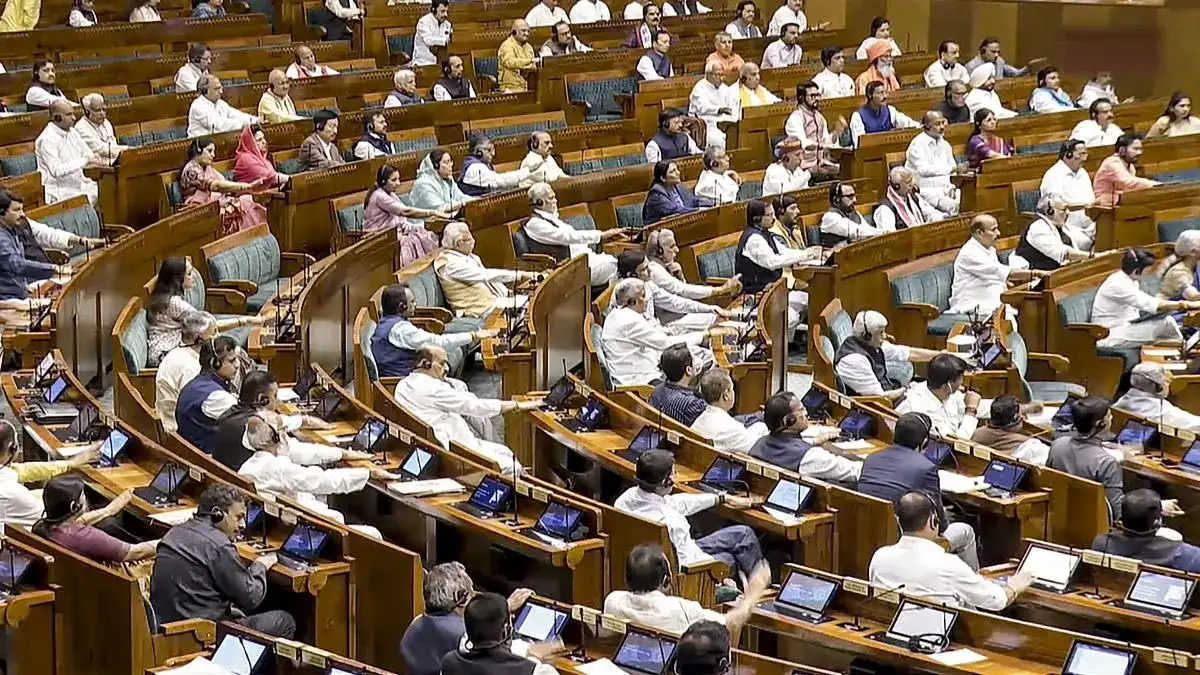
The Union Government has proposed expanding Lok Sabha from 543 to 816 seats, a historic move that will reshape India’s representative democracy. Under the Nari Shakti Vandan Adhiniyam (106th Constitutional Amendment), one-third of all seats are reserved for women, meaning approximately 270 seats could go to women candidates — the largest gender quota in Indian parliamentary history. The delimitation will be based on Census 2011 data.
⚖️ Constitutional & Legal Framework
- Article 81 — Composition of Lok Sabha, total seats, allocation among states by population
- Article 170 — Composition of State Legislative Assemblies, also affected by delimitation
- 106th Amendment — Inserted Articles 330A and 332A for women’s reservation in Parliament and state legislatures
- 84th Amendment (2001) — Froze delimitation based on 1971 Census until first census after 2026
- Rajbala v. State of Haryana (2015) — SC upheld reasonable restrictions on right to contest elections
Southern states like Tamil Nadu, Kerala, and Karnataka fear losing their relative seat share because their population growth has been slower than northern states — a consequence of successful family planning. Opposition parties including SP, TMC, and DMK have raised concerns about the delimitation methodology. The constitutional backbone lies in Articles 81 and 170, and the 84th Amendment that froze delimitation until 2026.
🎯 CLAT Angle — Why This Matters
Virtually guaranteed in CLAT 2027. GK: Number of seats, amendment number, delimitation basics. Legal Reasoning: Tension between equal representation and federalism, how constitutional amendments interact with delimitation. RC: North-south equity debate editorials.
📋 Key Facts at a Glance
| Expansion | 543 → 816 Lok Sabha seats |
| Women’s reservation | 106th Amendment — one-third seats (~270) for women |
| Delimitation basis | Census 2011 data |
| Freeze ended | 84th Amendment froze delimitation on 1971 Census until 2026 |
| New Articles | 330A and 332A for women’s reservation |
Key Terms and Definitions
| Term | Definition |
|---|---|
| Delimitation Commission | Statutory body that redraws constituency boundaries based on census data |
| Nari Shakti Vandan Adhiniyam | 106th Amendment providing one-third reservation for women in legislatures |
| 84th Amendment (2001) | Froze seat allocation based on 1971 Census until after 2026 |
| Federal Equity | Principle that delimitation should balance population-based representation with fair treatment of lower-growth states |
🧠 Mnemonic — “WOMEN” for Lok Sabha Expansion
Women’s 1/3 reservation • One-oh-sixth Amendment • More seats (543→816) • Eighty-fourth froze delimitation • North-south equity debate
Practice Quiz — 10 CLAT-Style Questions
Click an option to reveal the answer and explanation.
📰 Source: The Indian Express, 24 March 2026 • CLAT Gurukul Daily Current Affairs