CURRENT AFFAIRS | 08 OCTOBER 2026
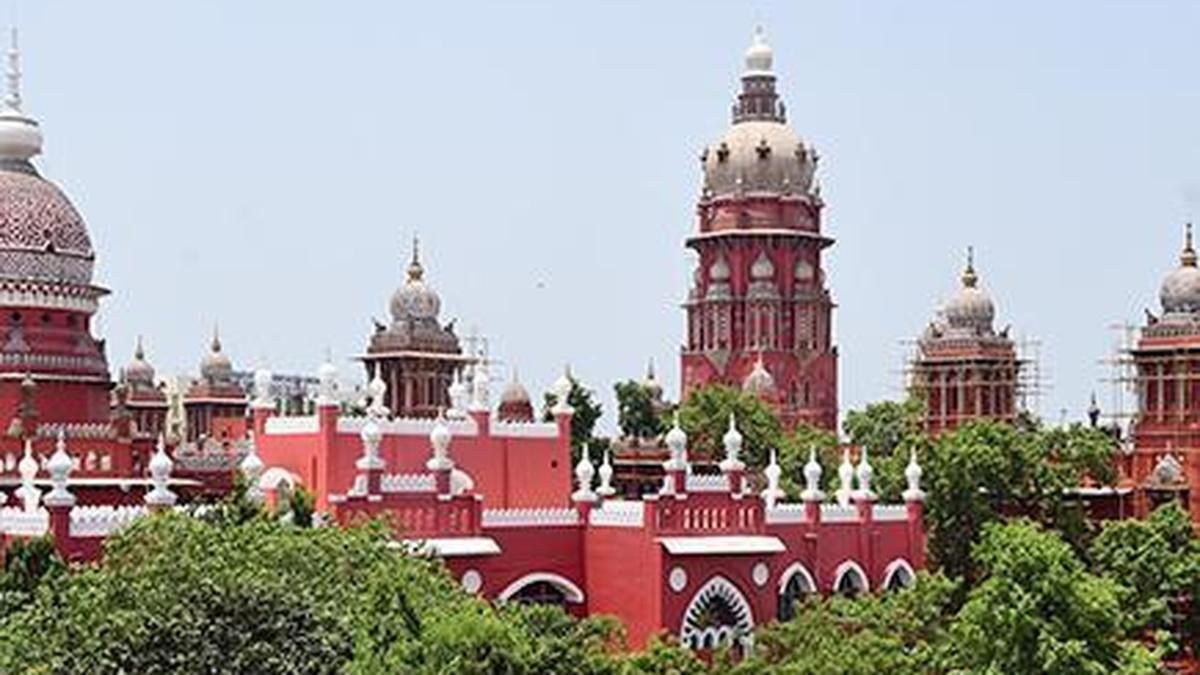
The Madras High Court has held that a person who borrows from a bank, or stands guarantor for someone else’s loan, does not thereby “mortgage” his constitutional rights with the bank. Justice V. Lakshminarayanan made the observation while dismissing an application filed by Bank of Baroda seeking review of his 24 August 2026 order, which had revoked a Look Out Circular (LOC) issued against Kondepati Ganga Prasad, a guarantor for a high-value loan availed by GVR Infra Projects. The ruling was reported by The Hindu in its edition dated Thursday, 8 October 2026.
The core of the judgment is a short but powerful constitutional syllogism. The right to travel abroad is part of “personal liberty” under Article 21, as the Supreme Court declared in Maneka Gandhi v Union of India (1978). Any restriction on that right must be imposed “in accordance with law”. And, in the judge’s words as reported by The Hindu, “the term ‘law’ under Article 21 implies a legislation” — so a letter written by a bank manager to the Bureau of Immigration cannot be treated as “law”.
What the High Court said
The Court was concerned about where a contrary rule would lead. If a nationalised bank could obtain an LOC by a letter, the judge reasoned, every private creditor or non-banking finance company would be emboldened to approach the police to stop its debtors from leaving the country. He framed the dispute as a “catch-22”: the guarantor wanted to go abroad to earn money and repay the debt on his return, while the bank insisted that he repay first and travel later. “If the bank wants the money, the petitioner has to earn it,” the Court noted, adding that this “vicious circle has to be broken.”
The judgment also made a commercial point. No business is started with the intention of making a loss, and a bank, when it lends, knows that some loans will become sticky or turn into Non-Performing Assets (NPAs). The judge observed that Bank of Baroda even maintains a separate stressed accounts branch for such loans.
Decisively, the Court recorded the bank’s own submission that it had not lodged any criminal complaint of fraud against the guarantor with the Central Bureau of Investigation or the State police, and that even the bank officials who cleared the loan had not been prosecuted. The judge read this as an acknowledgement that the loan was a business decision. Where there is no fraud, he concluded, the mere fact that a person is a defaulter cannot be used to force him to stay “within the four corners of this country” until the money is repaid.
Constitutional / Legal Framework
Article 21 provides that no person shall be deprived of his life or personal liberty except according to procedure established by law. Two Supreme Court decisions build the right to travel abroad on this text. In Satwant Singh Sawhney v D. Ramarathnam (1967), the Court held that the right to travel abroad is part of personal liberty, so the executive could not refuse a passport at its unguided discretion; Parliament responded with the Passports Act, 1967. In Maneka Gandhi v Union of India (1978), decided after the impounding of a passport under that Act, the Court held that the “procedure” contemplated by Article 21 must itself be just, fair and reasonable, and read Articles 14, 19 and 21 together. Earlier, in Kharak Singh v State of Uttar Pradesh (1962), the Court had held that police regulations without statutory backing were not “law” for the purpose of curtailing personal liberty. A Look Out Circular is an administrative alert, issued on the request of an authorised agency, asking immigration authorities to detain or report a person at a border checkpoint; it is not itself an Act of the legislature. A review of a High Court’s own order is a narrow remedy, ordinarily confined to an error apparent on the face of the record or a similar sufficient reason — it is not a re-hearing of the case.
Why the word “law” carries so much weight
Article 21 does not say that liberty can never be curtailed. It says liberty may be curtailed only according to procedure established by law. The entire contest, therefore, is over what counts as “law”. The Madras High Court has adopted a strict reading: a restriction on a fundamental freedom must trace back to legislation, not to an executive or institutional letter. This is the same logic that animated Kharak Singh — the State cannot invade personal liberty through instruments that the legislature never enacted.
The ruling also turns on proportionality between the interest and the restriction. A bank has a legitimate interest in recovering its money, and the legal system gives it civil and statutory routes to do so. But stopping a person from leaving the country is a coercive measure usually associated with criminal investigation. When the bank itself had not alleged fraud before any investigating agency, the Court found no basis for treating a civil debt as though it were a criminal matter.
Analysis: debt, liberty and the creditor’s reach
The judgment draws a clear line between two kinds of liability. A civil liability — a debt owed under a contract of loan or guarantee — binds a person’s money and property. It does not, without more, bind his body or his movement. A criminal liability — for instance, an allegation of fraud under investigation — may justify restrictions on movement, because the State has an interest in securing the accused’s presence for trial. By recording that no fraud complaint had been lodged, the Court placed the case firmly in the first category.
The judge’s remark that debtors should not be “thrown at the mercy of wolves of creditors” reflects a broader concern about private power. Fundamental rights are primarily enforced against the State. If State machinery — the Bureau of Immigration — can be set in motion merely by a creditor’s letter, then private commercial interests effectively acquire a power over citizens’ liberty that the Constitution reserves to properly enacted law. That, in essence, is why the Court emphasised that constitutional rights do not end when a mortgage begins.
The decision should not be over-read. It does not say that a loan defaulter can never be prevented from travelling, nor that banks lack remedies. It says that, on these facts — a guarantor, no fraud alleged, no criminal complaint, and a restriction resting on a bank official’s letter — the restriction failed the Article 21 test. In a CLAT passage, that distinction between a holding and its limits is often exactly what an option tests.
The CLAT Angle
Expect this as a Legal Reasoning passage built on a principle such as: “No person shall be deprived of personal liberty except according to procedure established by law; ‘law’ means legislation enacted by a competent legislature.” Facts will then test application: (a) a bank manager writes to immigration authorities to stop a defaulting guarantor — not “law”, so the restriction fails; (b) a statute expressly authorises a court to restrain travel of a person accused of fraud — that is “law”, so the restriction can stand if the procedure is fair. Watch for traps: the principle as stated in the passage governs, not your outside knowledge; and the absence of a fraud complaint was a key fact, so an option ignoring it is likely wrong. In GK, pair Maneka Gandhi (1978) with Satwant Singh Sawhney (1967) and the Passports Act, 1967.
Static GK links worth revising
Article 21 sits in Part III of the Constitution and is available to all persons, citizens and non-citizens alike. Article 19(1)(d) guarantees citizens the freedom to move freely throughout the territory of India; travel abroad is therefore located in Article 21 rather than Article 19(1)(d). Maneka Gandhi is also remembered as the case that read Articles 14, 19 and 21 together, a link students often call the “golden triangle”. The Bureau of Immigration functions under the Ministry of Home Affairs and manages immigration checks at India’s ports of entry and exit.
Key Facts
- Court: Madras High Court; Judge: Justice V. Lakshminarayanan.
- Application: review application by Bank of Baroda — dismissed.
- Order under review: dated 24 August 2026, revoking a Look Out Circular.
- Person affected: Kondepati Ganga Prasad, a guarantor for a loan to GVR Infra Projects.
- Right involved: right to travel abroad, part of personal liberty under Article 21.
- Key precedent cited: Maneka Gandhi v Union of India (1978).
- Core holding: “law” under Article 21 implies legislation; a bank manager’s letter to the Bureau of Immigration is not law.
- Fact relied on: the bank had lodged no criminal complaint of fraud with the CBI or State police.
- Phrase to remember: loanees do not mortgage their constitutional rights with banks.
- Related cases: Satwant Singh Sawhney (1967); Kharak Singh (1962).
- Related statute: Passports Act, 1967.
Memory Hook / Mnemonic
“A LETTER IS NOT LAW” — the bank manager’s letter cannot do what only legislation can. Chain the cases by year: 62 → 67 → 78 = Kharak Singh (regulations are not law) → Satwant Singh (travel abroad is liberty) → Maneka Gandhi (procedure must be fair). And the headline: a mortgage pledges property, not the Constitution.
Practice Quiz — 10 CLAT-Style Questions
Click an option to reveal the answer and explanation.