CURRENT AFFAIRS | 16 MAY 2026
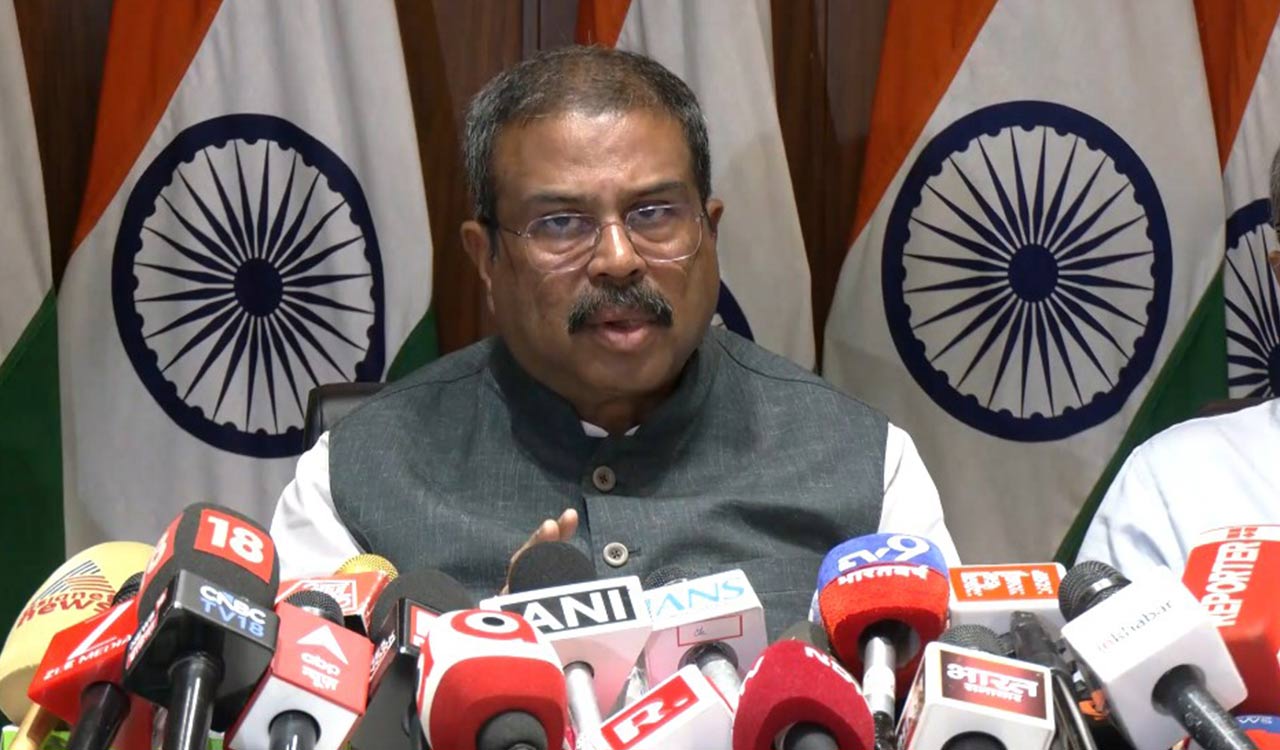
Education Minister Dharmendra Pradhan announced on Friday, 15 May 2026 that the National Eligibility cum Entrance Test (NEET-UG) will move to a fully computer-based testing (CBT) format from the 2026-27 admission cycle. The announcement comes against the backdrop of a fresh paper-leak investigation in Pune and the CBI’s April 2026 arrest of retired lecturer P V Kulkarni of Dayanand Junior College, Latur. Over 22 lakh candidates have registered for the 2026 NEET-UG retest on 21 June, with admit cards released on 14 June.
The shift is anchored in the recommendations of the K Radhakrishnan committee — chaired by the former ISRO chief and constituted by the Centre in 2024 after the NEET-UG paper-leak controversy. The committee concluded that pen-and-paper testing ‘increases potential leakages’ and recommended a secure CBT framework with biometric verification and isolated servers.
Constitutional & Statutory Framework
- Article 21A: Free and compulsory education for children 6-14 (86th Amendment, 2002) — courts have read this with Article 21 to cover meaningful access to higher education entrance examinations.
- National Testing Agency: NTA was set up in November 2017 as an autonomous society under the Societies Registration Act, 1860 — it is NOT a statutory body, a recurring CLAT distractor.
- Public Examinations (Prevention of Unfair Means) Act, 2024: Criminalises leaks, impersonation, and organised cheating in central exams; penalties up to 10 years imprisonment and Rs 1 crore fine.
- NEP 2020: Paragraph 4.42 calls for reducing ‘high stakes’ of board and entrance exams and pivoting to competency-based testing.
- Modern Dental College v State of MP (2016): Constitution Bench upheld NEET as a reasonable restriction under Articles 19(1)(g) and 30, aligned with the right to health under Article 21.
Why This Matters for CLAT 2027
CLAT examiners increasingly fuse Polity + Legal Reasoning passages around examination governance. Likely angles:
- Legal reasoning passage on whether NTA’s CBT switch is justiciable, with the principle of legitimate expectation and Articles 14/19(1)(g).
- Polity MCQ on the status of NTA (autonomous society, NOT statutory) and which ministry administers it.
- GK MCQ on the 2024 Public Exams (Unfair Means) Act and its penalties.
- Current affairs cross-link with the CBI’s role under the Delhi Special Police Establishment Act, 1946 in the P V Kulkarni Pune arrest.
Key Facts at a Glance
| Item | Detail |
|---|---|
| Announcement date | 15 May 2026 |
| Minister | Education Minister Dharmendra Pradhan |
| Effective from | NEET-UG 2026-27 cycle |
| Committee | K Radhakrishnan committee (constituted 2024) |
| 2026 retest | 21 June 2026; admit cards 14 June |
| Candidates | Over 22 lakh |
| CBI arrest | Retired lecturer P V Kulkarni, Pune (April 2026) |
CLAT Memory Mnemonic — “C-B-T R-E-A-D-Y”
CBT framework (servers + biometric) — Biometric verification — Twenty-four (2024) Unfair Means Act — Radhakrishnan committee — Education Minister Dharmendra Pradhan — Article 21A backdrop — Dayanand Junior College link (P V Kulkarni) — Year of effect 2026-27.
Quick CLAT Drill
Test your hold over the NEET CBT transition, NTA’s legal status, and the 2024 Public Exams (Unfair Means) Act with 10 CLAT-style MCQs.
Practice Quiz — 10 CLAT-Style Questions
Click an option to reveal the answer and explanation.
Sources: Press Information Bureau release dated 15 May 2026; The Hindu, The Tribune and LiveLaw reports on the K Radhakrishnan committee and CBI Pune arrest.