CURRENT AFFAIRS | 31 JULY 2026
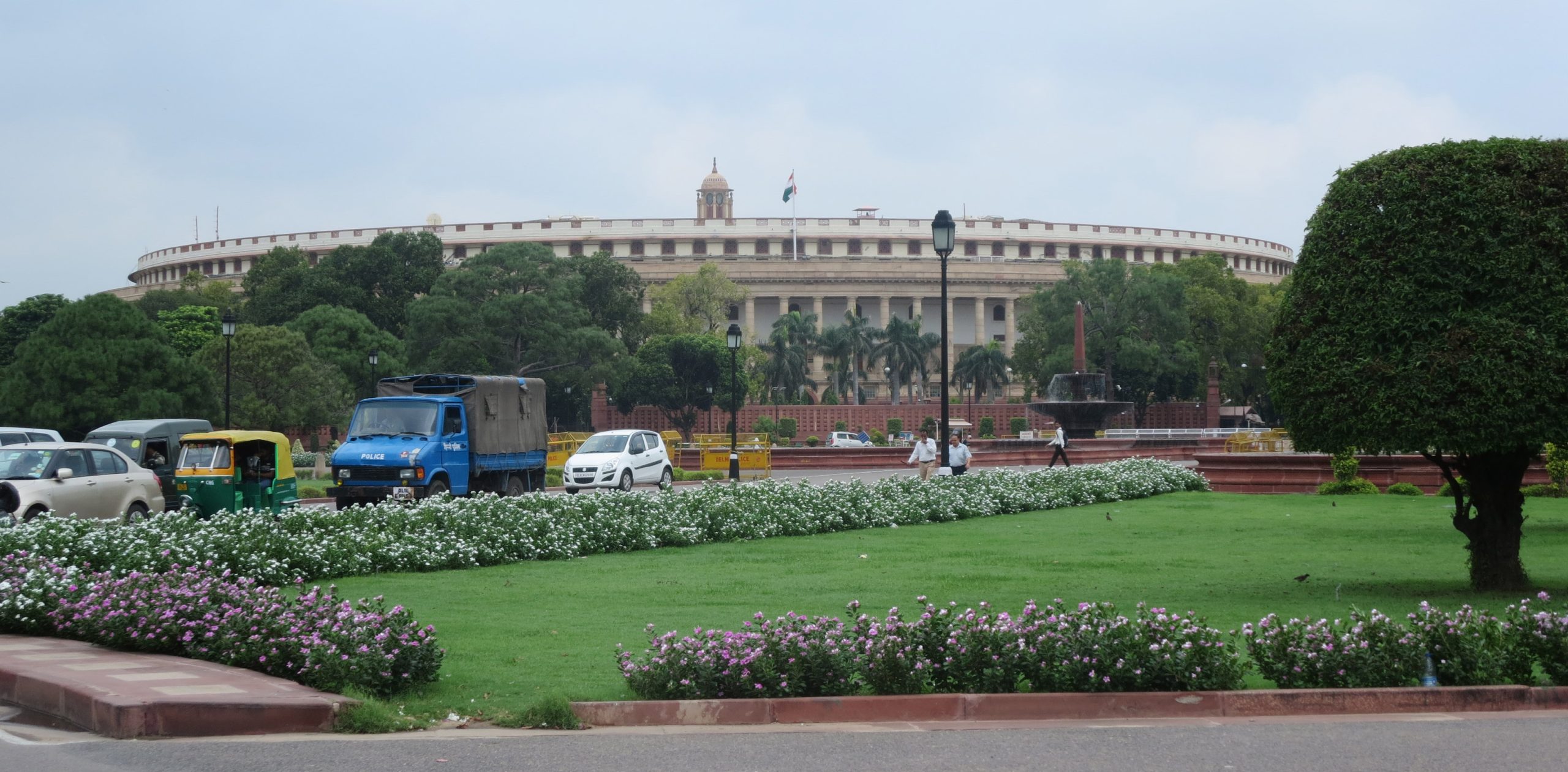
On 31 July 2026, the Lok Sabha passed the Public Examinations (Prevention of Unfair Means) Amendment Bill, 2026, sharpening the teeth of the country’s anti-paper-leak law. The amendment does not create a brand-new statute; it tightens the parent Public Examinations (Prevention of Unfair Means) Act, 2024 — the law Parliament rushed through after the NEET-UG 2024 question-paper leak triggered nationwide outrage among aspirants. The 2026 changes push penalties higher, empower fast-track and special courts, and mandate speedy trials so that offenders are punished before the exam cycle they corrupted is even forgotten.
For a CLAT aspirant, this is a near-perfect current-affairs item: it sits at the intersection of criminal-law classification, the legislative process by which a Bill becomes an Act, and the delicate centre–state balance in law-making. Let us unpack why the 2024 Act mattered, what the 2026 amendment adds, and how examiners are likely to test it.
Why the 2024 Act exists
Public recruitment and entrance examinations — conducted by bodies such as the Union Public Service Commission (UPSC), the Staff Selection Commission (SSC), the Railway Recruitment Boards (RRB), banking’s IBPS, and the National Testing Agency (NTA) which runs NEET and CUET — determine the futures of millions of young Indians every year. A single leaked question paper can wipe out months of honest preparation and hand an unearned advantage to those who pay for it. After a string of leaks culminating in the NEET-UG 2024 controversy, Parliament enacted the Public Examinations (Prevention of Unfair Means) Act, 2024, which received Presidential assent on 12 February 2024 and came into force on 21 June 2024.
The Act’s central design choice is how it classifies the offence of using or facilitating unfair means. Under Section 9, these offences are cognizable, non-bailable and non-compoundable. Each of those three words carries heavy legal weight, and CLAT loves to test exactly this vocabulary.
Constitutional / Legal Framework
A cognizable offence is one where the police may register an FIR and begin investigation — and arrest — without prior permission of a magistrate. A non-bailable offence is one where bail is not a matter of right; it lies in the discretion of the court. A non-compoundable offence cannot be settled or “withdrawn” through a compromise between the accused and the victim — the State prosecutes it to conclusion. By stamping paper-leak crimes with all three labels, the 2024 Act signalled zero tolerance. The Bill itself travelled the ordinary legislative route under Articles 107–108: introduced and passed by both Houses of Parliament, then sent for Presidential assent under Article 111.
What the 2026 Amendment changes
The 2024 Act already prescribed serious punishment. For an individual candidate or facilitator resorting to unfair means, imprisonment runs from three to five years along with a fine of up to ₹10 lakh. Where the malpractice is an organised crime — a syndicate of exam officials, service providers or coaching operatives acting in concert — imprisonment can extend to ten years and the fine to ₹1 crore. Default in paying the fine attracts additional imprisonment under the Bharatiya Nyaya Sanhita, 2023.
The 2026 amendment builds procedural muscle on top of this. Its headline features are: (i) enhanced penalties and stiffer minimum sentences to remove any perception of a soft option; (ii) the designation of special/fast-track courts to try these offences, so that cases do not languish for years; and (iii) statutory timelines pushing for speedy trials. The logic is deterrence through certainty and swiftness of punishment, not merely its severity. This mirrors the recommendations of the High-Level Committee chaired by former ISRO chief K. Radhakrishnan, set up to reform the NTA and exam-security architecture after 2024.
The CLAT Angle
Expect a legal-reasoning passage that states the principle — “offences under the Act are cognizable and non-bailable” — and then asks you to apply it to a fact pattern: can the police arrest a suspected leaker without a warrant? (Yes.) Is bail his right? (No.) Can the aggrieved board “compound” the matter privately? (No.) A second favourite is the Bill-to-Act process: since this is an ordinary Bill, it needs a simple majority in both Houses and assent — it is not a Money Bill and does not need a special majority. Finally, watch for the federalism hook: this is a central/model law, yet several states (Rajasthan, Gujarat, Uttar Pradesh) retain their own anti-cheating statutes for state-level exams.
The federalism dimension
Public order and police are State subjects, and states conduct their own recruitment and board examinations. The central Act therefore functions as a model law covering examinations of central agencies and Union public-sector bodies, while leaving states free to legislate on their own exams. Rajasthan’s anti-cheating law, for instance, prescribes life imprisonment in the most egregious cases. The 2026 amendment does not disturb this division; it strengthens the Union’s own framework. For an aspirant, the takeaway is that India’s response to paper leaks is a two-layered one — a central statute plus a patchwork of state laws — reflecting the cooperative-federal character of the Constitution.
Institutions in the frame
Two institutions recur in this story. The first is the National Testing Agency (NTA), the autonomous body that conducts NEET-UG, CUET and other high-stakes tests, whose credibility the reforms are meant to restore. The second is the proposed National Recruitment Agency (NRA) and its Common Eligibility Test (CET) concept, intended to consolidate preliminary recruitment screening. Together they represent the administrative side of exam integrity, while the 2024 Act and its 2026 amendment supply the deterrent, criminal-law side.
Key Facts
| Parent Act | Public Examinations (Prevention of Unfair Means) Act, 2024 |
| Assent / in force | 12 Feb 2024 / 21 June 2024 |
| Trigger event | NEET-UG 2024 paper leak |
| Nature of offence | Cognizable, non-bailable, non-compoundable |
| Individual penalty | 3–5 yrs jail + up to ₹10 lakh fine |
| Organised crime | Up to 10 yrs + up to ₹1 crore fine |
| 2026 additions | Fast-track/special courts, speedy trials, higher penalties |
How a leak becomes a crime: the mechanics
It helps to see how the Act defines the wrong. “Unfair means” is drawn broadly to cover leakage of a question paper or answer key, unauthorised access or communication of exam material, tampering with computer systems or OMR sheets, impersonation, conducting fake examinations, and manipulating merit lists or seat allotment. Importantly, the law targets not just the errant candidate but the ecosystem around organised cheating — examination-service providers, printing presses, and officials who collude. The concept of “organised crime” — where an unlawful act is committed by a person or group in furtherance of a shared conspiracy — is what unlocks the harshest penalties and the attachment of property. By criminalising the supply chain rather than only the end-user, the statute tries to break the economics of the leak market itself.
Why it matters for the aspirant of 2027
Beyond the exam hall, the amendment speaks to a constitutional value: the right to equality of opportunity in public employment and education. When a leak lets a few buy their way past millions, it corrodes the meritocratic promise on which competitive examinations rest. The legal system’s answer — classify the crime severely, deny easy bail, refuse compromise settlements, and now fast-track the trial — is a study in how criminal-law tools are marshalled to protect a public good. That is precisely the kind of reasoning CLAT rewards.
Memory Hook / Mnemonic
“LEAK → 2024 Act → 2026 tightens.” Remember the three-letter shield the offence wears: C-N-N — Cognizable, Non-bailable, Non-compoundable. And the 2026 upgrade adds F for Fast-track courts. So: “CNN reports, then the case goes Fast.”
The Public Examinations (Prevention of Unfair Means) Amendment Bill, 2026 is a compact but rich topic. It lets you revise the anatomy of a criminal offence, rehearse the Bill-to-Act journey, and appreciate the federal texture of Indian law-making — all through a story that touches every aspirant personally. Study it as a template for how “current affairs” and “static law” fuse in a good CLAT question.
Practice Quiz — 10 CLAT-Style Questions
Click an option to reveal the answer and explanation.