CURRENT AFFAIRS | 26 SEPTEMBER 2026
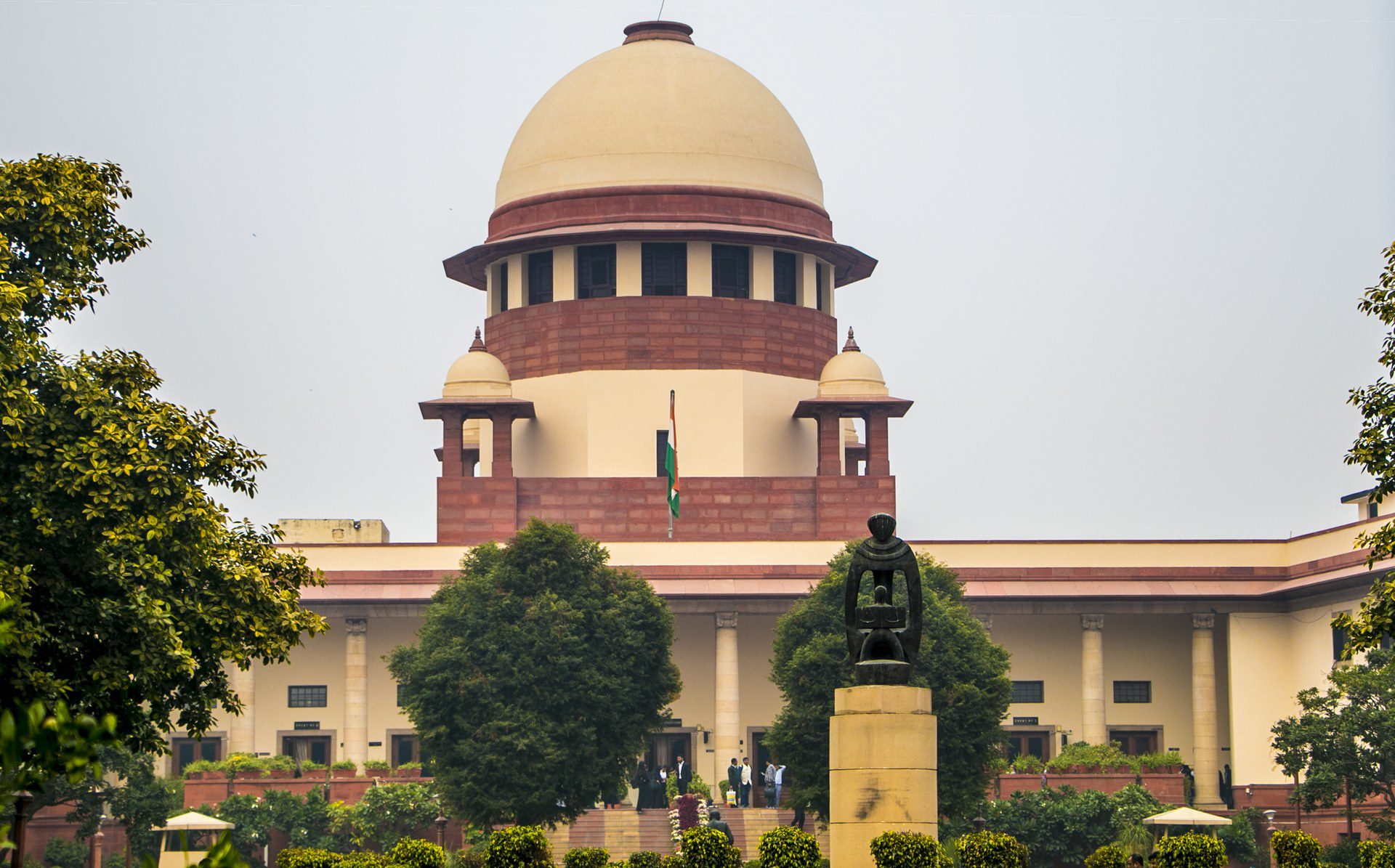
On 23 September 2026 a two-judge Bench of the Supreme Court comprising Justice Dipankar Datta and Justice Satish Chandra Sharma delivered a split verdict on whether the challenge to the Chief Election Commissioner and Other Election Commissioners (Appointment, Conditions of Service and Term of Office) Act, 2023 should be sent to a larger Bench. The lead matter is Dr. Jaya Thakur v. Union of India, reported by SCC Online as 2026 SCC OnLine SC 1980. The Union government had asked that the petitions be referred to a larger Bench. Justice Datta declined that request; Justice Sharma accepted it. Because the two judges disagreed, the Bench directed that the papers be placed before the Chief Justice of India to consider constituting an appropriate Constitution Bench to decide the validity of the law, principally Section 7 of the 2023 Act.
The order carried a second, institutional message. According to the SCC Online report, the Bench urged that the Court explore setting up a permanent five-judge Bench to decide pure constitutional issues, observing that references had been pending for periods “between 5 and 20 years or more” and that such pendency “does not reflect well on the institution”. For a CLAT aspirant, the day therefore offers two lessons at once: one on the independence of the Election Commission of India (ECI) under Article 324, and one on how the Supreme Court organises itself to answer constitutional questions under Article 145(3).
What the CEC appointment Act does
The 2023 Act is the first comprehensive parliamentary law on how the Chief Election Commissioner (CEC) and the other Election Commissioners (ECs) are chosen. It replaced the earlier Election Commission (Conditions of Service of Election Commissioners and Transaction of Business) Act, 1991, which dealt with service conditions but not with the selection process. Three provisions are under challenge, as summarised by SCC Online:
- Section 6 – a Search Committee prepares a panel of names for the Selection Committee to consider.
- Section 7 – the Selection Committee consists of the Prime Minister (Chairperson), the Leader of Opposition in the Lok Sabha, and a Union Cabinet Minister nominated by the Prime Minister. The President appoints on its recommendation.
- Section 8(2) – the Selection Committee may consider persons outside the panel prepared by the Search Committee.
The core grievance of the petitioners is that the Act removed the Chief Justice of India from the selection panel that the Supreme Court itself had put in place in 2023, and replaced that seat with a Cabinet Minister. On the petitioners’ reading, the executive now holds two of three votes on the committee.
Constitutional / Legal Framework
Article 324(1) vests the “superintendence, direction and control” of elections to Parliament, State Legislatures and the offices of President and Vice-President in the Election Commission. Article 324(2) says the Commission consists of the CEC and such number of ECs as the President may fix, and that the appointments are made by the President “subject to the provisions of any law made in that behalf by Parliament”. For more than seven decades no such law existed, so appointments were made on the advice of the Union Council of Ministers.
Article 324(5) protects the CEC’s tenure: the CEC can be removed only in the manner and on the grounds applicable to a Supreme Court judge. The other ECs cannot be removed except on the CEC’s recommendation.
In Anoop Baranwal v. Union of India, (2023) 6 SCC 161, a five-judge Constitution Bench held that, until Parliament made a law, appointments would be made on the advice of a committee of the Prime Minister, the Leader of Opposition in the Lok Sabha (or the leader of the largest Opposition party) and the Chief Justice of India. Parliament then enacted the 2023 Act, which is the law now under challenge.
Article 145(3) requires a minimum of five judges to decide any case involving a substantial question of law as to the interpretation of the Constitution, or to hear a Presidential reference under Article 143.
The split: two routes to the same Constitution Bench
The two judges were not deciding whether the 2023 Act is valid. They were deciding a procedural question: should this Bench of two hear the challenge itself, or should it go to a larger Bench? That distinction is easy to miss in headlines and is precisely the kind of detail a CLAT question can test.
Justice Datta declined to refer the matter. On his view, existing precedent already settles that free and fair elections are part of the basic structure of the Constitution and that this requires the ECI to be insulated from exclusive executive control at the stage of appointment. Bar & Bench reported that he described the role of the Leader of Opposition on the committee as effectively “ornamental”, because the Prime Minister and the nominated Minister together form a 2:1 majority. He also, according to the reports, expressed the prima facie view that the Act did not appear to guarantee an independent selection process. These were observations made in the course of deciding the reference question, not a final ruling on validity.
Justice Sharma took the opposite view on the procedural question. He held that the petitions raise a substantial question of law on the constitutional validity of a parliamentary statute and are therefore fit for consideration by a Bench of five judges — the reasoning that tracks Article 145(3).
When a two-judge Bench is evenly divided, neither view prevails, and the ordinary course is to place the matter before the Chief Justice, who as “master of the roster” decides which Bench will hear it. That is exactly what the order directs. The practical result is that the constitutional question will now be framed for a larger Bench, and it will be for the CJI to decide its composition and timing.
Why the permanent Constitution Bench suggestion matters
The Bench’s second observation goes beyond the Election Commission. The Supreme Court usually sits in Division Benches of two or three judges and assembles five-, seven- or nine-judge Benches as and when references accumulate. This means constitutional questions compete with the daily docket of appeals and special leave petitions. The judges noted, as quoted by SCC Online, that deciding constitutional questions is “the primary task of Judges” and that references pending for years reflect an institutional problem.
The CLAT Angle
Expect a legal-reasoning passage built on three ideas: (1) Article 324(2) makes appointments “subject to” a law of Parliament; (2) Anoop Baranwal filled a vacuum only “until” Parliament legislated; (3) basic structure review can still test whether that law secures independence. A likely question: “Once Parliament enacts a law under Article 324(2), does the interim judicial arrangement automatically continue?” The principled answer is no — a court-made stop-gap ends when the legislature acts, but the new law remains open to constitutional challenge.
A second pattern tests procedure: a split two-judge Bench does not decide the case either way; the matter goes to the CJI. Watch for distractor options that treat Justice Datta’s observations as a final judgment striking down the Act — that would be wrong.
Static GK links
Mohinder Singh Gill v. Chief Election Commissioner (1978) is the classic authority describing Article 324 as a reservoir of plenary power that operates where parliamentary or statutory law is silent — though that power must be exercised consistently with any law actually made. Anoop Baranwal drew on the same idea of legislative vacuum in 2023.
The Election Commission was set up on 25 January 1950, a day before the Constitution came into force; that date is now observed as National Voters’ Day. The Commission functioned as a single-member body for most of its early history; it became a multi-member body in 1989, reverted briefly to a single member in 1990, and has been a three-member Commission since 1993. The first CEC was Sukumar Sen, who conducted the first general elections of 1951–52.
Analysis: separating the three questions
Commentary on this case tends to merge three separate questions, and a careful reader should keep them apart.
First, competence. Parliament clearly has power to make a law on appointments — Article 324(2) expressly contemplates it. No one seriously disputes that the subject belongs to Parliament.
Second, content. The live question is whether the specific design chosen — a committee where two of three members come from the government — satisfies the constitutional demand for an independent Commission. This is where basic-structure arguments about free and fair elections come in, and where Justice Datta’s prima facie observations sit.
Third, forum. Which Bench should decide the second question? This is the only question the 23 September order actually answered — and it answered it by disagreement, sending the matter to the CJI.
There is also a policy tension worth noting neutrally. Some argue that judges should not sit on panels that appoint members of other constitutional bodies, since the judiciary may later review those very appointments. Others argue that a neutral third member is the simplest guarantee of perceived independence. Reports on the order suggest that Justice Datta engaged with and rejected a “judges appointing judges” line of argument; the final answer on the design will come only from the Constitution Bench.
Key Facts
- Date of order: 23 September 2026.
- Bench: Justice Dipankar Datta and Justice Satish Chandra Sharma.
- Lead case: Dr. Jaya Thakur v. Union of India, 2026 SCC OnLine SC 1980.
- Law challenged: CEC and Other ECs (Appointment, Conditions of Service and Term of Office) Act, 2023.
- Provisions challenged: Sections 6, 7 and 8(2).
- Section 7 committee: PM (Chair) + LoP in Lok Sabha + Cabinet Minister nominated by PM.
- Justice Datta: declined reference; Justice Sharma: favoured reference.
- Outcome: papers placed before the CJI to consider a Constitution Bench.
- Bench also urged a permanent five-judge Bench for constitutional questions.
- Anoop Baranwal (2023): interim committee of PM, LoP and CJI until Parliament legislated.
- Article 145(3): minimum five judges for substantial questions of constitutional interpretation.
- Article 324(5): CEC removable only like a Supreme Court judge.
What to watch next
The next procedural step lies with the Chief Justice: whether and when a Constitution Bench is constituted, and whether questions are formally framed for it. A second thread to watch is administrative — whether the Court acts on the suggestion of a standing Constitution Bench. For exam purposes, the essential point is that the 2023 Act remains in force; no court has struck it down, and the split order is about who will decide, not what has been decided.
Memory Hook / Mnemonic
“324 → 2023 → 145(3)”: 324 creates the Commission and invites a law; 2023 is both the year of Anoop Baranwal and of the Act; 145(3) sends the question to five judges.
Committee under Section 7 = “P-L-M”: Prime Minister, Leader of Opposition, Minister. Baranwal was “P-L-C” (C for CJI). The swap of C → M is the whole dispute.
Practice Quiz — 10 CLAT-Style Questions
Click an option to reveal the answer and explanation.