CURRENT AFFAIRS | 16 JULY 2026
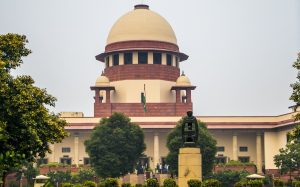
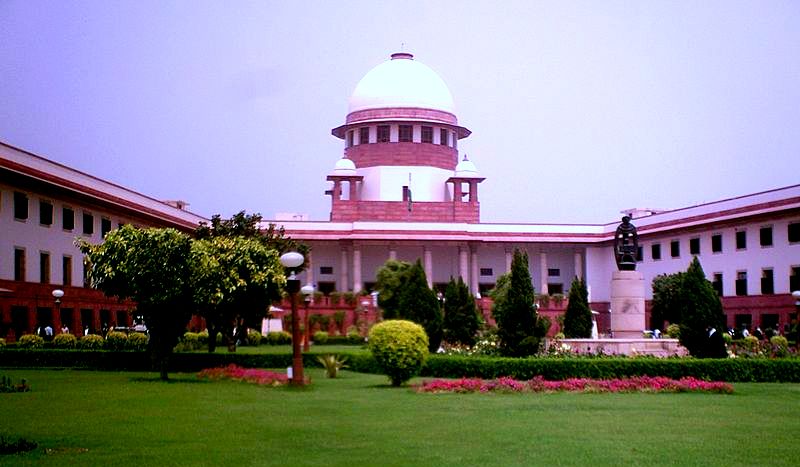
The Supreme Court has agreed to consider framing a Standard Operating Procedure (SOP) that would let litigants approach constitutional courts during off-duty and after-court hours in urgent matters touching life and personal liberty. The move could reshape how the justice system responds to emergencies that do not wait for the cause list.
A three-judge Bench headed by Chief Justice Surya Kant, sitting with Justices Joymalya Bagchi and V. Mohana, was hearing a plea by advocate Maharavish Rein. The petition argued that a person facing an imminent threat to liberty — an unlawful detention, a deportation, or an execution scheduled at short notice — must have a workable route to the court even when its doors are officially shut.
At the heart of the discussion lies Article 32(4), which the Bench expressly invoked: the right guaranteed by Article 32 “shall not be suspended except as otherwise provided for by this Constitution.” The clause anchors the idea that the constitutional remedy is robust and cannot be casually defeated. The Court was careful to frame the issue not as a demand for round-the-clock litigation, but as a graded criterion for access — separating matters that can wait for working hours from genuine emergencies that cannot.
The petition draws on a deeper constitutional stream. Article 21 protects life and personal liberty, and the Supreme Court has repeatedly held that access to justice is itself an intrinsic facet of Articles 21 and 14. If liberty can be lost at any hour, the remedy to protect it — the writ jurisdiction under Article 32 — must be capable of responding at any hour too. Dr B.R. Ambedkar famously called Article 32 the “heart and soul” of the Constitution precisely because it converts paper rights into enforceable ones.
An SOP would give concrete shape to this principle: designated duty judges, registry protocols, and clear thresholds for what qualifies as a life-and-liberty emergency. The Court’s willingness to examine the question signals a maturing view that procedural design, not just doctrine, determines whether fundamental rights are real.
🏛️ Constitutional / Legal Framework
- Article 32: Right to constitutional remedies; empowers the Supreme Court to issue writs to enforce fundamental rights.
- Article 32(4): The right under Article 32 shall not be suspended except as otherwise provided by the Constitution.
- Article 21: Protection of life and personal liberty — the substantive right at stake in urgent matters.
- Article 14: Equality before law, the second limb of the access-to-justice guarantee.
- Access to justice: Judicially recognised as intrinsic to Articles 21 and 14, requiring effective, not merely formal, remedies.
⚖️ Why This Matters for CLAT
This is a textbook fundamental-rights intersection: the writ jurisdiction of Article 32, the non-suspension guarantee of Article 32(4), and access to justice as a facet of Articles 21 and 14. CLAT frequently tests the ‘heart and soul’ description of Article 32 and the difference between a right being available and a right being effectively enforceable. Expect application questions on midnight-hearing scenarios.
📌 Key Facts
| What the SC will consider | An SOP for after-hours access to constitutional courts |
| Matters covered | Urgent cases involving life and personal liberty |
| Bench | CJI Surya Kant, Justices Joymalya Bagchi & V. Mohana |
| Petitioner | Advocate Maharavish Rein |
| Key provision cited | Article 32(4) — non-suspension of the remedy |
| Underlying right | Article 21 (life and personal liberty) |
| Framing | Graded criterion for access, not denial of access |
By treating the timing of court access as a rights question rather than a scheduling one, the Court is edging towards a system where the promise of liberty does not lapse when the clock strikes five.
🧠 Memory Aid
“Liberty keeps no office hours” — Article 21 rights demand Article 32 remedies at any hour, and Article 32(4) keeps that remedy from being switched off.
Practice Quiz — 10 CLAT-Style Questions
Click an option to reveal the answer and explanation.