CURRENT AFFAIRS | 12 JUNE 2026
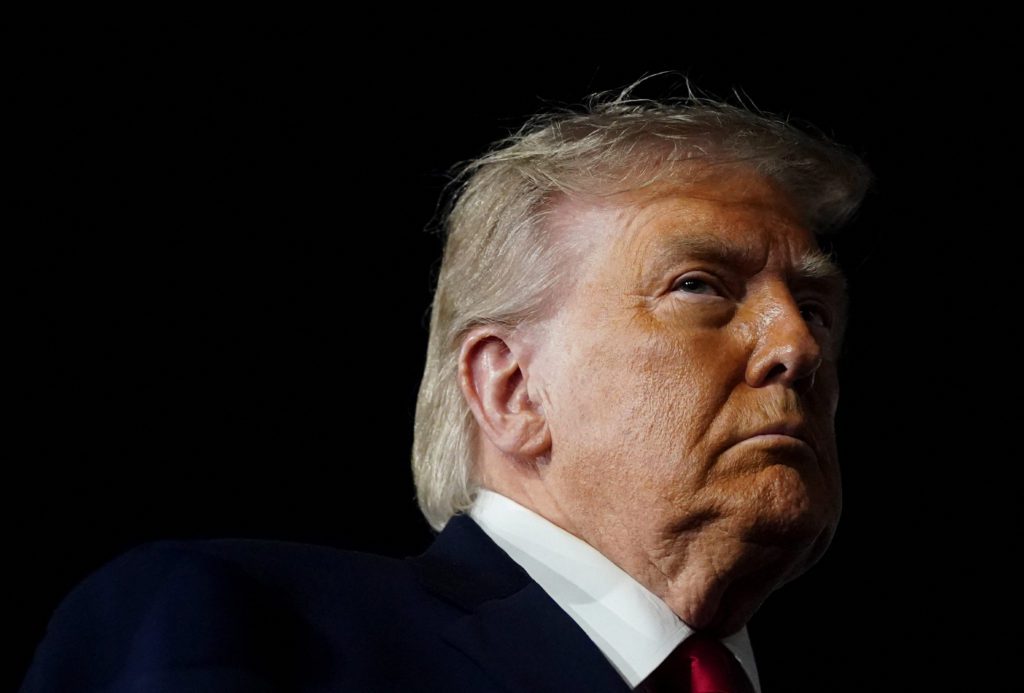
In a dramatic turn that gripped global diplomacy, US President Donald Trump called off renewed American military strikes on Iran at the last minute on Thursday, declaring that negotiations had reached “the highest level of Iran’s leadership.” For CLAT aspirants, this is more than a headline about war and peace; it is a live case study in international law, maritime chokepoints and India’s delicate balancing act in West Asia.
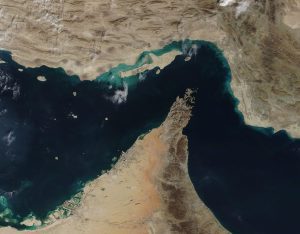
The flashpoint is the Strait of Hormuz, the narrow waterway through which nearly a fifth of the world’s oil flows. As tankers came under fire near Oman and hundreds of Indian seafarers found themselves in harm’s way, the crisis tied together threads of the UN Convention on the Law of the Sea, India’s energy security and the safety of its vast Gulf diaspora.
Questions on global chokepoints, transit passage and India’s strategic posture are perennial favourites in the GK and Current Affairs section. This episode rewards students who understand not just what happened, but the legal architecture beneath it.
What Happened
President Trump said he halted the strikes because talks had advanced to the top of Iran’s leadership and were backed by a “broad coalition of regional powers,” with “all parties” having approved. Tehran offered no immediate response. The pause came against the backdrop of a tense naval standoff in which US forces had struck three vessels accused of moving Iranian oil amid a blockade.
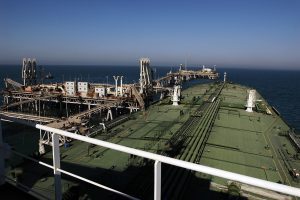
The human cost reached India directly. An earlier US strike on the Palau-flagged tanker MT Settebello killed three Indian seafarers. A third strike, on the Guinea-Bissau-flagged MT Jalveer, saw US CENTCOM fire Hellfire missiles at the engine room, but all 20 Indian crew were rescued safely. With roughly 562 Indian seafarers on ships near Hormuz, New Delhi watched anxiously.
- US President Donald Trump called off strikes citing talks at “the highest level of Iran’s leadership.”
- Three tankers struck near Oman; MT Settebello strike killed three Indian seafarers; all 20 aboard MT Jalveer rescued.
- ~562 Indian seafarers were near the Strait (329 in the Persian Gulf, 233 in the Gulf of Oman).
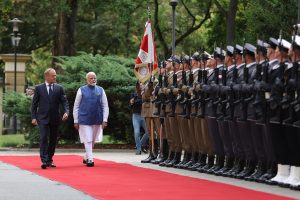
- PM Narendra Modi and President Trump are set to meet at the G7 Summit in France (June 13-16).
- The Strait of Hormuz carries ~20% of global oil; narrowest point ~21 nautical miles.
Constitutional / Legal Framework
The governing instrument is the UN Convention on the Law of the Sea (UNCLOS), 1982. Through international straits like Hormuz, vessels enjoy the right of transit passage, which crucially cannot be suspended by the coastal state. This is stronger than innocent passage through the territorial sea, which a coastal state may temporarily suspend. The Strait connects the Persian Gulf to the Gulf of Oman and the Arabian Sea, making it one of the world’s most critical maritime chokepoints. India’s response reflects its doctrine of strategic autonomy and its “Look/Link West” policy.
CLAT Angle
For CLAT 2027, expect questions distinguishing transit passage from innocent passage, identifying global chokepoints (Hormuz, Malacca, Bab-el-Mandeb, Suez), and on India’s “strategic autonomy.” A passage-based GK set may pair the map fact (Hormuz links the Persian Gulf to the Gulf of Oman) with a static legal fact (UNCLOS 1982) that is deliberately not stated in the passage, rewarding wider reading.
Key Facts
| Item | Detail |
|---|---|
| Waterway | Strait of Hormuz (~21 nautical miles narrowest) |
| Oil transit share | ~20% of global oil |
| Tanker (3 Indians killed) | MT Settebello (Palau-flagged) |
| Tanker (20 Indians rescued) | MT Jalveer (Guinea-Bissau-flagged) |
| Indian seafarers near Strait | ~562 (329 Persian Gulf, 233 Gulf of Oman) |
| Upcoming meeting | Modi-Trump at G7, France, June 13-16 |
| Governing law | UNCLOS 1982 (transit passage) |
Mnemonic / Memory Hook
“HORMUZ = Highest-leadership talks, Oil 20%, Rescued (Jalveer 20), Modi-Trump G7, UNCLOS transit, Z21 nautical miles.” And to lock the law: Transit can’t be suspended; innocent can. Think “Transit is Tough, Innocent is Interruptible.”
Conclusion
The Hormuz crisis shows how a single chokepoint can entangle great-power diplomacy, the law of the sea and the lives of Indian sailors. For aspirants, mastering UNCLOS distinctions and India’s strategic posture turns a frightening headline into reliable exam marks.
Practice Quiz — 10 CLAT-Style Questions
Click an option to reveal the answer and explanation.