CURRENT AFFAIRS | 25 MAY 2026
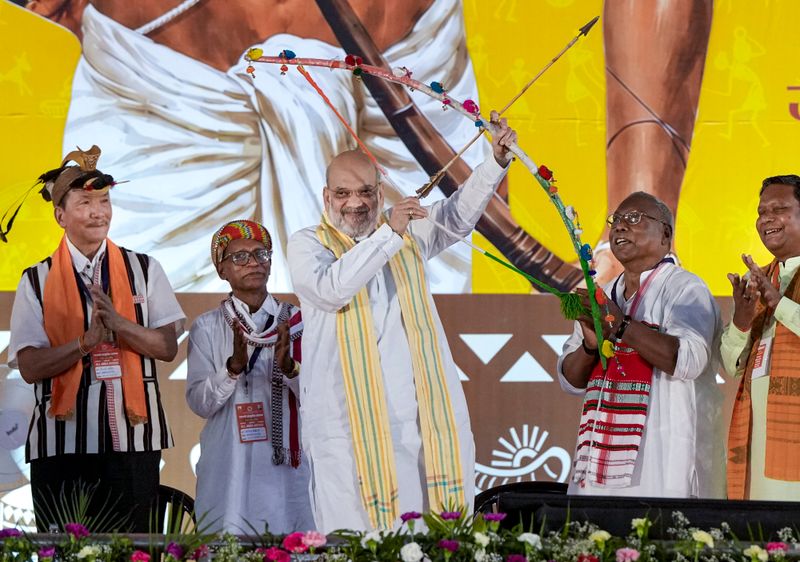
On 24 May 2026, at the Janjati Suraksha Samagam held at the Red Fort grounds in Delhi, Union Home Minister Amit Shah declared that “no provision of the Uniform Civil Code (UCC) will be applicable to tribals” and that the UCC “will not encroach upon the rights, customs and traditions of tribals.” The Samagam — organised by the RSS-linked Janjati Suraksha Manch (JSM) along with the Vanvasi Kalyan Ashram — marked the 150th birth anniversary of Birsa Munda and was attended by an estimated 1.5 lakh people from over 500 tribal groups. JSM also reiterated its long-standing demand for the delisting of converted Christians from the Scheduled Tribe category.
For CLAT 2027 aspirants, the statement is significant because it places the spotlight squarely on the constitutional tension between the Directive Principle of a Uniform Civil Code (Article 44) and the Constitution’s robust architecture for tribal autonomy — the Fifth and Sixth Schedules, PESA, the Forest Rights Act and Articles 25–29.
Constitutional & Legal Framework
- Article 44 (DPSP) — State shall endeavour to secure a Uniform Civil Code for the citizens throughout the territory of India.
- Articles 25 & 26 — Freedom of religion (individuals) and freedom of religious denominations to manage their own affairs.
- Article 29(1) — Protects the right of any citizen section to conserve its distinct language, script or culture.
- Article 342 — Empowers the President to specify Scheduled Tribes; Parliament alone can include/exclude tribes from the list.
- Article 244 — Special administrative provisions for tribal areas (Fifth Schedule + Sixth Schedule).
- Fifth Schedule — Governance of Scheduled Areas in nine States; Tribes Advisory Council; Governor’s special legislative powers.
- Sixth Schedule, Para 5 — Autonomous District Councils in NE States can administer justice per customary law.
- PESA, 1996 — Extends Part IX (Panchayats) to Scheduled Areas; gram sabha empowered on land alienation, minor forest produce and customary practices.
- Forest Rights Act, 2006 — Recognises individual & community forest rights; gram sabha is the authority.
CLAT 2027 Angle
This story is a goldmine for the Legal Reasoning section. The classic CLAT framing will pit DPSP Article 44 vs Article 29(1) + Sch V/VI customary autonomy. Note how legislative practice already aligns with Shah’s statement — the Uttarakhand UCC, 2024 and the proposed Gujarat UCC Bill, 2025 both expressly exclude Scheduled Tribes from their ambit, recognising that tribal personal law is rooted in custom rather than codified text. Compare with Sabarimala (2018) where Article 25 collided with custom, and TMA Pai (2002) where minority cultural autonomy was robustly protected. Expect a passage asking whether excluding STs from a UCC violates Article 14 (intelligible differentia satisfied — distinct historical and cultural circumstances).
Key Facts Table
| Date | 24 May 2026 |
| Venue | Red Fort grounds, Delhi |
| Speaker | Union HM Amit Shah |
| Organiser | Janjati Suraksha Manch + Vanvasi Kalyan Ashram |
| Occasion | 150th birth anniversary of Birsa Munda |
| Attendance | ~1.5 lakh from 500+ tribal groups |
| Tribal population (2011) | ~10.4 crore (8.6% of India) |
Cases to remember: TMA Pai Foundation v. State of Karnataka (2002), Indian Young Lawyers’ Assn v. State of Kerala — Sabarimala (2018), Samatha v. State of AP (1997), Orissa Mining Corp. v. MoEF — Niyamgiri (2013).
Mnemonic — TRIBAL
- Traditions protected (Article 29)
- Religion safeguarded (Article 25)
- Independence in Schedules V & VI
- Birsa Munda — 150th anniversary trigger
- Article 244 administration of tribal areas
- Left out of UCC by design — Uttarakhand 2024 & Gujarat 2025
Practice Quiz — 10 CLAT-Style Questions
Click an option to reveal the answer and explanation.