
CURRENT AFFAIRS | 12 MAY 2026
CLAT GK + CLAT GK + ECONOMICS & BALANCE OF PAYMENTS
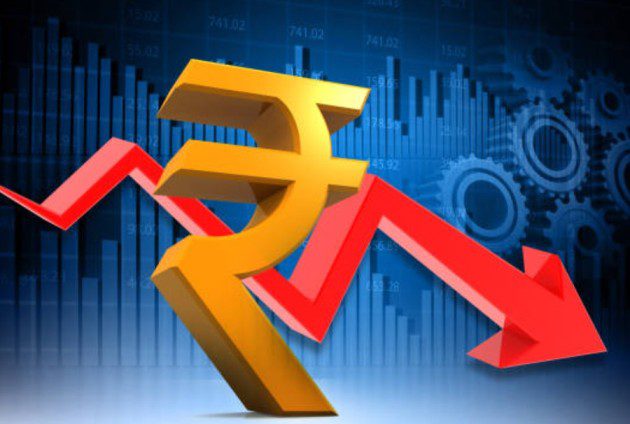
India’s rupee breached the psychologically critical 95 per US dollar mark in May 2026, prompting Prime Minister Narendra Modi to urge citizens to stop buying gold, work from home, cut foreign travel and curb fuel consumption. An Indian Express Explained piece (May 12) frames the call as a defensive measure to protect forex reserves, which have fallen $38 billion in two months since the West Asia conflict erupted. The episode revives memories of mid-2024, when Morgan Stanley labelled India one of the “fragile five” economies — a tag the country had spent a decade shedding.
Beneath the rupee headline lies a more technical squeeze. India’s Capital Account Surplus (CAS) has shrunk as FPI outflows accelerate, while the Current Account Deficit (CAD) has widened to $13.2 billion in Q3 FY26 (~1.3% of GDP). The Reserve Bank of India has deployed its three classical defences — selling dollars in the spot market, raising the repo rate corridor, and tightening the Liberalised Remittance Scheme (LRS). Yet, as classical macro theory predicts, Mundell & Fleming’s “impossible trinity” warns that no economy can simultaneously have free capital mobility, a fixed exchange rate, and an independent monetary policy. India must choose two, sacrifice one.
Constitutional / Legal Framework
Three statutes anchor India’s BoP defence. FEMA 1999 §3 & §6 empower the Centre and RBI to regulate capital and current account transactions — the basis on which the LRS $250,000-per-year cap operates. RBI Act 1934 §17 permits the central bank to intervene in foreign exchange markets and hold foreign assets. The Gold Monetisation Scheme 2015, framed under Section 35A of the Banking Regulation Act 1949, mobilises idle household gold (estimated 25,000 tonnes) at 2.25–2.50% interest to reduce gold imports — currently $72 billion annually. The IMF’s Balance of Payments Manual (6th edition) is the international template India follows for BoP accounting.
Why This Matters for CLAT 2027
CLAT GK passages routinely test BoP arithmetic, CAD vs fiscal deficit confusion, the LRS architecture and Mundell-Fleming theory. Aspirants who can distinguish the Current Account (trade in goods + services + net remittances + investment income) from the Capital Account (FDI + FPI + ECBs + banking capital) will dominate this question category. The “fragile five” coinage by Morgan Stanley’s James Lord in August 2013 (taper tantrum) is a perennial GK trap — note that 2013’s fragile five were Brazil, India, Indonesia, South Africa and Turkey; in 2024 Morgan Stanley re-included India based on twin-deficit concerns. Legal reasoning passages may pair this with FEMA enforcement powers, ED jurisdiction under PMLA 2002, and the constitutional status of RBI as a statutory body (not a constitutional body).
Key Facts at a Glance
| Aspect | Detail |
|---|---|
| Rupee level (May 2026) | Breached Rs 95 per USD |
| Forex reserves drop | $38 billion in 2 months |
| India CAD Q3 FY26 | $13.2 bn (1.3% of GDP) |
| LRS individual cap | $2,50,000 per year (FEMA 1999) |
| Gold import bill (FY26) | Doubled to $72 billion |
| Fragile Five coined | Aug 2013 by Morgan Stanley |
| RBI forex reserves total | ~$691 bn (~10 months import cover) |
Mnemonic
BoP = CA + KA | CAD = M > X | FRAGILE-5 (2013) = Brazil, India, Indonesia, South Africa, Turkey | Trinity = Capital + Fixed FX + Independent Policy (pick 2).
Test Yourself — 10-Question Quiz
Practice Quiz — 10 CLAT-Style Questions
Click an option to reveal the answer and explanation.