CURRENT AFFAIRS | 12 MAY 2026
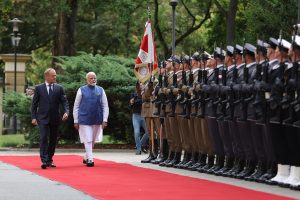
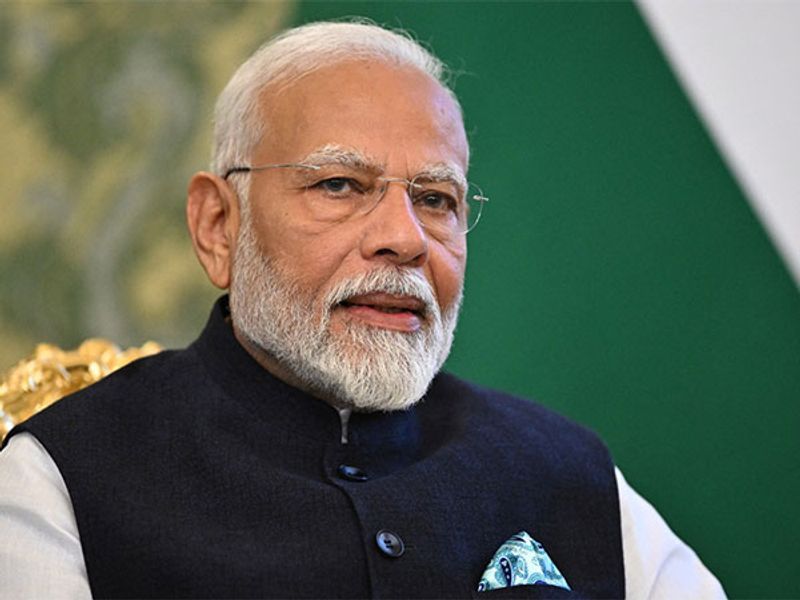
Prime Minister Narendra Modi will join the leaders of Denmark, Finland, Iceland, Norway, and Sweden at the 3rd India-Nordic Summit at Oslo on 19 May 2026. The Summit, hosted this year by Norwegian Prime Minister Jonas Gahr Støre, will be attended by Mette Frederiksen (Denmark), Petteri Orpo (Finland), Kristrun Frostadottir (Iceland), and Ulf Kristersson (Sweden). The agenda spans technology and innovation, green transition, renewable energy, blue economy, defence, space, and the Arctic.
This is the first visit by an Indian Prime Minister to Norway in 43 years. India-Nordic bilateral trade stood at USD 19 billion in 2024; both sides aim to push it past USD 30 billion by 2030 following the India-EFTA Trade and Economic Partnership Agreement (TEPA) signed on 10 March 2024.
Constitutional & Treaty Framework
The Summit itself is a high-level political dialogue and not a treaty body — no founding charter, no permanent secretariat. The Nordic 5 are unified by the Helsinki Treaty 1962 (the Nordic Cooperation Treaty) which created the Nordic Council (an inter-parliamentary body, 1952) and the Nordic Council of Ministers (an inter-governmental body, 1971).
The trade dimension is governed by the India-EFTA TEPA, a free-standing FTA between India and the European Free Trade Association (Switzerland, Norway, Iceland, Liechtenstein). TEPA includes a legally-binding commitment of USD 100 billion in FDI from EFTA to India over 15 years — a first for any Indian trade agreement.
Arctic cooperation is anchored in the Ottawa Declaration 1996 (which created the Arctic Council), UNCLOS 1982 (notably Article 234 on ice-covered areas), and India’s domestic Arctic Policy 2022.
Why CLAT 2027 Cares
This is the cleanest passage-writing material for the IntlOrg + multilateral diplomacy theme this year. The classic CLAT traps live here: “Nordic” vs “Scandinavian” vs “EFTA”. They are three different groupings that overlap on Norway and Iceland but not on the others. Memorising who is in which is exam gold.
Equally testable: the Arctic Council’s 8 Member states, 6 Permanent Participants (representing indigenous communities), and 13 Observer states. India’s seat is as an Observer (since 2013), not a member.
Key Facts — Nordic, EFTA, Arctic Council Compared
| Grouping | Members | Founding Instrument |
|---|---|---|
| Nordic 5 | Denmark, Finland, Iceland, Norway, Sweden | Helsinki Treaty 1962 |
| Scandinavia | Sweden, Norway, Denmark (strict sense) | Geographical, not legal |
| EFTA | Switzerland, Norway, Iceland, Liechtenstein | Stockholm Convention 1960 |
| Arctic Council Members | Canada, Denmark, Iceland, Finland, Norway, Russia, Sweden, USA | Ottawa Declaration 1996 |
| Arctic Council Observers | 13 states incl. India (2013), China, Japan, South Korea, Italy, France, Germany, UK | Approved at Kiruna Ministerial 2013 |
| India-Nordic Summits | 1st Stockholm 2018, 2nd Copenhagen 2022, 3rd Oslo 2026 | Bilateral political dialogue |
| India-EFTA TEPA | Signed 10 Mar 2024; USD 100bn FDI commitment over 15 years | FTA + Investment |
Agenda Pillars at Oslo
Green Hydrogen & Renewable Energy: Norway is the world’s largest exporter of hydropower-based electricity. India’s National Green Hydrogen Mission (2023; USD 2.4 bn outlay) is the natural partner. Joint financing and offtake agreements are expected.
Blue Economy & Maritime: Norway is a global leader in offshore aquaculture, deep-sea mining R&D, and maritime shipping standards. India’s SAGAR (Security and Growth for All in the Region) doctrine and the Indo-Pacific Oceans Initiative (IPOI) pillars on Maritime Resources and Disaster Risk Reduction dovetail neatly.
Arctic: Climate change has made the Arctic geo-strategically critical. India’s Arctic Policy 2022 has six pillars: Science & Research; Climate & Environment; Economic & Human Development; Transportation & Connectivity; Governance & International Cooperation; National Capacity Building. India operates the Himadri research station at Ny-Ålesund, Svalbard.
Defence & Space: India and the Nordic 5 are exploring collaboration on small modular reactors (SMR), submarine technology, and ISRO-ESA-led space sustainability frameworks.
Mnemonic for the Exam Hall
DIFNS = Denmark · Iceland · Finland · Norway · Sweden — the Nordic 5.
EFTA = SNIL = Switzerland, Norway, Iceland, Liechtenstein. Overlap with Nordic 5 = Norway + Iceland only. EU members among Nordic 5 = Denmark, Sweden, Finland (Norway and Iceland are NOT in EU).
Arctic Council members: USA, Russia, Canada, Denmark (the “non-Nordic four”) + Sweden, Norway, Finland, Iceland (the “Nordic four”) = 8 members.
Trap-Setting Questions CLAT May Ask
- Which Nordic state is NOT an EU member? (Norway and Iceland are not.)
- Is Switzerland a Nordic state? (No. It is in EFTA but not Nordic.)
- Is Greenland a Nordic state? (No. It is an autonomous territory of Denmark.)
- Number of Arctic Council Member states (8) vs Permanent Participants (6) vs Observers (13).
- Which UNCLOS Article allows special laws for ice-covered areas? (Article 234.)
Strategic Stakes for India
The 3rd India-Nordic Summit comes at an inflection point. The 2025 escalation in the West Asia conflict has reminded New Delhi that energy supply diversification is non-negotiable. Norway, with its 60+ years of North Sea oil and gas expertise plus a USD 1.7 trillion sovereign wealth fund, is a critical capital and technology partner. Sweden’s Saab, Finland’s Nokia, and Denmark’s Vestas anchor the industrial dimension. The Summit will likely produce a joint declaration with annexes on green hydrogen, semiconductors, and Arctic cooperation.
Pair this with the India-EU FTA negotiations (target: 2026 conclusion) and the India-Australia ECTA (operational from December 2022) for a complete IR-economic geography map.
Practice Quiz — 10 CLAT-Style Questions
Click an option to reveal the answer and explanation.