When War Becomes a Software Enterprise: AI, Autonomy and the Law of Armed Conflict
For most of military history, lethality was a function of steel, numbers and terrain. That equation is being rewritten. In a recent explainer, Lieutenant General Raj Shukla (retired) argues that a new trinity — Artificial Intelligence, military autonomy and algorithmic warfare — is redefining both warfighting and deterrence. The core insight is deceptively simple: battlefield lethality is increasingly becoming “a software enterprise”, delivered at a speed and scale that human decision-making alone can no longer match. For a CLAT aspirant, this is not merely a defence-studies headline. It sits at the intersection of emerging technology, public international law and ethics — three of the richest veins in the modern Legal Reasoning and Current Affairs syllabus.
The New Battlefield: Data, Drones and Digital Kill Webs
Consider the concrete examples that illustrate this shift. Ukraine has deployed a system called “Delta” — an AI-driven battlefield-management platform that fuses data from multiple sensors into real-time targeting, effectively creating a digital “kill web”. Instead of a linear “kill chain” moving from detection to decision to strike, a kill web is a dense, self-updating network in which many nodes can trigger action almost simultaneously.
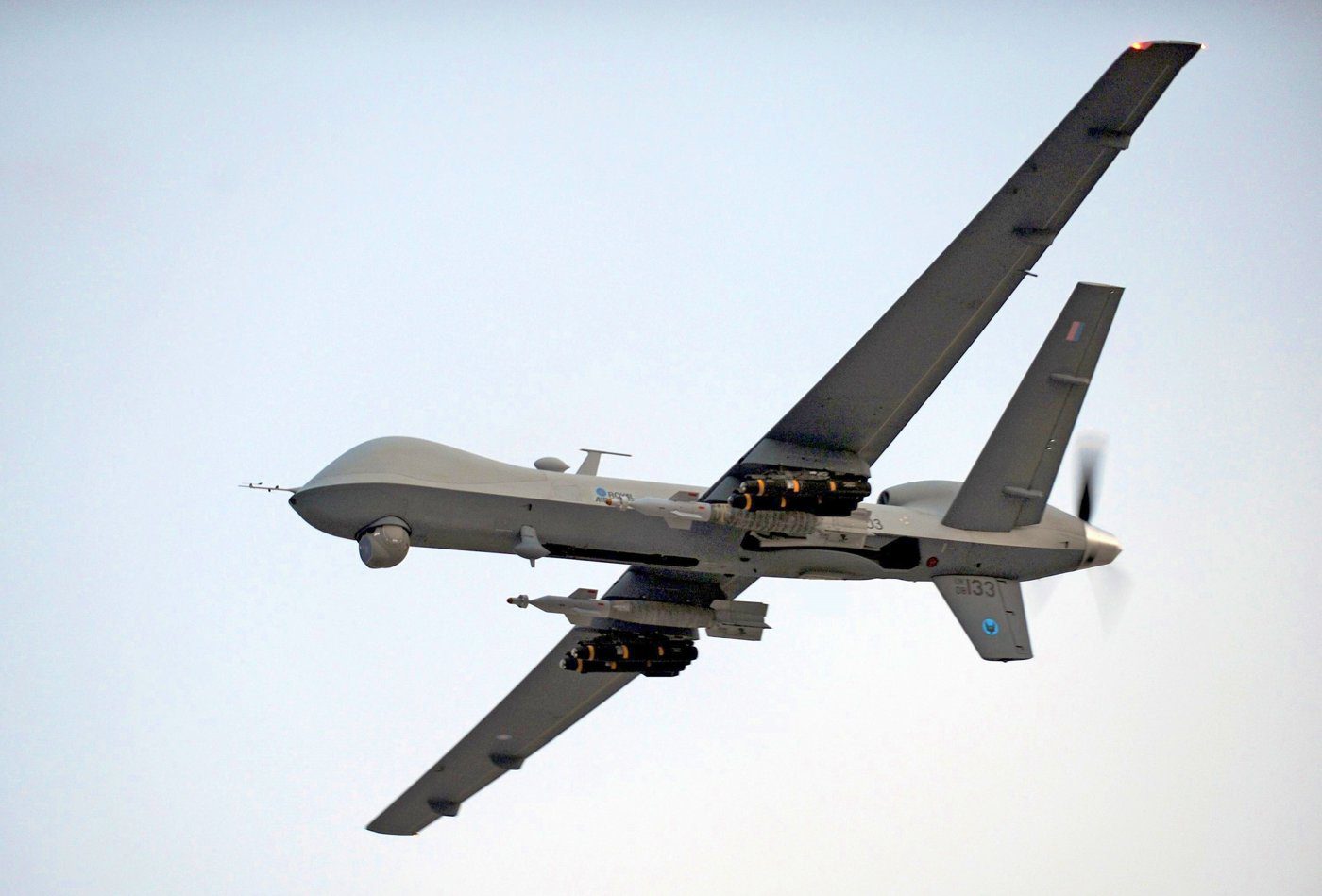
The trend is not confined to software. In October 2025, Anduril’s YFQ-44A “Fury” — an AI-powered unmanned fighter jet — began flight-testing under the United States’ Collaborative Combat Aircraft programme. This is a machine designed to fly and fight alongside crewed aircraft, with algorithms handling manoeuvre and coordination. The reach of AI extends even into intelligence operations: the United States reportedly used a commercial AI assistant, Anthropic’s Claude, to aid the operation that captured Venezuela’s Nicolas Maduro.
Taken together, these developments signal a change not just in equipment but in the very grammar of conflict. When a fighter aircraft can be unmanned, when targeting is generated in real time by fused sensor data, and when even commercial AI tools can be pressed into operational service, the traditional boundary between “the weapon” and “the decision to use the weapon” begins to blur. That blurring is precisely what makes the legal analysis so difficult — and so important. Law has always been built around identifiable human actors who form intentions and bear consequences. Autonomy inserts a layer of machine judgment between the human and the harm, and every established legal category must be re-examined in that light.
Scale is the other defining feature. Ukraine is reported to be buying roughly 8 million drones in 2026 alone. Along the front, a corridor of about 35 kilometres has become a “death zone” dominated by first-person-view (FPV) drones — cheap, expendable and lethal. Perhaps most striking was an incident on February 28, when an AI-synchronised strike combining electronic, cyber and drone effects reportedly wiped out much of Iran’s leadership in minutes. When decisions and effects compress from days to minutes, the tempo of war itself changes character.
Lethal Autonomous Weapons and the Question of Control
This is where the law enters. Weapons that can select and engage targets without meaningful human intervention are called Lethal Autonomous Weapons Systems (LAWS) — colloquially, “killer robots”. The central legal and ethical anxiety is captured in a single phrase now common in disarmament diplomacy: “meaningful human control”. If a machine, not a person, makes the final decision to take a human life, who is morally and legally responsible for a wrongful death?
International Humanitarian Law (IHL) — the body of law governing armed conflict, rooted in the Geneva Conventions — rests on three cardinal principles that every autonomous system must somehow satisfy:
- Distinction — combatants must always distinguish between military targets and civilians, and may only attack the former. Can an algorithm reliably tell a soldier from a farmer, or a functioning tank from a decoy?
- Proportionality — the expected civilian harm from an attack must not be excessive relative to the concrete military advantage anticipated. This demands a nuanced value judgment that is difficult to encode in software.
- Military necessity — force may be used only to the extent needed to achieve a legitimate military objective, and no further.
When an autonomous weapon violates one of these principles, a troubling problem emerges — the accountability gap. Traditional law holds a commander or soldier responsible. But if a machine acts unpredictably on the basis of its training data, is the fault with the programmer, the manufacturer, the commander who deployed it, or no one at all? Law abhors a vacuum of responsibility, yet autonomy threatens to create precisely that.
The Global Debate: The UN CCW and Technology Sovereignty
These questions are being fought out, so far inconclusively, at the United Nations Convention on Certain Conventional Weapons (CCW) — the principal forum where states debate whether and how to regulate or prohibit LAWS. Some states and civil-society campaigns push for a binding treaty banning fully autonomous weapons; others, particularly those with advanced military-tech industries, prefer non-binding guidelines that preserve their strategic freedom. The result is a slow-moving negotiation in which the technology consistently outpaces the law.
Underlying all of this is the idea of technology sovereignty — a nation’s capacity to develop, control and secure its own critical technologies rather than depending on foreign systems that could be denied, throttled or compromised in a crisis. In an age where warfare is software, sovereignty over that software becomes a question of national survival.
What This Means for India
General Shukla’s prescription for India is urgent and specific. He argues that India must move quickly to build an AI-enabled data-analytics platform to knit together its sensors and shooters; develop AI-coordinated drone swarms; and set a target of roughly 5 million counter-drone systems by 2028 to defend against the very swarm tactics now dominating modern battlefields. He calls for a low-earth-orbit (LEO) satellite constellation dedicated to Intelligence, Surveillance and Reconnaissance (ISR), giving Indian forces persistent eyes over any theatre.
The financial argument is equally pointed: he suggests earmarking at least 40% of the roughly Rs 2 lakh crore modernisation budget for technological transformation rather than legacy platforms. The strategic goals he identifies are framed in the language of deterrence — achieving “combat overmatch” in the western sector and “asymmetric deterrence” in the northern sector, so that adversaries are dissuaded not by matching them platform-for-platform, but by imposing unacceptable costs through smarter, cheaper, faster technology. Asymmetric deterrence is the idea that a smaller or differently-equipped force can still deter a larger one by exploiting vulnerabilities the larger force cannot easily defend.
The CLAT Angle
This single story is a masterclass in how the CLAT examination now tests law aspirants. Three threads run through it, and each maps onto the paper.
First, public international law. The principles of distinction, proportionality and military necessity, the framework of International Humanitarian Law, and the role of the UN CCW are exactly the kind of doctrinal material that appears in Legal Reasoning passages. A CLAT passage might describe a hypothetical autonomous strike and ask you to apply the proportionality test — rewarding students who understand that the law weighs anticipated civilian harm against concrete military advantage, not against emotion or outcome.
Second, emerging technology and the accountability gap. CLAT increasingly favours passages where old legal categories strain against new facts. The question “who is liable when an autonomous machine kills wrongfully?” is a pure legal-reasoning problem about the allocation of responsibility — the same logic that underpins tort, criminal and product-liability questions you will study in law school.
Third, ethics and current affairs. The GK and Current Affairs section rewards familiarity with concrete facts — Delta, the YFQ-44A Fury, the CCW, LEO ISR constellations, the modernisation budget figure. But the deeper reward goes to students who can connect a factual news item to the doctrinal debate behind it: the tension between “meaningful human control” and battlefield speed, and between technology sovereignty and international regulation.
As you prepare, resist treating defence news as someone else’s subject. The most examinable stories are precisely those, like this one, where technology forces the law to answer questions it has never faced before. Read them not for the hardware, but for the principle at stake — distinction, proportionality, accountability, control. That habit of reading is exactly what CLAT is designed to reward, and exactly what a good lawyer must do every working day.
Test Yourself — Daily Quiz
Practice Quiz — 10 CLAT-Style Questions
Click an option to reveal the answer and explanation.