Direct-Seeded Rice: How Farmers Are Rewriting the Paddy Playbook Under an El Niño Shadow
Every June, the fate of India’s kharif crop hangs on a single word: monsoon. In 2026, that word arrived with a warning. The southwest monsoon ran roughly 39.8% below normal in June — the fifth-lowest June rainfall on record, behind only 2014, 2009, 1926 and 1905 — and the India Meteorological Department (IMD) has forecast a below-normal July. Behind this shortfall sits an old climate villain, El Niño, currently in a “moderate” phase and predicted to intensify to “strong” over the October-to-January window.
In this uncertain rainfall environment, a quieter agricultural revolution is gaining ground: Direct-Seeded Rice (DSR). It is a technique that could reshape how India grows its most water-hungry staple. For CLAT aspirants, DSR is a beautifully layered story — part environmental science, part agriculture policy, and part crop-science GK that ties together water security and food security.
What makes the timing so significant is that DSR is no longer a laboratory curiosity confined to research farms. Faced with weak early rains, delayed nursery transplanting and rising labour costs, ordinary farmers — especially in the basmati belts of the north-west — are adopting it as a practical hedge. When a farmer cannot count on the sky, a method that lets the crop start with less water and less standing labour becomes attractive on its own economic merits, quite apart from any environmental argument. That is often how genuine change spreads in agriculture: not through slogans, but through thousands of individual farmers making a rational choice in a bad-monsoon year.
The Old Way: Puddling and Transplanting
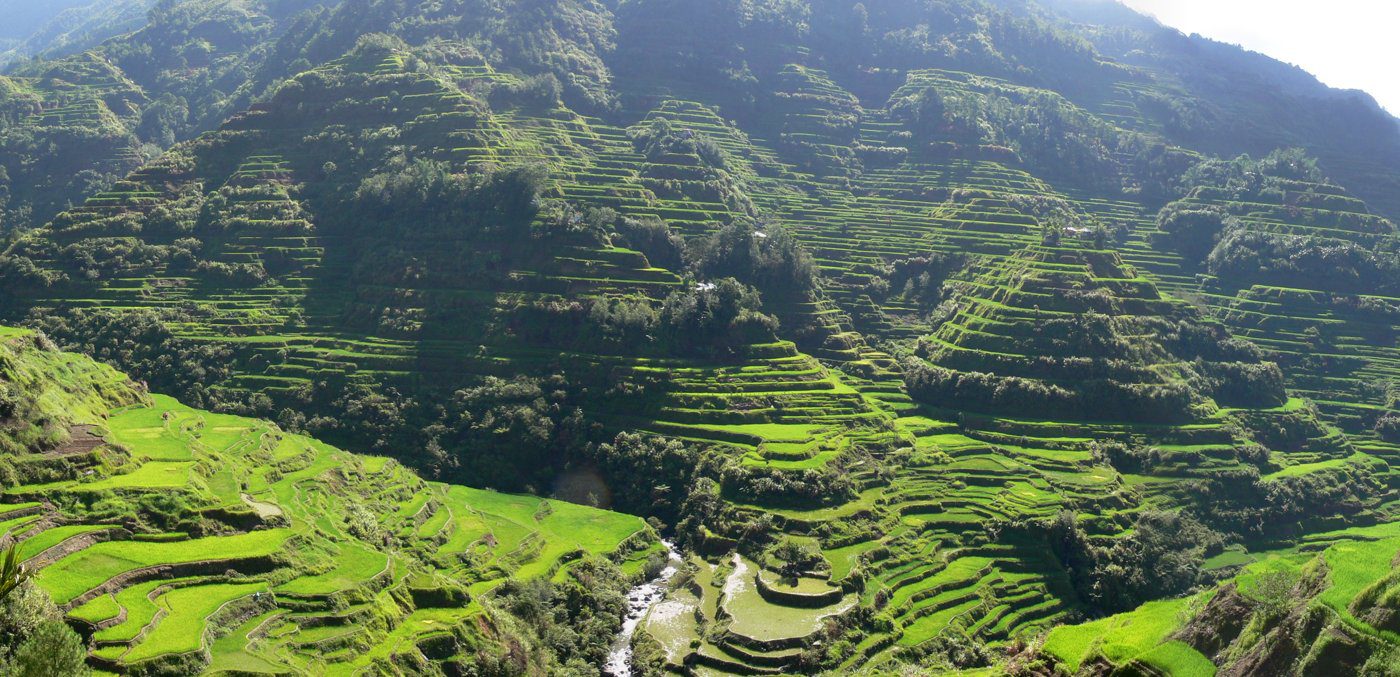
To appreciate DSR, you first have to understand the traditional method it seeks to replace. Conventional paddy cultivation relies on puddling — repeatedly flooding and tilling the field to create a soft, waterlogged bed — followed by transplanting young seedlings raised separately in a nursery.
This method is spectacularly water-intensive. Puddling alone can consume water equivalent to about three irrigations, and each irrigation draws roughly 200,000 litres per acre. Multiply that across millions of acres in Punjab, Haryana and beyond, and you see why paddy is so closely blamed for falling water tables. The standing water in transplanted fields does serve a purpose, though: it acts as a natural weed suppressant, drowning out weeds that would otherwise compete with the rice.
The New Way: Drilling Seeds Directly
In Direct-Seeded Rice, farmers skip the nursery and the puddling. Seeds are drilled directly into the field using a machine, and the crop is grown without the continuous ponding of water. The payoff is significant: DSR saves water and labour, both of which are increasingly scarce and expensive.
But every technique has a catch. Because DSR removes the standing water that once smothered weeds, the crop becomes far more vulnerable to weed competition. Farmers must therefore lean on chemical herbicides to keep weeds in check. This creates a new problem: an ordinary rice plant, sprayed with a broad weed-killer, may itself be damaged. The solution lies in plant breeding.
The Science That Makes DSR Work: Herbicide-Tolerant Basmati
The breakthrough enabling widespread DSR in basmati country is the arrival of Herbicide-Tolerant (HT) varieties. The Indian Agricultural Research Institute (IARI) has developed Pusa Basmati-1979 and Pusa Basmati-1985, both bred to tolerate the herbicide Imazethapyr. When a farmer sprays this herbicide, the weeds die but the rice survives — allowing DSR without standing water.
How does the plant gain this tolerance? Through a mutated ALS gene (the target enzyme that Imazethapyr normally blocks). Crucially, this trait was achieved by non-GM mutation breeding, not genetic modification. This distinction matters enormously for the exam and for policy.
Mutation Breeding vs Genetic Modification
Mutation breeding speeds up a natural process: scientists expose seeds to agents (such as radiation or chemicals) that induce random mutations, then select the plants carrying a useful trait — here, a mutated ALS gene that confers herbicide tolerance. No foreign DNA from another species is inserted. By contrast, Genetic Modification (GM) typically transfers a gene from one organism into another. Because HT basmati is non-GM, it sidesteps the regulatory and export-market sensitivities that surround GM crops — a vital consideration for basmati, a premium export product.
Shorter-Duration Varieties: Racing the Rain
The other weapon against a weak monsoon is time. When water is scarce, a crop that matures faster needs less irrigation and dodges more risk. Here the choice of variety is strategic:
- Pusa Basmati-1509 and Pusa Basmati-1847 mature in roughly 115-120 days — the shorter-duration options.
- Pusa Basmati-1121 takes about 140-145 days — a longer, thirstier cycle.
In an El Niño year, shifting to shorter-duration varieties can meaningfully cut the water footprint and the exposure to a failing monsoon, without abandoning the prized basmati crop altogether.
El Niño, ENSO and the Monsoon
Why does El Niño matter so much? El Niño is one phase of the El Niño-Southern Oscillation (ENSO), a periodic warming of the central and eastern Pacific Ocean’s surface waters. This warming shifts global atmospheric circulation in ways that tend to weaken the Indian southwest monsoon, often producing below-normal rainfall over the subcontinent. With the June deficit already at nearly 40% and the IMD flagging a below-normal July — and with the event forecast to strengthen from moderate to strong later in the year — the pressure on water-dependent crops like rice is exactly why techniques such as DSR are moving from experiment to necessity.
The Bigger Picture: Sustainable, Water-Wise Agriculture
DSR is not a silver bullet. It demands careful herbicide management, good land levelling and farmer training. But it embodies a larger shift the country cannot avoid: growing more food with less water. Set against paddy’s enormous irrigation demand, a method that cuts water use while preserving yields — supported by non-GM science and smarter variety selection — is precisely the kind of climate-resilient adaptation India needs as monsoons grow more erratic.
It is worth noting that DSR also carries trade-offs a balanced analysis must acknowledge. Heavier reliance on herbicides raises questions about soil health, residue and the long-term risk of herbicide-resistant weeds evolving — the very problem HT varieties are meant to solve could, over time, be partly recreated by overuse. Careful stewardship, crop rotation and correct dosing therefore matter as much as the seed technology itself. This is a reminder that sustainable agriculture is rarely about a single fix; it is about managing a system of interacting choices — water, weeds, chemicals, timing and climate — so that a gain on one front does not quietly create a loss on another.
Seen this way, DSR under an El Niño shadow is a small but telling example of how India must increasingly farm: adapting proven crops with new science, reading the ocean and the sky as inputs to planting decisions, and treating water not as a free resource but as the scarce, strategic asset it has become.
The CLAT Angle
This story is a strong candidate for the CLAT current-affairs and comprehension sections because it fuses environment, agriculture policy and science-GK — three high-frequency zones.
- Environment and climate: Expect passages on ENSO and the monsoon, water security and sustainable agriculture. A comprehension set might give you the June rainfall figures and ask you to infer the likely consequence for kharif sowing, or to distinguish correlation (El Niño years) from causation.
- Science-GK precision: The mutation-breeding versus GM distinction is a classic trap. CLAT loves options that blur the two. Remember: HT basmati (Pusa 1979/1985) is non-GM, achieved via a mutated ALS gene tolerating Imazethapyr — no foreign DNA inserted.
- Policy and legal reasoning: DSR connects to Directive Principles — Article 48 (agriculture on modern, scientific lines) and Article 21 read with environmental protection and the right to water. A principle-application question could ask you to balance farmers’ water conservation against herbicide-safety and food-security concerns.
Exam tip: When a passage packs numbers (39.8% deficit, 200,000 litres/acre, 115-145 day durations), do not try to memorise every figure. Instead, grasp the direction each number points — less water, faster maturity, weaker monsoon — because inference questions reward understanding the trend, not reciting the statistic. Nail the mutation-breeding-versus-GM difference and the ENSO-monsoon link, and this entire topic becomes easy marks.
Test Yourself — Daily Quiz
Practice Quiz — 10 CLAT-Style Questions
Click an option to reveal the answer and explanation.