Current Affairs Polity & Nation Constitutional Law CLAT 2027 CLAT GK
13 May 2026 · Source: The Indian Express, Delhi Edition · Reuters · PIB · Live Law
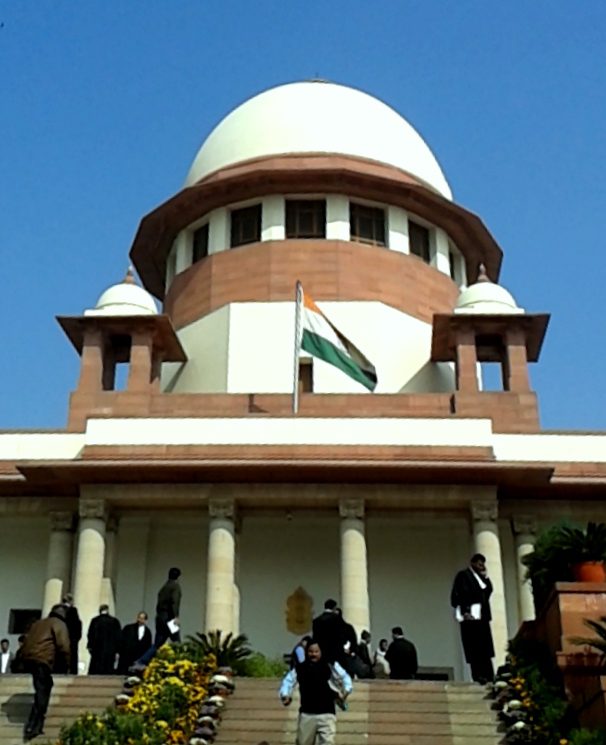
Chief Justice of India Surya Kant has constituted a Judicial Infrastructure Advisory Committee (JIAC) to prepare a comprehensive roadmap for strengthening court infrastructure across India. A communication issued by SC Secretary General Bharat Parashar on 8 May 2026 confirmed the committee will work to secure central and state government support of ₹40,000–50,000 crore over five years for courthouses, residential complexes, e-court infrastructure and digitisation.
📌 Key Facts at a Glance
- Pending cases (April 2026): 5.1 crore (4.9 cr at district/subordinate + 60 lakh at HCs + ~80,000 at SC)
- Funding ask: ₹40,000–50,000 crore over 5 years
- Committee head: Justice B.V. Nagarathna; report due 31 August 2026
- Constitutional anchor: Articles 50, 247; Finance Commission mandate
- e-Courts Phase III: AI-assisted case management (‘Su Sahay’ chatbot piloted)
Background
India’s lower judiciary functions out of an estimated 23,000 courtrooms but needs over 27,500 to clear the 5.1 crore pending cases. A 2023 Supreme Court report found 24% of court complexes lacked basic toilet facilities for women lawyers and 38% had no record rooms. The Centrally Sponsored Scheme for Development of Infrastructure Facilities for Judiciary (CSS-IDFJ), running since 1993, has cumulatively spent ~₹11,000 crore — clearly insufficient.
Main Analysis
Committee composition
Headed by Justice B.V. Nagarathna (likely the first woman CJI in 2027), with representation from the Finance Ministry, NIC, and three High Court Chief Justices, the JIAC is the first dedicated body of its kind. Its draft roadmap is due by 31 August 2026, in time for inclusion in the Union Budget 2027-28.
The constitutional anchor
Article 247 empowers Parliament to provide for additional courts for the better administration of laws made by it. The CJI has also cited Article 50 (separation of judiciary from executive) and the Finance Commission’s mandate to recommend grants for ‘augmentation of state’s Consolidated Fund’ for judicial infrastructure. The 15th Finance Commission had recommended ₹50,000 cr for judiciary; only a fraction was utilised.
Technology overlay
₹7,000 crore of the proposed corpus is earmarked for e-Courts Phase-III: AI-assisted case management (the ‘Su Sahay’ chatbot already piloted at the SC), virtual hearing rooms in every district, and a unified Case Information System. Federal friction is real — courts other than the SC are run by state PWDs. The Centre’s 60% share via CSS-IDFJ is matched 40% by states, but several states underspend; the committee will recommend a binding utilisation framework.
🎯 Key Takeaways
- Pending cases: 5.1 crore as of April 2026
- Funding ask: ₹40,000–50,000 crore over 5 years
- Constitutional anchor: Articles 50, 247; Finance Commission mandate
- Committee head: Justice B.V. Nagarathna (in line to become CJI in 2027); report due 31 Aug 2026
- e-Courts Phase III gets ₹7,000 cr — AI ‘Su Sahay’ chatbot, virtual hearing rooms, unified CIS
📚 Glossary
- Article 247
- Empowers Parliament to provide for the establishment of any additional courts for the better administration of laws made by it.
- Article 50
- Directive Principle of State Policy mandating the separation of judiciary from the executive in the public services of the state.
- CSS-IDFJ
- Centrally Sponsored Scheme for the Development of Infrastructure Facilities for the Judiciary; cost-shared 60:40 (Centre:State), 90:10 for NE & hill states.
- e-Courts Mission Mode Project
- Department of Justice initiative since 2007, now entering Phase III, to computerise and integrate India’s judicial system.
Test Yourself — 10 MCQs
Attempt the 10-question quiz below. Answers and explanations reveal after each click.
Practice Quiz — 10 CLAT-Style Questions
Click an option to reveal the answer and explanation.
CLAT Gurukul · By Ready For Exam · Bihar’s premier coaching for CLAT 2027 · Mentor Helpline: 7033005444