DAC Clears ₹52,000 Crore Defence Acquisitions: India’s Multi-Domain Atmanirbharta Push
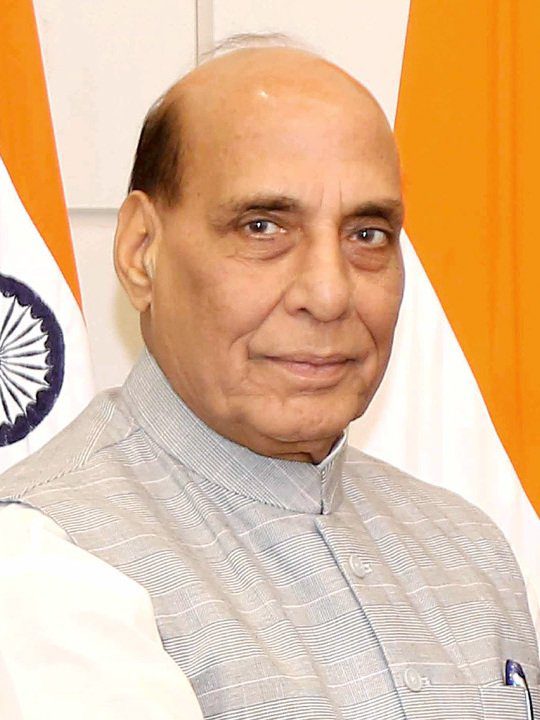
The Defence Acquisition Council (DAC), chaired by Defence Minister Rajnath Singh, cleared acquisition proposals worth approximately ₹52,000 crore for India’s armed forces in a single sitting — one of the largest single-day capital procurement approvals in recent memory. The clearances span the Indian Army, the Indian Air Force (IAF), and the Indian Navy, spanning electronic warfare, missile defence, drone warfare, and maritime surveillance. For CLAT aspirants, this decision sits at the intersection of constitutional governance, defence policy, and India’s Atmanirbhar Bharat initiative — all directly relevant to the General Knowledge section.
What makes this approval especially significant is not merely the scale of expenditure but the diversity of domains it covers. India is formally articulating a multi-domain operations posture — the doctrine that modern warfare is fought simultaneously across land, sea, air, cyber, and the electromagnetic spectrum. Each of the systems cleared by the DAC corresponds to a distinct domain gap identified after decades of doctrinal review and operational experience.
What Is the Defence Acquisition Council?
The Defence Acquisition Council is the apex body for making decisions on capital acquisitions for the Indian armed forces. Constituted in 2001 following the Kargil War-era Subramanyam Committee report, it is chaired by the Defence Minister and includes the Chief of Defence Staff (CDS), the three Service Chiefs, the Defence Secretary, the Secretary (Defence Production), and the Secretary (Defence Research and Development). The presence of the Defence Research and Development Organisation (DRDO) secretary reflects the integrated approach India takes to balancing import, licence production, and indigenous development.
The DAC’s core function in the procurement cycle is to grant Acceptance of Necessity (AoN) — the formal acknowledgment that an identified capability gap is genuine and that procurement action should begin. Critically, an AoN is the first step in capital procurement under the Defence Acquisition Procedure (DAP) 2020; it does not guarantee that a final order will be placed. After AoN, a tendering process, technical evaluation, price negotiation, and Cabinet Committee on Security (CCS) approval (for large contracts) must follow before a contract is signed.
Acceptance of Necessity: The Gateway to Procurement
Under DAP 2020, which replaced the earlier DPP 2016, acquisition categories prioritise indigenous procurement. The categories, in descending order of indigenisation, are:
- Make-I / Make-II: Fully Indian design, development, and manufacture.
- Buy (Indian — IDDM): Indigenously designed, developed, and manufactured with a minimum 50% indigenous content.
- Buy (Indian): At least 50% indigenous content, even if not indigenously designed.
- Buy and Make (Indian): Import with technology transfer for domestic production.
- Buy (Global — Manufacture in India): Foreign vendor must commit to manufacturing in India.
- Buy (Global): Outright import — the least preferred route.
When the DAC clears an AoN, it also typically assigns the procurement category. The push toward Make and Buy (Indian — IDDM) categories is the institutional expression of Atmanirbhar Bharat in defence — the goal that India’s strategic platforms should be developed and produced domestically, reducing dependence on suppliers whose supply chains can be disrupted by geopolitics.
Key Systems Cleared: A Domain-by-Domain Breakdown
Anti-UAV Electronic Warfare: Akash Tarang
The system named “Akash Tarang” is an Anti-UAV Electronic Warfare System. With the proliferation of low-cost commercial drones being weaponised on modern battlefields — a lesson drawn vividly from the Russia-Ukraine conflict and conflicts in West Asia — counter-drone capability has become a top priority. Akash Tarang is designed to detect, track, and neutralise hostile unmanned aerial vehicles through electronic means, including jamming and spoofing, without necessarily firing a kinetic projectile. The name “Akash” (sky) echoes the family of surface-to-air missile systems already in Indian service; “Tarang” (wave) signals its electromagnetic nature.
Air Defence: MRSAM and VSHORADS
The Medium Range Surface-to-Air Missile (MRSAM) Weapon System is a jointly developed Indo-Israeli system (DRDO and Israel Aerospace Industries) that provides layered air defence against aircraft, helicopters, cruise missiles, and precision-guided munitions at medium ranges. Its induction marks a significant step in integrating guided missile defence into all three services.
The Very Short Range Air Defence System (VSHORADS) addresses the critical “last mile” of air defence — man-portable missiles that infantry soldiers carry to engage low-flying threats. As drone swarms and attack helicopters become more common in forward areas, VSHORADS gives the frontline soldier a direct engagement capability without relying on centralised batteries.
Offensive Drone Capabilities
The Jet-Based Kamikaze Drone System cleared for the Indian Army is a loitering munition — a drone that patrols a target area and, upon identification of a high-value target, dives into it and detonates. Sometimes called “suicide drones,” these systems allow precision strike with a relatively small logistical footprint. The jet-propulsion basis gives them higher speed than propeller-driven equivalents, compressing the adversary’s reaction time.
The Naval Shipborne Unmanned Aerial System (NSUAS) extends maritime surveillance and potentially strike capability from naval vessels without risking manned aircraft or exposing the carrier ship. As the Indian Navy expands its blue-water presence in the Indian Ocean Region, UAS capability on warships becomes a force multiplier.
Strategic Persistence: FW-HAPS for the IAF
The Fixed-Wing High Altitude Pseudo Satellite (FW-HAPS) for the Indian Air Force represents a sophisticated capability leap. A HAPS is an aircraft — typically solar-powered — that operates in the stratosphere (roughly 18–25 km altitude) and can loiter over a region for days, weeks, or even months. Because it flies above most weather and air traffic, it can provide persistent intelligence, surveillance, and reconnaissance (ISR), communications relay, and electronic intelligence functions at a fraction of the cost of a satellite while offering much greater flexibility of deployment.
Ground and Maritime Capabilities
The Man Portable Anti-Tank Guided Missile (MPATGM) System gives the Indian Army a lightweight, shoulder-fired anti-tank weapon for infantry units operating in mountainous terrain where armoured vehicle support is limited. This is a DRDO-developed system, marking another step in indigenising the Army’s precision anti-armour arsenal.
The Multi-Influence Ground Mine (MIGM) is a naval mine that activates on the basis of multiple stimuli — magnetic, acoustic, and pressure signatures — making it harder to defeat than older single-influence mines. Deployed in shallow coastal waters, MIGM adds a credible sea-denial capability.
Finally, the Land-Based Testing Facility (LBTF) for Electric Propulsion is an enabling infrastructure investment. As India explores electric propulsion for future naval vessels — including submarines — an indigenous land-based facility to develop, test, and validate such systems is foundational. This is a long-horizon investment in future naval self-sufficiency.
The New Army Chief: General Dhiraj Kumar Seth
Around the same period, General Dhiraj Kumar Seth assumed charge as the new Chief of Army Staff (COAS), making him the principal military adviser to the government on Army matters and a member of the DAC. His tenure will shape how these newly cleared capabilities are integrated into the Army’s operational doctrine and force structure.
Atmanirbhar Bharat in Defence: The Policy Architecture
India’s indigenisation drive in defence rests on several institutional pillars. The government has released multiple Positive Indigenisation Lists (PILs) that progressively ban imports of specified platforms and subsystems, compelling the armed forces to source from domestic manufacturers — whether Defence Public Sector Undertakings (DPSUs) like Hindustan Aeronautics Limited (HAL), Bharat Electronics Limited (BEL), and Mazagon Dock, or private-sector firms. The DRDO (Defence Research and Development Organisation) remains the government’s primary R&D agency, but its role is increasingly complemented by private sector participation through iDEX (Innovations for Defence Excellence) and the DISC (Defence India Start-up Challenge) programme.
The DAP 2020 also provides for a dedicated Defence Indigenisation Fund and mandates technology transfer in government-to-government procurement deals, ensuring that even when India buys foreign, it builds domestic expertise in the process.
Civil-Military Relations and Constitutional Context
Under the Indian Constitution, defence is a Union subject (Entry 1, List I, Seventh Schedule). The Cabinet Committee on Security (CCS) — comprising the Prime Minister, Home Minister, Finance Minister, External Affairs Minister, and Defence Minister — is the apex executive body for national security decisions and approves large-value defence contracts. The Minister of Defence is accountable to Parliament for defence expenditure under Article 75 (ministerial responsibility). The role of the CDS, created in January 2020, is to enhance jointness among the three services — the vision that Army, Navy, and Air Force operate as an integrated force rather than in silos, precisely the capability that multi-domain operations require.
Why This Matters for CLAT
- Constitutional hook: Defence is a Union subject; the CCS and Parliament exercise oversight — linking this to List I, Article 75, and the Seventh Schedule is a direct GK-polity bridge question.
- Procurement procedure: AoN, DAP 2020 categories, and the role of the DAC appear as direct current-affairs questions and as analytical passages in CLAT’s reading-comprehension section.
- Indigenisation policy: The Positive Indigenisation List, iDEX, and the distinction between DRDO and DPSUs are recurring themes in defence-policy passages.
- Multi-domain doctrine: Questions framed around cyber warfare, drone proliferation, and electronic warfare increasingly appear in CLAT passages — understanding the doctrinal vocabulary adds analytical depth.
- New Army Chief: Service chief appointments are high-probability static GK facts tested in the exam’s current-affairs section.
Conclusion
The DAC’s ₹52,000 crore clearance is more than a budgetary headline. It is a statement of strategic intent: India intends to contest the full spectrum of modern warfare — from drone swarms to stratospheric surveillance to underwater mines — using systems that are increasingly designed, developed, and built within the country. The Acceptance of Necessity granted across these eight-plus categories will set in motion procurement timelines stretching across the coming decade, shaping the character of the Indian armed forces well into the 2030s. For CLAT aspirants, the ability to read such decisions not merely as facts but as intersections of constitutional governance, economic policy, and strategic doctrine is precisely what the examiners test — and what this acquisition clearance exemplifies perfectly.
Test Yourself — Daily Quiz
Practice Quiz — 10 CLAT-Style Questions
Click an option to reveal the answer and explanation.