
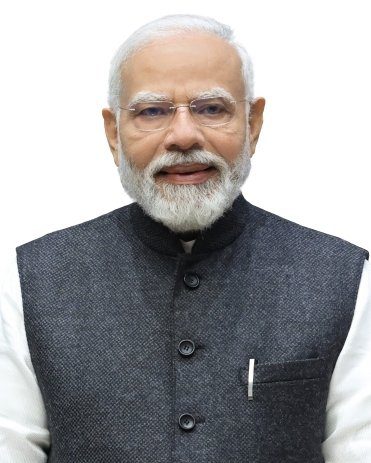
PM Modi’s 3-Nation Tour: Indonesia, Australia, New Zealand — Indo-Pacific, Act East, and India’s Pacific Pivot
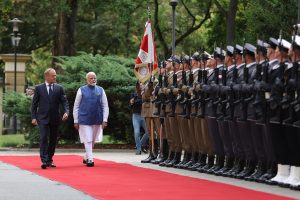
Prime Minister Narendra Modi began a landmark six-day, three-nation tour on July 6, visiting Indonesia, Australia, and New Zealand in quick succession — a diplomatic marathon that underscores India’s expanding strategic footprint across the Indo-Pacific. The visit to New Zealand is particularly historic: it marks the first by an Indian Prime Minister in forty years, signalling how seriously New Delhi now views the wider Pacific as part of its strategic horizon. The tour is not merely a ceremonial exchange of pleasantries; it is a carefully calibrated statement about India’s place in the emerging post-unipolar world order.
For CLAT aspirants preparing in the Legal Reasoning and GK-Current Affairs sections, this tour is a rich repository of inter-connected themes — the Act East Policy, the Indo-Pacific framework, the Quad, SAGAR, freedom of navigation under UNCLOS, and the role of diaspora diplomacy. Each of these is a tested concept in CLAT’s General Knowledge section, and understanding how they connect through this single diplomatic event will help you answer context-heavy inference questions with confidence.
Act East Policy: From “Look East” to Strategic Engagement
India’s engagement with its eastern neighbourhood has evolved through two distinct phases. The Look East Policy, launched in 1991 under Prime Minister P.V. Narasimha Rao, was primarily an economic initiative aimed at integrating India into the rapidly growing economies of Southeast Asia. It yielded early dividends — closer ties with ASEAN, growing trade with Thailand and Malaysia, and India’s admission to the ASEAN Regional Forum.
In 2014, the policy was rebranded and reinvigorated as the Act East Policy, reflecting a decisive shift from passive engagement to proactive strategy. The key change: geography. Where “Look East” stopped roughly at Southeast Asia, “Act East” consciously extends India’s strategic vista to include East Asia, the Pacific Islands, and beyond. Indonesia — the world’s largest archipelagic state and home to the Malacca Strait, through which a substantial share of India’s trade passes — is the anchor of this expanded vision. Australian and New Zealand engagement naturally follows, as India seeks partners who share concerns about the rules-based maritime order.
The Indo-Pacific Framework and China’s Counter-Narrative
The term “Indo-Pacific” is itself a strategic construct, deliberately coined to link the Indian Ocean and the Pacific Ocean as a single, integrated strategic space — one in which India is a central actor rather than a peripheral one. It reflects a recognition that naval power, trade routes, and geopolitical competition in the twenty-first century cannot be neatly separated by ocean basin.
China’s foreign ministry spokesperson Guo Jiakun wasted no time responding to Modi’s tour, stating that the “free and open Indo-Pacific” concept “goes against the regional aspirations” of Asian countries and “will never win genuine recognition.” This response is consistent with Beijing’s position that Indo-Pacific frameworks — especially those involving the Quad — are thinly veiled containment strategies. India categorically rejects this characterisation, insisting that a free and open Indo-Pacific benefits every trading nation, including China. India and Japan, whose Prime Minister Sanae Takaichi had recently visited New Delhi, jointly reaffirmed commitment to a free and open Indo-Pacific, signalling a coordinated diplomatic posture.
The Quad: A Security Architecture for the Indo-Pacific
The Quadrilateral Security Dialogue (Quad) — comprising India, the United States, Japan, and Australia — is perhaps the most consequential multilateral security framework in the Indo-Pacific today. Though its origins trace back to a 2007 humanitarian cooperation arrangement, the Quad was revived and elevated to leader-level summits from 2021 onwards.
Australia is a critical Quad partner. The 3rd India-Australia Annual Summit, which Prime Minister Modi joins in Melbourne (the first was held in March 2023), reflects the institutionalisation of what is now called a Comprehensive Strategic Partnership between the two countries. The agenda covers critical minerals — Australia is one of the world’s leading suppliers of lithium and rare earth elements — as well as cybersecurity, supply-chain resilience, emerging technologies, and maritime security. Each of these items speaks directly to the logic of “friend-shoring”: building secure, diversified supply chains among trusted democracies rather than remaining dependent on any single dominant economy.
SAGAR: India’s Ocean-Centric Security Doctrine
India’s maritime security philosophy is captured in the acronym SAGAR — “Security and Growth for All in the Region” — articulated by Prime Minister Modi during a 2015 visit to Mauritius. SAGAR frames India’s role in the Indian Ocean not as a hegemonic power but as a net security provider: one that shares maritime domain awareness, provides humanitarian assistance, and helps smaller island nations protect their Exclusive Economic Zones. Indonesia, with its vast maritime territory and position astride critical sea lanes, is a natural partner in this vision. New Zealand and Australia, both with extensive Pacific Ocean responsibilities, share the same instinct that open sea lanes protected by international law are a global public good.
UNCLOS and the Freedom of Navigation
Underlying all these diplomatic frameworks is a legal bedrock: the United Nations Convention on the Law of the Sea (UNCLOS), adopted in 1982. UNCLOS establishes the rights and responsibilities of nations with respect to ocean territory, codifying freedom of navigation through the Exclusive Economic Zones (EEZ) and the high seas. The South China Sea disputes — in which China’s expansive territorial claims conflict with UNCLOS provisions — are the most visible flashpoint. India, Australia, the United States, and their partners have consistently insisted that UNCLOS must be upheld, a position that directly confronts Chinese maritime assertions. The Indo-Pacific strategic partnership is thus partly a legal argument: that the international rules-based order, including UNCLOS, must be defended.
Trade Architecture: FTA, CECA, and ECTA
Beyond security, the tour carries significant economic momentum. India and Australia concluded the India-Australia Economic Cooperation and Trade Agreement (ECTA) in 2022 — a landmark that eliminated tariffs on 85% of Australian goods entering India and gave preferential access to Indian exporters. Negotiations for a comprehensive Free Trade Agreement (FTA), including services and investment chapters, are ongoing. With New Zealand, an India-NZ FTA was launched in April 2026, opening a new chapter in trade relations that have historically been modest given the geographic distance. These trade frameworks serve a dual purpose: deepening economic interdependence and reducing exposure to supply-chain concentration risks.
Diaspora Diplomacy: India’s Soft-Power Multiplier
India’s diplomatic heft in Australia and New Zealand is amplified by its large diaspora. Approximately 1.4 lakh (140,000) persons of Indian origin live in Australia, and an even larger community of nearly 3 lakh (300,000) reside in New Zealand — making Indians one of the largest ethnic communities in both countries. This diaspora functions as a living bridge: sustaining cultural ties, generating business networks, influencing electoral politics, and creating a natural constituency for positive bilateral relations. Prime Minister Modi’s tradition of addressing large diaspora gatherings during overseas tours turns this demographic reality into active people-to-people diplomacy, reinforcing state-level partnerships with grassroots legitimacy.
Indonesia: The Geo-Strategic Anchor of Southeast Asia
Indonesia is more than a regional power — it is a civilisational fulcrum of the Indo-Pacific. With a population exceeding 280 million, the world’s largest Muslim-majority democracy, and an economy growing at over five percent annually, Indonesia commands strategic attention. President Prabowo Subianto — who served as Guest of Honour at India’s Republic Day parade in January 2025 — represents continuity in the warm India-Indonesia relationship. The two nations share a historical affinity rooted in the Non-Aligned Movement, and contemporary cooperation spans defence, digital infrastructure, maritime security, and cultural diplomacy. Indonesia controls the Lombok Strait and the Sunda Strait — alternative routes to the Malacca Strait — giving it critical importance to Indian naval and commercial planners.
India’s Balancing Act vis-à-vis China
A recurring analytical question is whether India’s Indo-Pacific engagement constitutes an anti-China alliance or a genuinely multilateral framework. India’s official position is the latter: the Quad is not a NATO-style collective defence pact, and India maintains an independent foreign policy that includes substantial trade with China despite ongoing border tensions. However, the reality is more complex. The infrastructure of these partnerships — critical minerals, secure technology supply chains, shared maritime surveillance — is specifically designed to reduce the risks that flow from over-dependence on a single great power. India’s strategy is one of strategic autonomy with tactical alignment: it builds partnerships that hedge without triggering direct confrontation.
Why This Matters for CLAT
- Act East Policy vs Look East Policy: CLAT frequently tests the shift from 1991’s economic-focus to the post-2014 security-plus-economic approach; key dates and architects matter.
- The Quad: India-US-Japan-Australia; distinguished from AUKUS (UK, US, Australia — nuclear submarines); CLAT questions often test which countries belong to which grouping.
- SAGAR: Full form (“Security and Growth for All in the Region”) and its 2015 articulation in Mauritius — a favourite static GK anchor.
- UNCLOS: Freedom of navigation, EEZ (200 nautical miles), and how South China Sea disputes relate to UNCLOS — frequently tested in GK and Legal Reasoning for rule interpretation questions.
- FTA, CECA, ECTA: Distinguish between these trade instruments; India-Australia ECTA (2022) is a confirmed CLAT-level fact; the newer India-NZ FTA launch (2026) is a current-affairs anchor.
Conclusion
PM Modi’s six-day tour to Indonesia, Australia, and New Zealand is a microcosm of India’s grand strategic ambition in the twenty-first century: to be an indispensable partner in an open, rules-based Indo-Pacific rather than a peripheral observer. Each leg of the tour adds a distinct layer — Indonesia brings the Southeast Asian maritime pivot, Australia deepens the Quad security architecture and critical minerals cooperation, and New Zealand signals India’s reach into the deeper Pacific after a forty-year absence. Taken together, the tour is India asserting that its “act” extends far beyond its immediate neighbourhood — and that the eastern oceans are as central to Indian security and prosperity as the subcontinent itself. For CLAT aspirants, mastering this web of doctrine, geography, and statecraft is not just academic preparation; it is training in the analytical thinking that top law schools and public institutions demand.
Test Yourself — Daily Quiz
Practice Quiz — 10 CLAT-Style Questions
Click an option to reveal the answer and explanation.