CURRENT AFFAIRS | 9 JUNE 2026
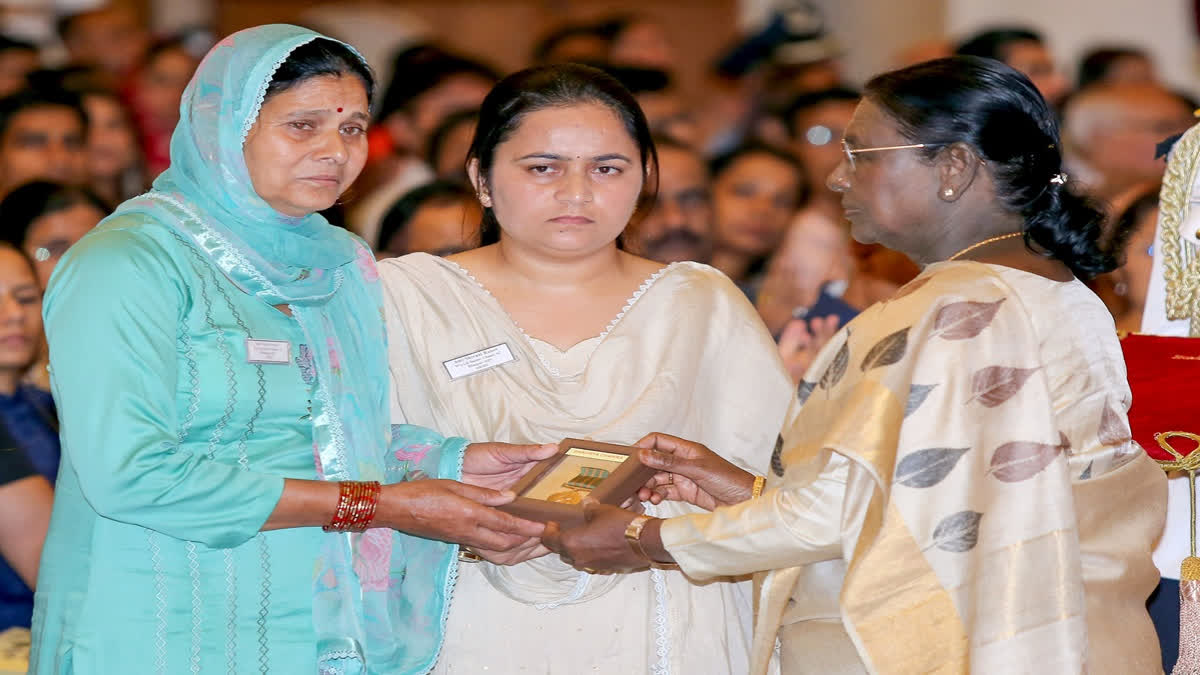
In a solemn ceremony at Rashtrapati Bhawan on Monday 8 June 2026, President Droupadi Murmu conferred seven Kirti Chakras (two posthumous), 15 Vir Chakras (three posthumous), and 29 Shaurya Chakras (one posthumous) on personnel of the Defence Forces, Central Armed Police Forces and State/Union Territory Police, marking Phase-I of the Defence Investiture Ceremony 2026.
Among the awardees were Naib Subedar Doleshwar Subba, Captain Lalrinawala Sailo, Air Commodore Prasanth Balakrishnan Nair and Major Arshdeep Singh. The posthumous Kirti Chakras and Vir Chakras included Lance Naik Meenatchi Sundaram A, Lieutenant Shashank Tiwari and Sepoy Janjal Pravin Prabhakar — soldiers who paid the ultimate price in counter-terror, counter-insurgency and high-altitude operations during the past year.
Constitutional & Legal Framework
- Article 18(1) — abolition of titles, with exception preserved for military and academic distinctions
- Gallantry awards instituted by warrant under the President’s signature
- Balaji Raghavan v. Union of India (1996) — Padma awards/Bharat Ratna are NOT titles of nobility
- Peacetime order: Ashoka Chakra > Kirti Chakra > Shaurya Chakra
- Wartime order: Param Vir Chakra > Maha Vir Chakra > Vir Chakra
The legal architecture of India’s gallantry awards rests on Article 18(1) of the Constitution, which abolishes titles. The Article, however, expressly preserves an exception for military and academic distinctions — the constitutional escape hatch that allows the Republic to honour bravery without recreating the hereditary peerages of colonial rule. The awards themselves are instituted by warrant issued under the President’s signature, and are conferred at Investiture Ceremonies held twice a year — Phase-I typically in May-June and Phase-II later in the calendar year.
Understanding the precedence order is essential for any CLAT aspirant. Peacetime gallantry awards, in descending order, are the Ashoka Chakra, the Kirti Chakra, and the Shaurya Chakra. Wartime gallantry awards, in descending order, are the Param Vir Chakra, the Maha Vir Chakra and the Vir Chakra. The Kirti Chakra is therefore the second-highest peacetime award, given for conspicuous gallantry otherwise than in the face of the enemy. The Shaurya Chakra is the third, awarded for valour while not engaged in direct enemy action.
The constitutional jurisprudence on civilian honours is captured in Balaji Raghavan v. Union of India (1996). The Supreme Court there upheld the Bharat Ratna and the Padma awards, holding that they are not ‘titles’ within the meaning of Article 18 because they do not create hereditary nobility and cannot be used as prefixes or suffixes to a recipient’s name. The Court read Article 18 narrowly, preserving the State’s symbolic capacity to honour distinguished service while honouring the egalitarian thrust of the Article.
Phase-II of the Investiture Ceremony 2026 will be held later in the year and is expected to include the formal conferral of additional awards announced on Republic Day 2026. The two-phase structure exists primarily for logistical reasons — the sheer number of awardees across all services, paramilitary, and police makes a single ceremony impractical.
For CLAT 2027, expect questions on Article 18’s text and exceptions, the precedence order of gallantry awards (a perennial static-GK favourite), the Balaji Raghavan judgement, and the constitutional difference between ‘titles’ and ‘awards’.
CLAT Angle
Article 18 is one of the shortest but most-tested constitutional provisions in CLAT. The military-and-academic exception in 18(1), combined with the Supreme Court’s narrowing reading in Balaji Raghavan v. UoI (1996), are testable on both ends — the law student must know that gallantry awards are constitutional precisely because of the exception, and that civilian Padma awards survive because they are not ‘titles of nobility’ in the Article 18 sense.
Key Facts
| Date | 8 June 2026 |
| Venue | Rashtrapati Bhawan, New Delhi |
| Conferring Authority | President Droupadi Murmu |
| Kirti Chakras | 7 (including 2 posthumous) |
| Vir Chakras | 15 (including 3 posthumous) |
| Shaurya Chakras | 29 (including 1 posthumous) |
| Total Awards | 51 |
| Constitutional Basis | Article 18(1) — military distinction exception |
| Key Case | Balaji Raghavan v. UoI (1996) |
Mnemonic
Wartime gallantry: ‘PMV’ = Param Vir Chakra > Maha Vir Chakra > Vir Chakra. Peacetime gallantry: ‘AKS’ = Ashoka Chakra > Kirti Chakra > Shaurya Chakra. Article 18 exception: ‘MAD’ — Military And academic Distinctions only.
Test Your Knowledge
Practice Quiz — 10 CLAT-Style Questions
Click an option to reveal the answer and explanation.