CURRENT AFFAIRS | 9 JUNE 2026
9 June 2026 — Tuesday’s newsroom for CLAT 2027 aspirants. Below is one of ten passage-led current-affairs explainers built on India’s constitutional, statutory and policy framework.
Constitutional & Statutory Framework
- Section 4, Indian Telegraph Act 1885 — Centre’s exclusive privilege to establish, maintain and license telegraphs/telecom networks.
- New Telecom Policy 1999 (NTP 99) — shifted licensing to a revenue-sharing model emphasising affordability over revenue maximisation.
- One-Time Spectrum Charge (OTSC) — retrospective levy via Cabinet decisions of 8 Nov & 28 Dec 2012.
- Vodafone International Holdings v. UoI (2012) 6 SCC 613 — landmark SC ruling against retrospective tax-style executive action absent statutory backing.
- Doctrine of Legitimate Expectation — protects a citizen/firm relying on consistent governmental representation.
- Doctrine of Promissory Estoppel — binds the State to its representations where a party has altered its position in reliance.
- Article 14 — equality; bars arbitrary executive action; EP Royappa (1974).
- Article 19(1)(g) — right to practise any trade, business or profession.
- Article 299 — sanctity of contracts entered into by/in the name of the President.
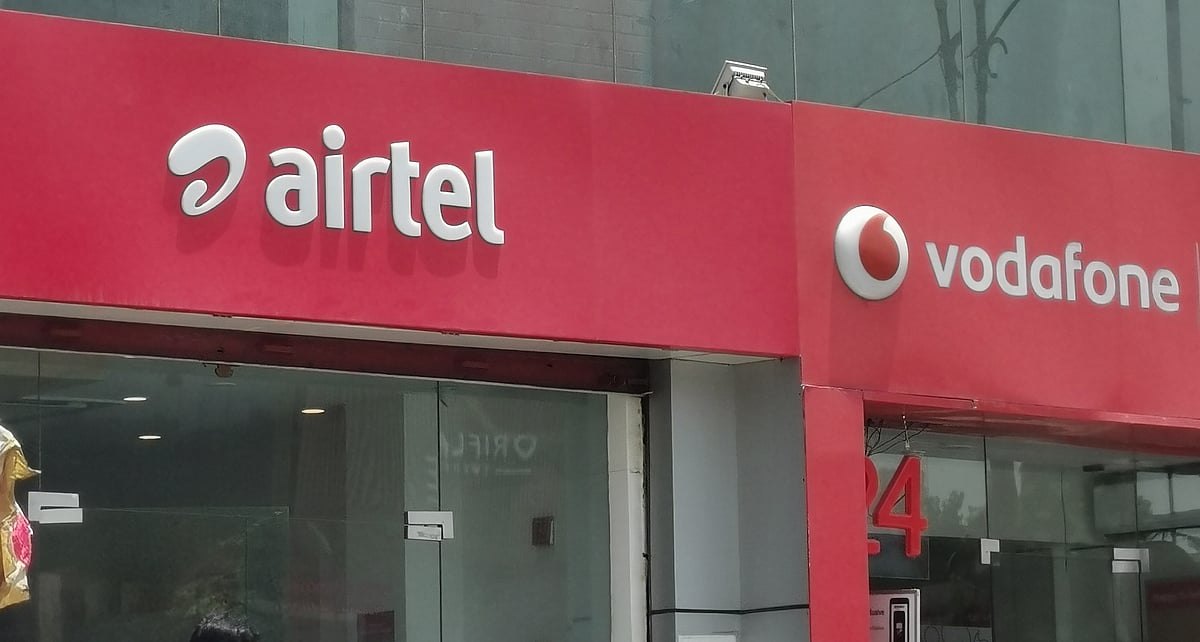
A Division Bench of Justices Manish M Pitale and Shreeram V Shirsat of the Bombay High Court on Monday 8 June 2026 quashed the Centre’s Cabinet decisions of 8 November 2012 and 28 December 2012, along with the consequent One-Time Spectrum Charge (OTSC) demand notices issued by the Department of Telecommunications against Bharti Airtel and Vodafone-Idea — holding that the Centre “obviously cannot claim statutory power” under Section 4 of the Indian Telegraph Act 1885 to act retrospectively in a manner that rewrote the terms of a subsisting licence.
The dispute traces back to spectrum allocated to the two operators in 2008 and 2012 at the then-administered prices. After a 2012 spectrum auction yielded materially higher market prices, the Cabinet decided to retrospectively charge the existing licensees the difference — denominated as the OTSC. Demand notices followed, which Airtel and Vodafone-Idea immediately challenged. The operators had since deposited bank guarantees as financial security against the disputed demands, pending adjudication.
Senior advocates Harish Salve and Darius Khambata appeared for Bharti Airtel; senior advocate Aspi Chinoy led Vodafone-Idea’s case. Their core submission was that the Centre had no power under the Telegraph Act or under the licence agreements themselves to layer a retrospective financial obligation on a contract that had been fully performed on its original terms. The Bench, in a closely-reasoned judgment, accepted this position.
Examining the licence agreements first, the Court found that the government could not deviate from contract terms or impose new financial burdens by invoking “public interest” alone. The judges noted that the New Telecom Policy 1999 had explicitly recalibrated the sector away from revenue-maximisation and toward affordable access — a policy backdrop against which a retrospective revenue-extraction measure cut sharply.
The Bench then turned to Section 4 of the Telegraph Act. While Section 4 vests the Centre with the exclusive privilege of establishing telegraphs and authorises licensing, the Court held that this privilege “cannot be exercised as per the Centre’s own whim, regardless of the terms of the contract or licence executed under that provision”. Public-interest invocations, the judges said, must depend on the facts of each case and cannot be a master-key that overrides contractual sanctity.
The judgment locks in two doctrinal threads. First, it strengthens the line, traceable to Vodafone International Holdings v. UoI (2012) 6 SCC 613, against open-ended retrospective revenue measures imposed via executive instruments. Second, it operationalises the doctrines of legitimate expectation and promissory estoppel as live constraints on executive power in regulated sectors — Article 14’s arbitrariness bar and Article 19(1)(g)’s freedom-of-trade guarantee working in tandem with Article 299’s contractual-sanctity protection.
Key Facts at a Glance
| Field | Detail |
|---|---|
| Date | Monday 8 June 2026 |
| Court | Bombay High Court, Division Bench |
| Bench | Justices Manish M Pitale & Shreeram V Shirsat |
| Petitioners | Bharti Airtel (Salve, Khambata); Vodafone-Idea (Chinoy) |
| Quashed | Cabinet decisions of 8 Nov & 28 Dec 2012; DoT OTSC demand notices |
| Statutory ground | Centre lacks power under s. 4, Indian Telegraph Act 1885 to act retrospectively over a subsisting licence |
| Policy backdrop | New Telecom Policy 1999 — affordability over revenue-maximisation |
| Anchor case | Vodafone International Holdings v. UoI (2012) 6 SCC 613 |
CLAT 2027 Angle
Doctrine of legitimate expectation; doctrine of promissory estoppel against the State; retrospective taxation/charging without statutory backing; Article 14 (arbitrariness); Article 19(1)(g) right to trade; sanctity of contract under Article 299; reading-down of executive powers building on Vodafone International Holdings v. UoI (2012) 6 SCC 613. Expect Legal Reasoning passages on contract sanctity vs ‘public interest’, and Principle-Fact sets pairing s. 4 Telegraph Act with the doctrine of legitimate expectation.
Mnemonic — Memory Aid
“PEL-CON-14” — three doors the State must walk through before a retrospective levy survives review. Promissory estoppel — has the State made a representation a private party relied on? Expectation, legitimate — is there a settled pattern of conduct? Licence/CONtract terms (Art. 299) — can the original bargain be unilaterally rewritten? If any door is shut, Art. 14 arbitrariness pulls the levy down. Pair with year “1885-1999-2012”: Telegraph Act → NTP 99 → Vodafone (SC) → 2026 Bombay HC.
Test Yourself — 10-Question Quiz
Take the interactive quiz below to reinforce these concepts:
Practice Quiz — 10 CLAT-Style Questions
Click an option to reveal the answer and explanation.