CURRENT AFFAIRS | 9 JUNE 2026
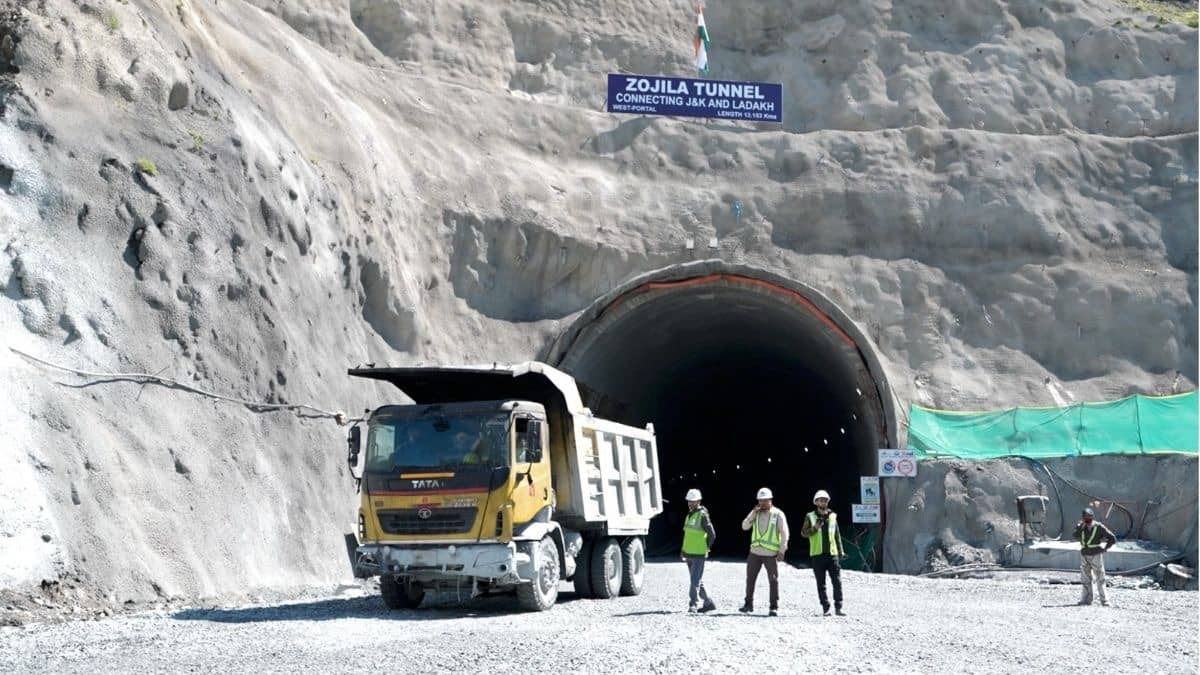
A decades-old dream of all-weather road connectivity between the Kashmir Valley and Ladakh inched towards reality on Tuesday 9 June 2026 when a controlled blast triggered the long-awaited breakthrough at the Zojila Tunnel — now confirmed as the world’s longest single-tube bi-directional road bypass at record height. The tunnel pierces the formidable Zojila Pass at 11,578 feet above sea level, an altitude that has historically shut the Srinagar-Leh highway for nearly six months of the year due to heavy snowfall.
Union Minister for Road Transport and Highways Nitin Gadkari witnessed the breakthrough blast. According to officials of the National Highways & Infrastructure Development Corporation Limited (NHIDCL), the project’s nodal agency, the breakthrough is six months ahead of schedule — a rare achievement in Himalayan tunnelling, where weather windows, rock instability and supply-chain delays usually push timelines back, not forward.
Constitutional & Legal Framework
- National Highways Act 1956 — primary statute for highway development
- NHIDCL — Government of India undertaking incorporated under the Companies Act 2013 for border-area highways
- Bharatmala Pariyojana — flagship national highway development programme
- Border Roads Organisation (BRO) — Ministry of Defence agency for strategic roads
- Article 73 — Union executive power extends to subjects in the Union List (including national highways and defence)
The execution model bears study. The project is being built by Megha Engineering & Infrastructure Limited (MEIL) on EPC terms, with NHIDCL — a fully-owned Government of India company incorporated under the Companies Act 2013 — as the project authority. The 14.15-km Zojila Tunnel itself sits at the end of a longer corridor that also includes the 6.5-km Z-Morh tunnel, which opened in January 2025. The two together unlock genuinely all-weather connectivity between Sonamarg in the Kashmir Valley and Drass in Kargil district, Ladakh.
For travellers, the transformation is dramatic. Today, the Sonamarg-Drass leg of the Srinagar-Leh highway takes around 3.5 hours in winter, when it is open at all — and is closed for the deep winter months when the Zojila Pass is buried under snow. After commissioning, the same leg will take about 15 minutes, all year. For the Army, which moves men, materiel and rations to Ladakh’s forward positions through this corridor, the strategic significance is immense.
The total project cost is Rs 6,809 crore. Full commissioning of the Zojila Tunnel is targeted for 2027, with several months of finishing work, ventilation, lighting and emergency-systems integration still ahead. The breakthrough itself, however, marks the end of the riskiest phase: tunnel-boring at extreme altitude through volatile Himalayan rock.
The legal-administrative architecture is worth noting. National highways are listed under the Union List of the Seventh Schedule, with the Union exercising executive power over them via Article 73. NHIDCL was set up in 2014 specifically to develop highways in border and strategic areas where the NHAI’s procurement and execution model was not optimised for difficult terrain and security considerations. The Border Roads Organisation (BRO), under the Ministry of Defence, complements NHIDCL by handling purely defence-driven roads in forward areas.
For CLAT 2027 aspirants, the Zojila story sits at the intersection of infrastructure policy, federal architecture (Centre’s role on national highways under the Union List) and the broader Bharatmala Pariyojana framework. Static GK questions on world-record tunnels in India (Atal Tunnel at Rohtang, Z-Morh, Zojila) and on the agency-by-agency mapping (NHAI vs NHIDCL vs BRO) routinely appear.
CLAT Angle
National highways fall on the Union List (Seventh Schedule) and the Union’s executive power flows from Article 73. The procurement vehicle for the Zojila Tunnel — NHIDCL, incorporated under the Companies Act 2013 — illustrates how the Government uses corporate-form SPVs to execute strategic infrastructure outside the standard NHAI route. CLAT 2027 may pair this with questions on the Bharatmala framework and the National Highways Act 1956.
Key Facts
| Breakthrough Date | 9 June 2026 |
| Tunnel Length | 14.15 km (longest single-tube bi-directional bypass) |
| Altitude | 11,578 ft above sea level |
| Schedule Status | 6 months ahead |
| Constructor | Megha Engineering & Infrastructure Limited (MEIL) |
| Project Authority | NHIDCL |
| Travel-time saved | 3.5 hrs → ~15 min (Sonamarg-Drass) |
| Total Project Cost | Rs 6,809 crore |
| Companion tunnel | Z-Morh (6.5 km, opened Jan 2025) |
Mnemonic
Remember the three border-highway agencies with ‘NNB’: NHAI for general national highways, NHIDCL for border/strategic areas, BRO for defence-driven roads. For the Zojila profile use ’14-11-6′: 14.15 km long, 11,578 ft high, 6 months ahead of schedule.
Test Your Knowledge
Practice Quiz — 10 CLAT-Style Questions
Click an option to reveal the answer and explanation.