CURRENT AFFAIRS | 8 JULY 2026
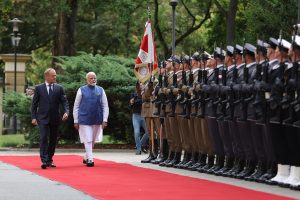
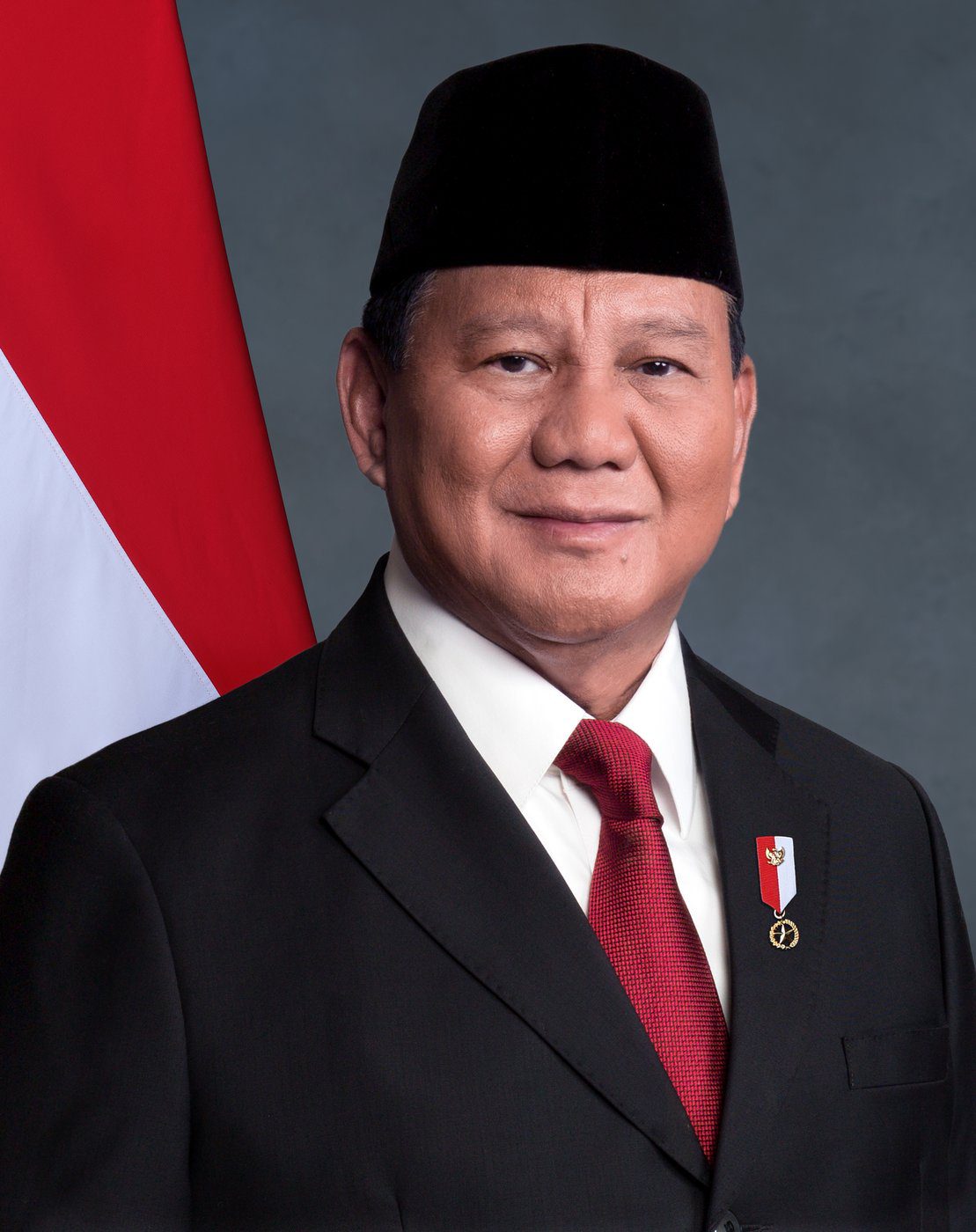
India and Indonesia have injected fresh momentum into one of the Indo-Pacific’s most consequential partnerships. On 7 July 2026, Prime Minister Narendra Modi met Indonesian President Prabowo Subianto in Jakarta on the opening leg of a three-nation Indo-Pacific tour that also covers Australia and New Zealand. Over a dozen agreements were signed, spanning defence, critical minerals, maritime security, space and agriculture, giving what officials described as “new energy” to a relationship formally elevated to a Comprehensive Strategic Partnership (CSP) back in 2018.
For CLAT aspirants, the visit is a rich source of current-affairs and legal-reasoning material: it touches treaty-making powers under the Constitution, the Directive Principle on promoting international peace, the law of the sea, and India’s Act East Policy. This piece breaks down what happened, why it matters, and how it maps onto your GK and legal-reasoning preparation.
What makes this event particularly worth studying is the way it fuses several strands of Indian foreign policy into a single day of diplomacy. A leader’s state visit is rarely just about photo opportunities and honours; it is where accumulated negotiation crystallises into signed instruments that will shape trade, security and technology cooperation for years. When such an event carries a defence-export component, a resource-security component, and a maritime-infrastructure component all at once, it becomes a compact lesson in how modern statecraft actually works. That is exactly why examiners find it attractive: one news item, many teachable dimensions.
What was agreed in Jakarta
The headline outcomes cut across strategic and economic domains. On defence, India agreed to supply BrahMos supersonic cruise missiles — two batteries valued at roughly USD 200 million — alongside the Astra air-to-air missile, routed through a Bharat Dynamics Limited (BDL)–Republikorp arrangement. The two sides also deepened cooperation on critical minerals and rare earths, maritime security, space and agriculture.
A standout item was India’s stated interest in the integrated development of Sabang Port, located on the north-western tip of Sumatra, close to the Strait of Malacca. Indonesia, for its part, conferred on PM Modi the Bintang Adipurna, its highest civilian honour, and President Prabowo publicly called himself “a great admirer of PM Modi.” Modi also addressed Indonesia’s Parliament, where he made a thinly veiled reference to China’s assertive conduct in the Indo-Pacific, stressing that India is on a “path of development, not expansionism” and that it firmly backs freedom of navigation.
India’s power to conclude such pacts flows from the Constitution. Article 73 extends the executive power of the Union to matters on which Parliament can legislate, including treaties. Article 253 empowers Parliament to make laws to implement any treaty, agreement or convention with other countries. Underlying the foreign-policy vision is Article 51 (a Directive Principle), which directs the State to promote international peace and security, maintain just and honourable relations between nations, and foster respect for international law and treaty obligations. Note that treaties are not automatically part of domestic law — they require enabling legislation to be enforceable in Indian courts.
Why Sabang Port and the Strait of Malacca matter
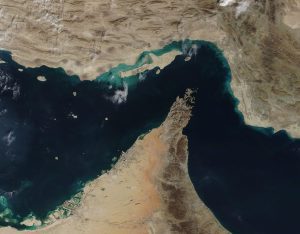
The Strait of Malacca is one of the world’s most critical maritime corridors — an estimated 25 to 40 per cent of global seaborne trade passes through it. Sabang Port sits astride the western approach to this chokepoint and lies only around 160 km from India’s Great Nicobar trans-shipment hub, which is being developed under the ambitious Great Nicobar Project. Indian involvement in Sabang would extend New Delhi’s maritime footprint into a strategically decisive stretch of ocean and complement its own island infrastructure to the west of the strait.
This dovetails neatly with India’s Act East Policy and the broader Indo-Pacific vision, both of which prioritise ASEAN centrality and secure sea lanes of communication. Indonesia is ASEAN’s largest economy, making it a natural anchor for India’s eastward strategic outreach.
The Act East Policy, launched as an upgrade of the earlier Look East Policy, seeks to move India’s engagement with Southeast and East Asia beyond trade into the realms of security, connectivity and people-to-people ties. A port arrangement at Sabang is the kind of tangible outcome that gives such a policy substance. It converts diplomatic goodwill into physical presence — the difference between a friendly statement and a strategic foothold. For an aspirant, the takeaway is that policies like Act East are best remembered not as abstract slogans but through the concrete projects that embody them.
Expect this story to surface across all three CLAT question types. In GK/Current Affairs, examiners love pairing a leader’s visit with the honour conferred (Bintang Adipurna), the missile named after two rivers (BrahMos), and the port in question (Sabang). In Legal Reasoning, a passage may test whether a treaty is self-executing in India or needs Article 253 legislation, or apply the principle of “freedom of navigation” under UNCLOS to a hypothetical dispute. In Logical Reasoning, “development, not expansionism” is a classic assumption/inference prompt — distinguish stated fact from implied criticism of a third country.
Critical minerals: the resource dimension
One of the quieter but strategically vital threads of the visit was critical minerals and rare earths. Indonesia dominates the global critical-minerals map: it commands roughly 21 per cent of the world’s nickel reserves, and is also a significant source of copper, bauxite and tin. Nickel is indispensable for electric-vehicle batteries and clean-energy technologies, so a reliable supply partnership helps India diversify away from over-concentrated global supply chains — an increasingly salient concern given recent rare-earth export restrictions worldwide.
By tying defence exports, minerals and maritime cooperation into a single visit, India signalled that the CSP is maturing from a diplomatic label into a working strategic architecture.
There is also an economic-security logic worth internalising. Modern manufacturing — from electric vehicles to renewable-energy storage and defence electronics — depends on a narrow set of critical minerals whose supply is geographically concentrated. A country that lacks assured access to nickel or rare earths is vulnerable to price shocks and export curbs imposed by others. By building a minerals partnership with the world’s leading nickel holder, India is practising what strategists call supply-chain resilience: reducing single-source dependence before a crisis forces the issue. This theme recurs across contemporary current affairs and is a productive lens through which to read many India-partner agreements.
| Meeting | PM Modi & President Prabowo Subianto, Jakarta, 7 July 2026 |
| Framework | Comprehensive Strategic Partnership (established 2018) |
| Defence deal | BrahMos — 2 batteries (~USD 200 million); Astra via BDL–Republikorp |
| Port focus | Sabang Port, Sumatra — near Strait of Malacca; ~160 km from Great Nicobar |
| Minerals | Indonesia holds ~21% of world nickel reserves; also copper, bauxite, tin |
| Honour | Bintang Adipurna — Indonesia’s highest civilian honour, conferred on PM Modi |
| Context | Indonesia = ASEAN’s largest economy; first leg of Modi’s 3-nation tour |
The China subtext and freedom of navigation
Modi’s remarks to Indonesia’s Parliament were carefully calibrated. Without naming China, he contrasted India’s “path of development, not expansionism” with assertive behaviour in the Indo-Pacific and reaffirmed support for freedom of navigation. This principle is anchored in the United Nations Convention on the Law of the Sea (UNCLOS, 1982), which India and Indonesia have both ratified. UNCLOS guarantees rights of innocent passage through territorial seas and freedom of navigation on the high seas — legal concepts that regularly appear in CLAT legal-reasoning passages on maritime disputes.
“SABANG = Strategic ASEAN Bond, Astra-N-BrahMos-Guns” — Sabang Port, ASEAN centrality, Astra + BrahMos defence deal, and the resource-and-security Bond that upgrades the 2018 CSP. Pair it with “51-73-253” for the constitutional chain: Article 51 (peace principle) → Article 73 (executive treaty power) → Article 253 (Parliament implements treaties).
How to use this for CLAT
Approach the story on three levels. First, lock down the factual anchors — the date, the leaders, the CSP’s 2018 origin, the Sabang–Malacca–Great Nicobar geography, and the nickel statistic. Second, connect it to standing themes: Act East Policy, Indo-Pacific strategy, ASEAN centrality, and India’s defence-export push. Third, treat the constitutional angle as a mini-doctrine you can deploy in any legal-reasoning passage about international agreements: treaties bind India internationally but need Article 253 legislation to operate domestically.
The Jakarta visit is a textbook example of how a single diplomatic event can generate GK facts, legal principles and inference questions all at once. Aspirants who can move fluidly between the news fact, the constitutional rule, and the strategic logic will find themselves well-placed whenever this topic appears in the paper.
Test Yourself — Daily Quiz
Practice Quiz — 10 CLAT-Style Questions
Click an option to reveal the answer and explanation.