INS Mahendragiri: The Sixth Stealth Frigate and India’s Indigenous Naval Ambition
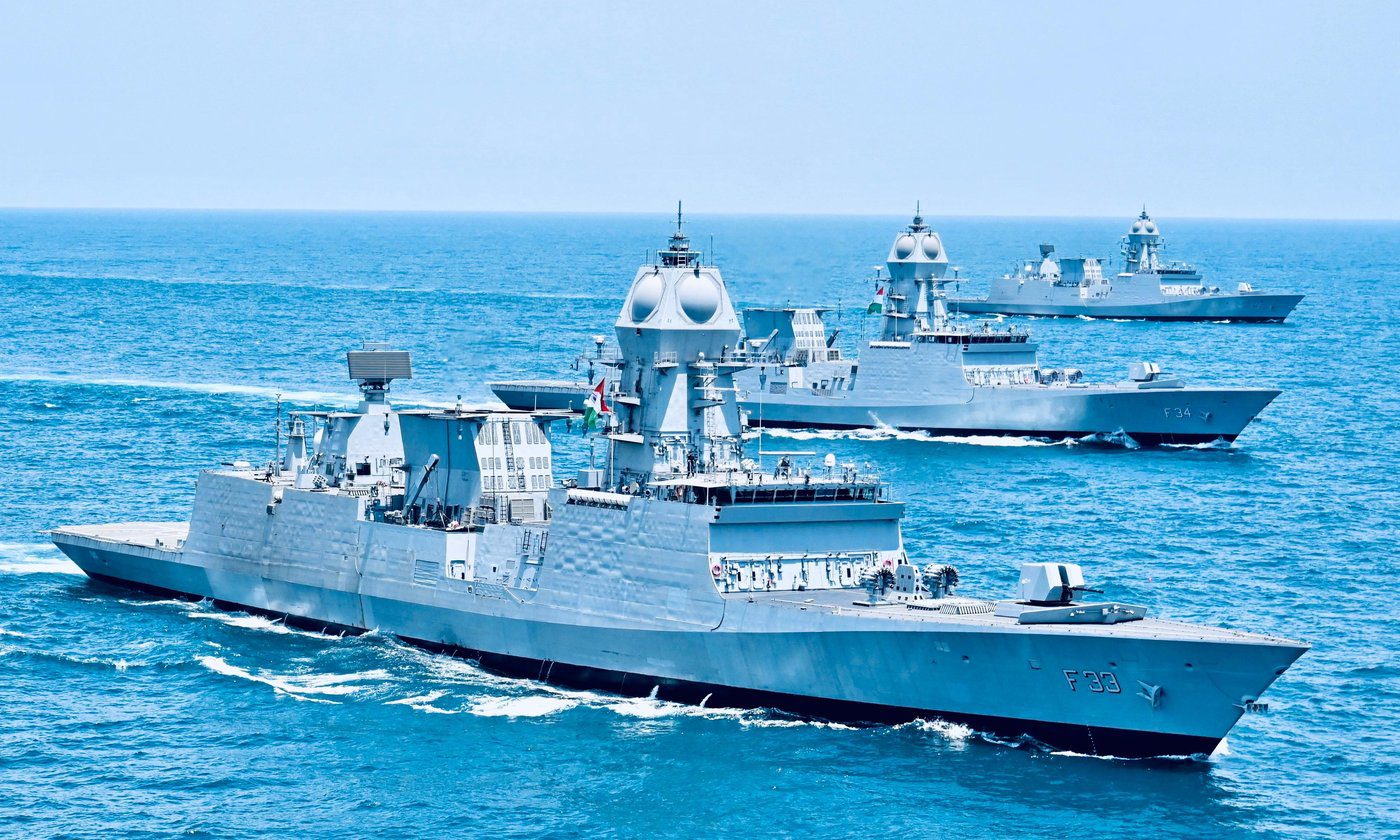
On July 11, the Indian Navy will commission its sixth Project 17A stealth frigate, INS Mahendragiri (F38), at Visakhapatnam. At first glance, this is a routine milestone in a warship-building programme that has been progressing steadily for several years. Looked at more closely, however, it is a window into one of the most consequential shifts in Indian defence policy over the past decade — the movement from being a major arms importer toward becoming a credible indigenous shipbuilder. For a CLAT aspirant, this story combines Static GK on naval terminology and shipbuilding institutions with a deeper conceptual thread: what “self-reliance” (Aatmanirbhar Bharat) means in the defence-industrial context, and why it matters for India’s strategic posture.
The Ship: Design, Builder, and Name
INS Mahendragiri was designed by the Indian Navy’s own Warship Design Bureau (WDB) and built by Mazagon Dock Shipbuilders Limited (MDL), based in Mumbai. The fact that the design itself originates in-house, within a Navy design organisation rather than being licensed from a foreign shipyard, is significant — it reflects decades of accumulated naval architecture expertise that India has built up progressively, moving from adapting foreign designs to producing indigenous ones. The ship is named after the Mahendragiri mountain range in the Eastern Ghats, continuing the class’s tradition of naming vessels after mountain ranges.
Project 17A and the Nilgiri-Class: Understanding the Lineage
Project 17A is the direct follow-on programme to Project 17, which produced the Shivalik-class frigates. Project 17A takes the design lessons and technological base of Project 17 and advances them substantially — improved stealth, upgraded weapons and sensors, and enhanced survivability. The seven ships built under Project 17A collectively form what is called the Nilgiri-class, named after the lead ship of the class, INS Nilgiri. Of the seven ships in this class, some are being built at Mazagon Dock Shipbuilders Limited (MDL), Mumbai, and others at Garden Reach Shipbuilders and Engineers (GRSE), Kolkata — meaning the programme is deliberately spread across two of India’s most capable public-sector shipyards, building capacity and expertise in both simultaneously rather than concentrating the work in a single yard.
INS Mahendragiri joins a growing family of commissioned or launched Project 17A vessels: INS Nilgiri (commissioned January 2025, the class’s lead ship), INS Himgiri, INS Udaygiri, INS Dunagiri (2026), and INS Taragiri (commissioned earlier in April). With Mahendragiri now joining as the sixth vessel, the Nilgiri-class programme is nearing full realisation of its seven-ship complement, marking one of the most substantial and sustained frigate-building efforts undertaken by independent India.
What Makes a Stealth Frigate “Stealthy”
A frigate is a medium-sized, multi-role naval combat vessel, generally smaller than a destroyer but larger than a corvette, designed to escort larger ships, hunt submarines, and project power in contested waters. The term “stealth” in a naval context does not mean invisibility — it means a deliberate reduction in the ship’s detectability across various sensor types, principally radar. This is achieved through careful hull-shaping (angled surfaces that scatter radar waves rather than reflecting them back to a receiver), radar-absorbent coatings, reduced acoustic and infrared signatures, and the careful placement of external equipment to minimise sharp reflective edges. INS Mahendragiri’s advanced stealth suite gives it a substantially reduced radar cross-section compared to conventional warship designs, making it harder for adversary sensors to detect, track, and target the vessel.
Propulsion: The CODOG System
The ship uses a CODOG (Combined Diesel or Gas) propulsion architecture. In simple terms, this means the vessel can run on efficient diesel engines for regular cruising speeds — conserving fuel during long patrols — and switch to powerful gas turbines when high-speed bursts are required, such as during pursuit or evasive manoeuvres. This “or” (as opposed to “and,” which would mean both power sources running simultaneously) configuration allows the ship to optimise for either fuel efficiency or raw speed depending on the tactical situation, without carrying the weight and complexity of running both systems together.
Combat Systems and Capabilities
Beyond stealth and propulsion, INS Mahendragiri is equipped with an integrated combat-management system — the “brain” of the ship that fuses data from radars, sonars, and other sensors into a single operational picture, allowing the crew to make faster and more coordinated decisions. Its weapons suite includes both surface-to-surface and surface-to-air missiles, giving it the ability to strike enemy vessels as well as defend itself and escorted ships against aerial and missile threats. The frigate also carries electronic-warfare systems, used to detect, jam, or deceive an adversary’s radar and communication signals, and anti-submarine-warfare capabilities, essential for detecting and neutralising underwater threats — a capability of particular importance given the expanding submarine fleets of regional rivals.
The Indigenous Content Milestone
Perhaps the most significant statistic associated with the Nilgiri-class is that it carries over 75 percent indigenous content. This figure represents a remarkable transformation. For much of independent India’s naval history, warships — even those assembled domestically — relied heavily on imported engines, weapons systems, sensors, and steel. A programme achieving more than three-quarters indigenous content means that the overwhelming majority of the ship’s value, by components, materials, and systems, is now designed, manufactured, or sourced from within India. This is the concrete, measurable face of what is more broadly termed Aatmanirbhar Bharat (self-reliant India) in the defence sector.
The CLAT Angle
This story is a strong source of Static GK and analytical current-affairs material, particularly around defence policy, public-sector enterprises, and strategic doctrine.
Aatmanirbhar Bharat in Defence: More Than a Slogan
Aatmanirbhar Bharat in the defence context refers to a deliberate policy shift toward reducing dependence on imported weapons systems and building domestic design, manufacturing, and maintenance capacity. This matters strategically for several reasons: imported systems can be subject to supply disruptions during geopolitical tensions, foreign sellers may impose end-use restrictions on how equipment is deployed, and dependence on external maintenance and spare parts can create vulnerabilities during prolonged conflict. Indigenous shipbuilding, by contrast, gives a country greater strategic autonomy — the ability to sustain, repair, upgrade, and replace its naval assets without depending on any external supplier’s cooperation. A GK question might ask students to identify Aatmanirbhar Bharat’s core rationale in the defence sector; the correct framing centres on strategic autonomy and supply-chain security, not merely “cost savings” or “nationalism” in the abstract.
Defence Public Sector Undertakings (PSUs): MDL and GRSE
Mazagon Dock Shipbuilders Limited (MDL) and Garden Reach Shipbuilders and Engineers (GRSE) are both Defence Public Sector Undertakings (DPSUs) — government-owned companies operating under the Ministry of Defence, specifically tasked with warship and submarine construction. These PSUs occupy a distinctive place in India’s industrial landscape: unlike private manufacturing companies, they combine commercial shipbuilding operations with a mandate tied directly to national security, meaning their capacity, output, and technological capability are treated as strategic assets of the state. Static GK questions frequently test which PSU builds what class of vessel, or which shipyard is associated with a particular naval programme — the Project 17A split between MDL (Mumbai) and GRSE (Kolkata) is a good example of exactly this kind of testable fact.
Make in India and the Defence-Industrial Base
The Nilgiri-class programme is frequently cited as an exemplar of Make in India applied to defence manufacturing — the broader national initiative to encourage both domestic and foreign companies to manufacture within India, building local supply chains, skilled employment, and technological capability rather than simply importing finished products. In the defence sector specifically, this intersects with policies such as indigenisation targets for defence public-sector companies, promotion of domestic private defence manufacturers, and restrictions on importing categories of equipment that India can produce domestically. The 75-percent indigenous content figure for the Nilgiri-class is precisely the kind of quantifiable outcome that “Make in India in defence” policies are designed to produce.
Blue-Water Navy: A Strategic Concept
A blue-water navy refers to a maritime force capable of operating across open oceans and deep waters, far from home shores, as opposed to a “brown-water” or “green-water” navy restricted largely to coastal defence and near-shore operations. Building a blue-water navy requires not just individual capable ships, but a sustained industrial and logistical base — shipyards that can build and maintain vessels continuously, a domestic supply chain for critical systems, and a scale of production that allows for a large enough fleet to maintain persistent presence across multiple maritime theatres. The steady, programmatic delivery of Nilgiri-class frigates — six commissioned in quick succession, with a seventh to follow — is itself evidence of India’s push toward sustaining blue-water naval capability, rather than acquiring occasional, one-off vessels.
Why the Programme’s Pace Matters
It is worth noting the tempo of this programme: INS Nilgiri commissioned in January 2025, followed by Himgiri, Udaygiri, Taragiri (April), Dunagiri (2026), and now Mahendragiri in quick succession, with the seventh ship of the class still to come. This steady cadence of commissioning — rather than long, unpredictable gaps between ships — reflects a maturing shipbuilding ecosystem where design, production processes, and supply chains have been stabilised sufficiently to deliver ships at a predictable pace. This is itself a marker of industrial capability that goes beyond any single vessel’s specifications.
Key Takeaways for Revision
- INS Mahendragiri (F38): 6th Project 17A stealth frigate; commissioned July 11 at Visakhapatnam.
- Designed by: Navy’s Warship Design Bureau; built by: Mazagon Dock Shipbuilders Limited (MDL), Mumbai.
- Class: Nilgiri-class (7 ships total), follow-on to Project 17 (Shivalik-class); built by MDL and GRSE (Kolkata).
- Named after: Mahendragiri mountain range, Eastern Ghats.
- Key features: stealth suite, CODOG propulsion, integrated combat-management system, surface-to-surface/air missiles, electronic warfare, anti-submarine warfare.
- Indigenous content: over 75% — flagship example of Aatmanirbhar Bharat / Make in India in defence.
- Prior ships: Nilgiri (Jan 2025), Himgiri, Udaygiri, Dunagiri (2026), Taragiri (April).
INS Mahendragiri is far more than a naming ceremony for a new hull. It is a data point in a larger, deliberate national strategy to convert defence manufacturing from an import-dependent activity into a domestically anchored industrial capability — precisely the kind of layered static-and-analytical fact pattern that CLAT’s current-affairs section consistently rewards.
Test Yourself — Daily Quiz
Practice Quiz — 10 CLAT-Style Questions
Click an option to reveal the answer and explanation.