Great Nicobar’s Indira Point: A Lighthouse, a CRZ Clearance, and the Bigger Island Story
A proposal to build a convention centre and museum at Indira Point — India’s southernmost tip, located on Great Nicobar Island — has moved into the regulatory pipeline, requiring clearance from coastal-zone authorities and the Environment Ministry. On the surface, this looks like a routine infrastructure approval attached to lighthouse redevelopment. For a CLAT aspirant, though, it opens a dense, high-yield cluster of environmental law and constitutional doctrine: the Coastal Regulation Zone framework, the Environment (Protection) Act, environmental impact assessment, and the rights of particularly vulnerable tribal groups — all playing out against the backdrop of the much larger Great Nicobar mega-project.
The Proposal: Lighthouse, Museum, Convention Centre
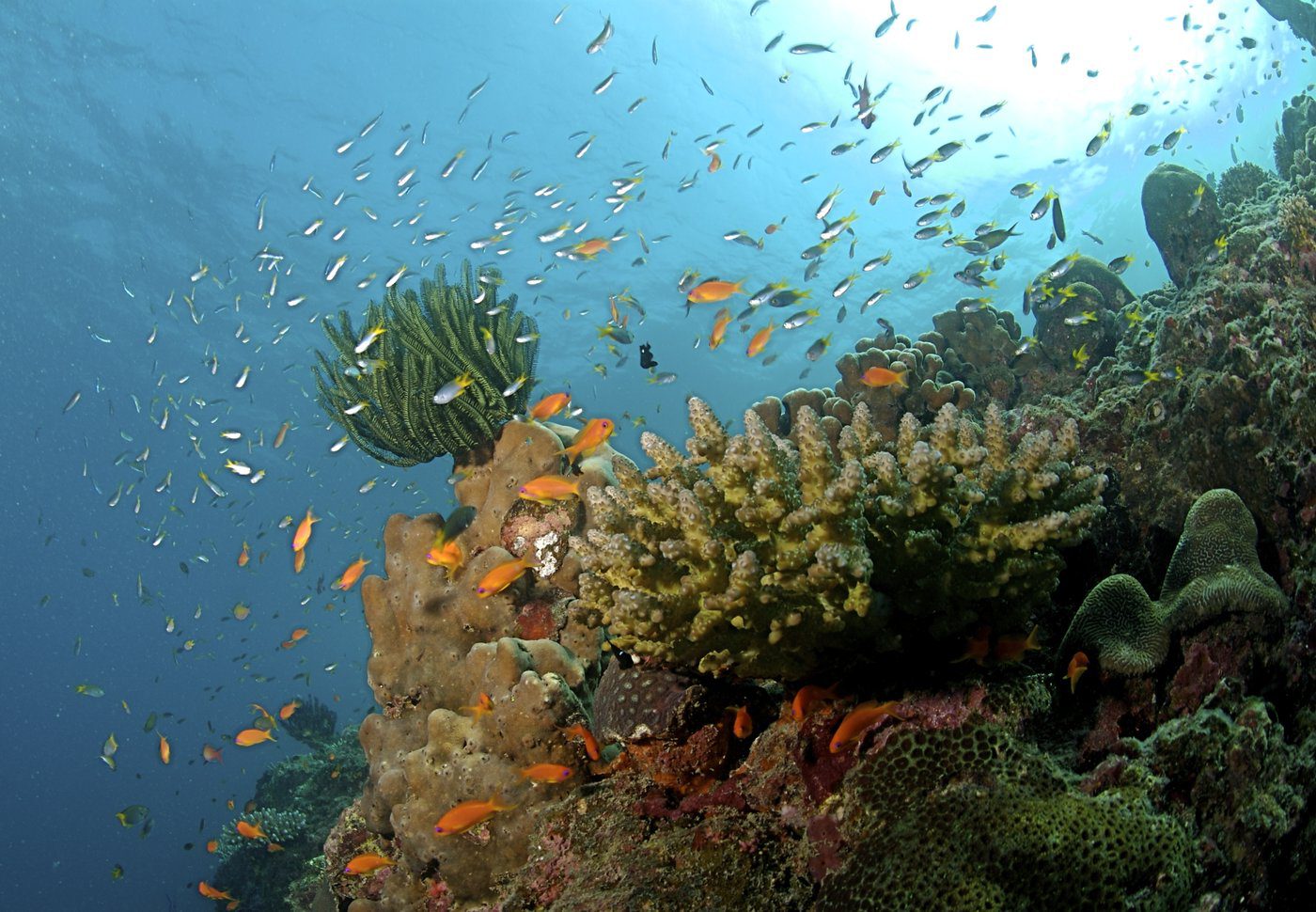
The Directorate of Lighthouses and Lightships, headquartered at Sri Vijaya Puram (Port Blair), is undertaking works to protect and redevelop the Great Nicobar lighthouse situated at Indira Point. As part of this redevelopment, a convention centre and a museum have been proposed at the site. Because Indira Point sits within ecologically sensitive coastal territory, the Directorate has sought clearance from two authorities: the Andaman and Nicobar Coastal Zone Management Authority and the Union Environment Ministry. Before any such clearance can be granted, a detailed appraisal of the site’s ecological character is required — which is why a coral-reef survey was commissioned and carried out by Anna University.
Understanding the Coastal Regulation Zone (CRZ) Framework
India regulates construction and activity along its coastline through the Coastal Regulation Zone (CRZ) Notification, issued under the Environment (Protection) Act, 1986. The CRZ framework classifies coastal land into categories based on ecological sensitivity, population density, and existing development, and prescribes what may or may not be built in each category. For India’s island territories — the Andaman and Nicobar Islands and Lakshadweep — a specialised variant applies, known as the Island Coastal Regulation Zone (ICRZ), tailored to the unique ecology of small island systems where the margin for ecological error is far smaller than on the mainland coast.
The Indira Point site falls within two ICRZ categories simultaneously: ICRZ-IA and ICRZ-IVA. ICRZ-IA covers the most ecologically sensitive coastal areas — such as mangroves, coral reefs, turtle-nesting grounds, and biosphere reserves — where the default rule is that no new construction is permitted. Exceptions exist only for a narrow, specified set of purposes: eco-tourism facilities, roads and paths necessary for public use, and works classified as “protective” in nature (such as sea walls or, arguably, a lighthouse and its ancillary structures). Even for these permitted exceptions, approval is not automatic — it requires a detailed impact assessment demonstrating that the proposed activity will not degrade the sensitive ecology it sits within. ICRZ-IVA, by contrast, generally covers the water area up to territorial limits, where regulation focuses on marine activity, traditional fishing rights, and navigational uses.
Why an Impact Assessment Matters Here
The requirement for a coral-reef survey before clearance illustrates a foundational idea in environmental law: decisions about ecologically sensitive land cannot rest on assumption or convenience — they must rest on evidence. This is the essence of an Environmental Impact Assessment (EIA): a structured, science-based study of how a proposed project will affect its surrounding environment, conducted before construction begins, so that regulators can weigh benefits against ecological costs with actual data rather than projections alone. The Anna University coral survey performs exactly this function for the museum-and-convention-centre proposal — establishing whether the reef ecosystem near Indira Point can absorb this addition without long-term degradation.
The Larger Canvas: The Great Nicobar Mega-Project
The Indira Point clearance request cannot be read in isolation. It sits within the shadow of a far larger undertaking: the Great Nicobar Island mega-project, which envisages an international transshipment port at Galathea Bay, a greenfield international airport, a power plant, and an integrated township. This mega-project’s own Environmental Impact Assessment was prepared by the public-sector undertaking WAPCOS, working with the Department of Ocean Engineering at IIT-Madras. The mega-project has drawn sustained attention because Galathea Bay is a nesting site for the leatherback turtle, one of the world’s largest marine turtle species, whose nesting beaches are highly sensitive to disturbance, lighting, and habitat modification.
The mega-project also directly engages the rights and welfare of Great Nicobar’s indigenous inhabitants — the Shompen and the Nicobarese — both officially recognised as Particularly Vulnerable Tribal Groups (PVTGs). PVTG status is assigned to tribal communities characterised by pre-agricultural or hunter-gatherer livelihoods, low and stagnant or declining population, extremely low literacy, and a subsistence level of economy — attributes that make such groups acutely vulnerable to disruption from large infrastructure activity, land-use change, and demographic influx. Any large-scale development on Great Nicobar therefore necessarily raises questions about consultation, consent, and the constitutional and statutory protections owed to these communities, in addition to the purely environmental clearances required for construction.
The CLAT Angle
This news cluster is unusually rich for CLAT preparation because it combines environmental regulatory law, constitutional doctrine on the environment, and tribal-rights jurisprudence in one factual setting.
The Environment (Protection) Act, 1986 — Statutory Foundation
The Environment (Protection) Act, 1986 was enacted in the aftermath of the Bhopal Gas Tragedy to create an umbrella law empowering the Union Government to take all measures necessary to protect and improve the environment, including the power to issue notifications restricting activities in specific areas. The CRZ Notification — and by extension the ICRZ framework — is issued as a subordinate legislation under Section 3 of this Act. A Legal Reasoning passage might test whether a coastal authority’s refusal to clear a project is valid; the answer typically traces back to whether the refusal is grounded in this statutory rule-making power, since executive action restricting land use needs a clear source of legal authority.
Ecologically Sensitive Zones and the Precautionary Principle
Indian environmental jurisprudence, developed extensively by the Supreme Court, recognises the Precautionary Principle — the idea that where an activity risks serious or irreversible environmental harm, the absence of full scientific certainty should not be used as a reason to postpone protective measures, and the burden shifts to the project proponent to show the activity is environmentally safe. The insistence on a coral-reef survey before allowing construction in an ICRZ-IA zone is a direct application of this principle: build only after the ecological cost has been established, not the other way around.
Sustainable Development Doctrine
The Supreme Court has repeatedly balanced development and ecology through the doctrine of sustainable development — development that meets present needs without compromising the ability of future generations to meet their own, requiring a balance between economic activity (Article 19(1)(g) — the right to carry on trade, business, or occupation) and environmental protection (linked to Article 21 — the right to life, interpreted to include the right to a healthy environment, and Article 48A, a Directive Principle obligating the State to protect and improve the environment). A museum-and-convention-centre proposal inside an ICRZ-IA zone is a textbook fact pattern for testing whether a specific activity can be reconciled with this balance.
PVTG Rights and Constitutional Protections
The presence of the Shompen and Nicobarese as PVTGs brings in a distinct strand of doctrine. Article 46 directs the State to promote the educational and economic interests of Scheduled Tribes and protect them from social injustice and exploitation. Additionally, protections under laws such as the Forest Rights Act, 2006 and specific tribal-welfare regulations for the Andaman and Nicobar Islands (such as restrictions under the Andaman and Nicobar Islands (Protection of Aboriginal Tribes) Regulation) become relevant whenever large projects touch land historically used by these communities. A Legal Reasoning question could ask what obligations arise before displacing or affecting a PVTG community — the doctrinally correct answer centres on prior consultation, safeguarding of habitat, and constitutional protection against exploitation, not mere administrative convenience.
Federal and Institutional Structure
The dual clearance requirement — from the Andaman and Nicobar Coastal Zone Management Authority (a body constituted under the CRZ framework) and the Union Environment Ministry — illustrates how environmental governance operates through a layered institutional structure: a local/regional statutory authority assesses site-specific compliance, while the Ministry retains overall regulatory and appellate oversight. This is a useful anchor for GK questions on environmental administrative bodies and the extent of Union control over Union Territory administration, since the Andaman and Nicobar Islands are directly administered by the Union.
Reading the Story Neutrally
For an aspirant, the disciplined approach is to treat this as a case study in regulatory process rather than as an occasion to take a position for or against development. Every element in the story — the coral survey, the ICRZ classification, the dual clearance requirement, the WAPCOS-IIT Madras EIA for the larger project, and the PVTG dimension — exists precisely because Indian law requires ecological and social costs to be assessed transparently before large infrastructure is approved in sensitive zones. Whether that process operates well in practice is a separate empirical question from what the law requires it to do, and CLAT rewards students who can hold that distinction clearly.
Key Takeaways for Revision
- Location: Indira Point, Great Nicobar Island — India’s southernmost point; site of a proposed lighthouse-linked convention centre and museum.
- Clearance sought from: Andaman and Nicobar Coastal Zone Management Authority + Union Environment Ministry.
- Zone classification: ICRZ-IA (no development except eco-tourism/roads/protective works, with impact assessment) and ICRZ-IVA.
- Legal source: CRZ/ICRZ Notification issued under the Environment (Protection) Act, 1986.
- Survey conducted by: Anna University (coral reef survey).
- Bigger project: Great Nicobar mega-project — transshipment port at Galathea Bay, greenfield airport, power plant, township; EIA by WAPCOS + IIT-Madras Ocean Engineering.
- Ecological stake: Galathea Bay is a leatherback turtle nesting site.
- Tribal stake: Shompen and Nicobarese are Particularly Vulnerable Tribal Groups (PVTGs) with distinct constitutional/statutory protection.
The CLAT Angle: master the chain — Environment (Protection) Act, 1986 → CRZ/ICRZ Notification → ICRZ-IA restrictions → EIA/precautionary principle → sustainable development balance (Articles 19(1)(g), 21, 48A) → PVTG protections (Article 46) — and this single news item can answer questions across environmental law, constitutional doctrine, and tribal-rights GK.
Test Yourself — Daily Quiz
Practice Quiz — 10 CLAT-Style Questions
Click an option to reveal the answer and explanation.