INS Trikand in the Gulf of Aden: Piracy, UNCLOS, and India’s Role as a Maritime Security Provider
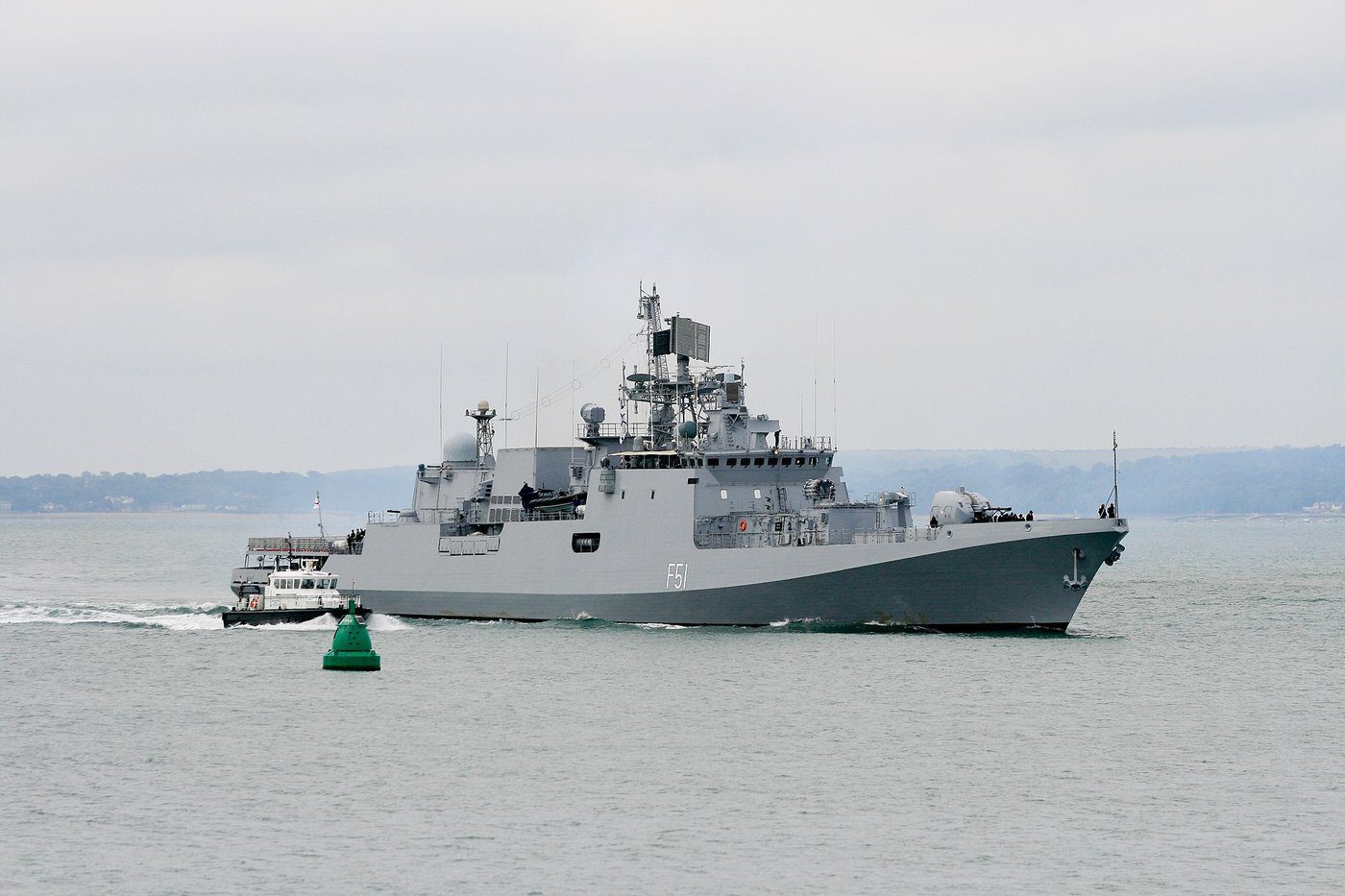
On Wednesday, the Indian Navy’s stealth frigate INS Trikand intervened to foil a piracy attempt on the merchant vessel MV Golden Arsenal in the Gulf of Aden — roughly 200 nautical miles north-east of Djibouti. The vessel, a bulk carrier flagged in St Vincent and the Grenadines and transiting from Aden, Yemen, reported the attempted attack while carrying 31 crew members, including one Indian national. INS Trikand, already deployed on counter-piracy missions in the area, was directed to intercept; its boarding team conducted a thorough inspection, neutralised the threat, and confirmed the crew’s safety. The episode is a textbook illustration of several foundational doctrines in public international law — doctrines that CLAT examiners have tested with increasing sophistication in recent years.
What Happened: The Tactical Picture
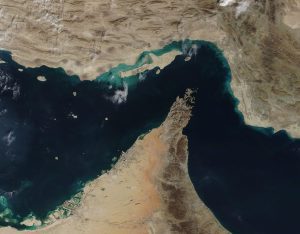
The Gulf of Aden is one of the world’s most strategically important waterways, connecting the Red Sea to the Arabian Sea and serving as the primary gateway for trade between Europe, East Africa, and Asia through the Suez Canal. It has also been, for over two decades, one of the world’s most dangerous maritime corridors — a hunting ground for Somali pirates operating from a coastline with limited state control, and more recently a zone of heightened risk from Houthi attacks on commercial shipping linked to the Gaza conflict.
MV Golden Arsenal, while transiting this corridor, came under a piracy attempt approximately 200 nautical miles north-east of Djibouti. Under international law, this location almost certainly falls within the high seas — the zone beyond any state’s territorial waters or Exclusive Economic Zone (EEZ). INS Trikand, which had been deployed in the Gulf of Aden as part of India’s ongoing counter-piracy presence, received the distress call, was directed to the vessel, and dispatched a boarding team. The boarding team secured the vessel, removed the threat, and confirmed all 31 crew members were safe. The Indian Navy has been conducting such operations continuously since 2008, and this intervention is part of that sustained operational commitment.
The UNCLOS Framework: Piracy in International Law
What is Piracy Under UNCLOS?
The United Nations Convention on the Law of the Sea (UNCLOS), 1982 is the foundational instrument of modern maritime law. Ratified by 168 states (though notably not the United States as a full party), it is widely regarded as reflecting customary international law, binding on all states regardless of formal ratification. India ratified UNCLOS in 1995.
Under Article 101 of UNCLOS, piracy consists of any illegal act of violence, detention, or depredation committed for private ends by the crew or passengers of a private ship, directed against another ship or persons or property on the high seas (or in a place outside the jurisdiction of any state). Three elements are critical: the act must be for private ends (not political), it must be committed by a private vessel (not a state warship), and it must occur on the high seas or in a jurisdiction-free zone.
Universal Jurisdiction Over Piracy
Piracy holds a unique and ancient status in international law as one of the earliest recognised subjects of universal jurisdiction — the principle that certain crimes are so grave, and so threatening to the international order, that any state may exercise criminal jurisdiction over them regardless of where the act occurred, the nationality of the perpetrators, or the nationality of the victims. Hugo Grotius, writing in the seventeenth century, described pirates as hostes humani generis — “enemies of all mankind.”
UNCLOS codifies this in Articles 100–107. Article 100 imposes a duty on all states to cooperate to the fullest possible extent in the repression of piracy. Article 105 provides that any state may seize a pirate ship on the high seas, arrest the persons on board, and adjudicate upon the penalties to be imposed — regardless of the flag of the pirate vessel or the capturing warship. This is the broadest grant of jurisdiction in UNCLOS and reflects the universal-jurisdiction character of the offence.
The Boarding Power in Context
As a general rule, UNCLOS enshrines the principle of exclusive flag-state jurisdiction: a ship on the high seas is subject only to the jurisdiction of the state whose flag it flies. A warship of another state may not board, inspect, or interfere with a foreign-flagged vessel except in narrowly defined circumstances. Piracy is one such exception. Under Article 110, a warship that encounters a foreign vessel on the high seas may board it if there is reasonable ground to suspect it of piracy. In the INS Trikand case, the boarding team acted on the distress call from MV Golden Arsenal — a response to an ongoing piracy attempt that clearly falls within this exception.
The Maritime Zones: A Doctrinal Map
Understanding the significance of the incident requires clarity on the maritime zones established by UNCLOS:
- Territorial Sea (0–12 nautical miles from baseline): Full state sovereignty applies; foreign vessels have a right of innocent passage but are subject to coastal-state law.
- Contiguous Zone (12–24 nm): Coastal state may exercise control to prevent infringement of customs, fiscal, immigration, and sanitary laws.
- Exclusive Economic Zone (12–200 nm): The coastal state has sovereign rights for economic purposes (fishing, seabed resources) but not full sovereignty. Freedom of navigation persists.
- High Seas (beyond 200 nm, or beyond EEZ where it exists): No state has sovereignty; freedom of navigation, overflight, fishing, and scientific research apply. Universal jurisdiction over piracy.
- Continental Shelf: Rights over seabed and subsoil resources may extend beyond 200 nm in certain geological conditions.
The incident at 200 nm north-east of Djibouti falls at or near the outer edge of Djibouti’s EEZ — the precise zonal characterisation depends on the exact coordinate, but at that distance, UNCLOS piracy jurisdiction almost certainly applied, permitting INS Trikand’s boarding action without any requirement for specific flag-state consent from St Vincent and the Grenadines.
India’s Role as a Maritime Security Provider
Institutional Framework: Combined Maritime Forces and EU NAVFOR
The Gulf of Aden counter-piracy mission is one of the most ambitious instances of multilateral maritime security cooperation in history. The Combined Maritime Forces (CMF) — a coalition of over 40 nations led by the United States — operates CTF-151, a task force specifically focused on counter-piracy in the Gulf of Aden and Western Indian Ocean. The European Union runs Operation Atalanta (EU NAVFOR), the EU’s first-ever naval mission, also focused on the Gulf of Aden. India has maintained an independent naval presence in the region since 2008, operating its own deployments while sharing information with these multilateral frameworks.
India’s “Net Security Provider” Doctrine
India’s strategic doctrine in the Indian Ocean Region (IOR) has articulated the concept of India as a “net security provider” — a state that contributes to the security and stability of the region rather than merely being a consumer of it. This doctrine, first articulated in the context of the Maldives and Sri Lanka, has expanded to encompass maritime security in the broader Western Indian Ocean. The INS Trikand deployment is a concrete expression of this doctrine: India’s warships protect not just Indian-flagged vessels or vessels carrying Indian crew, but commercial shipping regardless of flag, ensuring the freedom of navigation on which global trade — and India’s own import-dependent economy — depends.
Flag-State Jurisdiction and the Rescue
MV Golden Arsenal flies the flag of St Vincent and the Grenadines — a small Caribbean island state that is, like Panama, Liberia, and the Marshall Islands, a major open-registry flag state. Open registries allow shipowners from any country to register their vessels under that flag, often for cost or regulatory reasons. St Vincent and the Grenadines as the flag state would have primary jurisdiction over the vessel, but in an emergency on the high seas, any naval vessel with counter-piracy authority may respond. The fact that one crew member was Indian further grounds India’s response in the protection of its nationals — a recognised basis for state action in international law.
CLAT Concepts to Master
UNCLOS as a Living Instrument
UNCLOS is frequently tested in CLAT legal reasoning and GK passages. Know the five main zones, the rights and duties attaching to each, and the dispute settlement mechanisms (ITLOS, Annex VII arbitration). Recent India-related UNCLOS disputes — including the Chagos Islands advisory opinion and South China Sea arbitration — have appeared in past papers.
Universal Jurisdiction
Understand the categories of offences subject to universal jurisdiction: piracy, genocide, crimes against humanity, war crimes, and torture. Piracy is the oldest example and the only one fully codified in a treaty (UNCLOS). The principle that any state may arrest and try pirates regardless of nationality is CLAT-relevant doctrine.
Freedom of Navigation
The freedom of navigation on the high seas is among the most fundamental principles of international law. It underpins global trade, and challenges to it — whether from piracy, Houthi attacks on shipping, or unlawful maritime claims — are among the most consequential legal-political issues of the present era. CLAT passages often frame freedom of navigation as a counterpoint to coastal-state jurisdiction.
India’s Strategic Commitments
India’s role in the Indian Ocean — SAGAR (Security and Growth for All in the Region) doctrine, participation in multilateral naval exercises such as MILAN, and bilateral agreements such as ACSA with the US — situates the INS Trikand operation in a larger strategic context that CLAT general knowledge sections test extensively.
Conclusion
The INS Trikand operation in the Gulf of Aden is simultaneously a tactical success, a statement of strategic doctrine, and a demonstration of international law in action. It illustrates how UNCLOS’s universal jurisdiction framework enables any willing naval power to protect global commerce, how the principle of flag-state exclusivity yields to piracy exceptions, and how India’s positioning as a net security provider in the Indian Ocean translates into concrete humanitarian and legal consequences. For CLAT aspirants, the ability to extract these layers of doctrine from a single news event — and to articulate them clearly in a legal reasoning answer — is precisely the analytical skill the examination rewards.
Test Yourself — Daily Quiz
Practice Quiz — 10 CLAT-Style Questions
Click an option to reveal the answer and explanation.