Kabir as Rationalist: Bhakti, Epistemology, and the Living Tradition of Indian Knowledge
Amid a renewed national conversation about Indian Knowledge Systems (IKS) — their relevance, their revival, and their place in contemporary education — an Ideas-page essay has invited readers to revisit one of medieval India’s most radical thinkers: Kabir, the 15th-century weaver-poet of Varanasi. The essay’s central argument is deceptively simple yet philosophically consequential: Kabir was not merely a devotional poet but a thorough-going rationalist, one who interrogated the very foundations of how knowledge is established, validated, and transmitted. This reading, elaborated by historian Purushottam Agrawal in his landmark work Akath Kahani Prem Ki, offers a corrective to both nostalgic and dismissive accounts of the Bhakti tradition — and opens a rich vein of material for CLAT aspirants navigating static GK, legal reasoning, and the general knowledge of constitutional and cultural India.
Who Was Kabir?
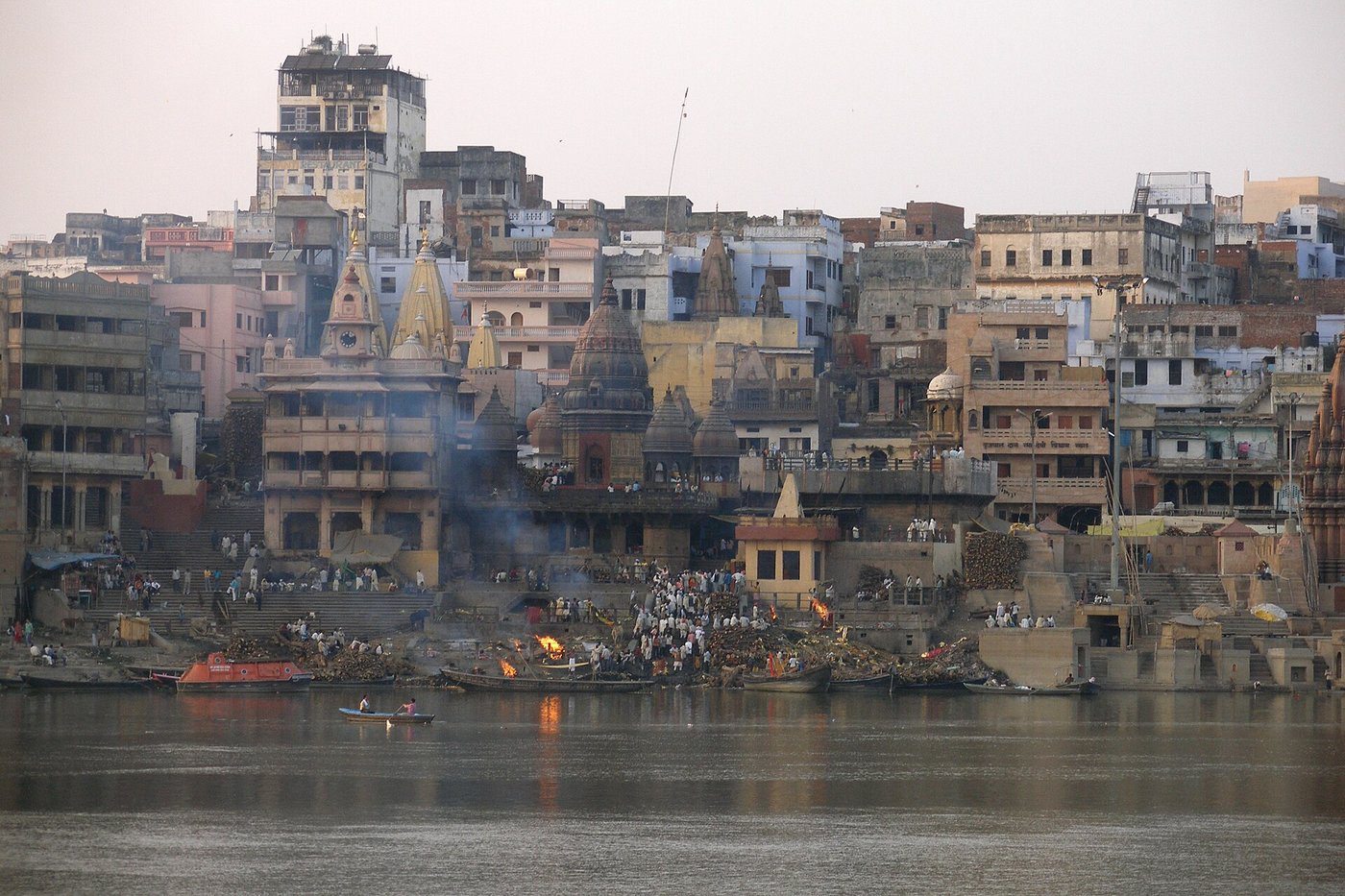
Kabir (c. 1440–1518 CE) was born in or near Varanasi, into a community of Muslim weavers (julaha). He is believed to have been a disciple of the Hindu saint Ramananda, though this too is a matter of scholarly debate that Kabir himself might have found entertaining. What is certain is that he straddled — and satirised — both Hindu and Islamic orthodoxy. He wrote in vernacular Hindi (including Avadhi and Braj dialects) rather than Sanskrit or Persian, the prestige languages of religious authority. His compositions are found in the Guru Granth Sahib, the Kabir Panth’s Bijak, and countless oral traditions across South Asia. Kabir died, according to tradition, at Maghar — a town Hindus considered inauspicious for death, a choice that was itself a philosophical statement.
The Epistemological Break: Anubhuti over Shabda-Pramana
To understand Kabir’s radicalism, one must understand the Indian philosophical concept of pramana — the valid means or sources of knowledge. Classical Indian epistemology recognises several pramanas: pratyaksha (direct perception), anumana (inference), upamana (analogy), and shabda (verbal testimony or scriptural authority). Different schools privilege different pramanas. The Mimamsa school, foundational to Brahminical orthodoxy, held shabda-pramana — the authority of the Vedas and scripture — as the supreme, self-validating source of knowledge. Knowledge, in this framework, was inherited and transmitted through proper textual lineage; it was not for the individual to question but to receive.
Kabir broke decisively with this framework. He replaced shabda-pramana with anubhuti — direct, experiential knowledge. For Kabir, truth was not something located in a text to be decoded by a priestly class. It was something available to anyone capable of direct inner experience: testable, lived, and accessible across the boundaries of caste, gender, and creed. This was an epistemological democratisation of extraordinary scope. The weaver was not merely weaving cloth; he was asserting that the loom of experience yields a fabric of truth that no scripture alone can produce.
Historian Purushottam Agrawal reads this as a form of what he calls “indigenous modernity” — a rationalist turn that arose from within Indian tradition rather than being imported from the European Enlightenment. Kabir did not need Descartes to tell him to question inherited authority; the philosophical resources of yoga, advaita, and vernacular spirituality furnished him with the tools to do so on his own terms.
Nirguna Bhakti, Advaita, and the Rejection of Maya
The Bhakti movement (roughly 7th to 17th centuries CE) is broadly divided into two streams:
- Saguna Bhakti: devotion to a God with form and attributes — Vishnu as Krishna or Ram, Shiva, the Goddess. Associated with poets like Surdas, Tulsidas, and Mirabai.
- Nirguna Bhakti: devotion to a formless, attribute-less Absolute — beyond name, image, ritual, and sectarian identification. Associated with the Sant tradition, including Kabir, Ravidas, and Namdev.
Kabir was the most uncompromising voice of Nirguna Bhakti. His God — whom he addressed with names like Ram, Hari, or simply “the nameless” — had no temple, no mosque, no idol, and no priest as intermediary. He fused this devotional stance with the philosophical position of advaita (non-dualism): the individual self (jivatman) and the Absolute (Brahman) are not ultimately separate. The apparent multiplicity of the world is maya — illusion — and the task of the seeker is to pierce through it to an experience of unity.
What made Kabir’s synthesis distinctive was its social radicalism. If God is formless and accessible to direct experience, then the caste of the seeker is irrelevant. The Brahmin’s ritual purity and the low-caste person’s supposed impurity are equally illusory — products of maya rather than features of ultimate reality. This translated into a fierce and often comic critique of both Hindu ritual orthodoxy (idol worship, pilgrimage, caste hierarchy) and Islamic ritual formalism (circumcision, the call to prayer, the Haj as external markers of internal states).
Ulatbansi: The Pedagogy of the Paradox
Kabir’s literary method deserves attention in its own right. He frequently deployed ulatbansi — literally “upside-down speech” or paradoxical verse — to jolt the listener out of habitual cognitive patterns. Statements that seem absurd or self-contradictory on the surface encode, on closer reading, a philosophical challenge to received wisdom. A fish fears water; a lotus blooms in mud without being soiled; a fire burns without fuel. These images do not merely decorate a mystical point — they enact it: they force the reader to abandon the logic of ordinary categories and open themselves to a different mode of knowing. Pedagogically, ulatbansi is closer to the Socratic method than to catechism.
Kabir and the Contemporary IKS Conversation
The National Education Policy (NEP) 2020 and subsequent curriculum discussions have placed Indian Knowledge Systems at the forefront of educational reform. But IKS is often deployed selectively — valorising those elements that affirm existing hierarchies while ignoring the heterodox and egalitarian strands of the tradition. Kabir’s recovery as a rationalist is a corrective to this selective appropriation. He represents a strand of Indian intellectual history that was empiricist (anubhuti over inherited text), egalitarian (the weaver as philosopher), syncretic (refusing the boundaries of any single tradition), and self-critical (using paradox and irony to question its own claims). Any honest engagement with IKS must reckon with Kabir as well as with the canonical texts of Sanskrit philosophy.
CLAT Concepts at a Glance
- Bhakti Movement: Pan-Indian medieval devotional reform movement challenging caste, ritual orthodoxy, and religious exclusivity. CLAT GK frequently asks about key figures, their home regions, and their associated traditions.
- Nirguna vs. Saguna Bhakti: A standard distinction — nirguna (formless: Kabir, Ravidas, Namdev); saguna (with form: Mirabai, Surdas, Tulsidas).
- Sant Tradition: The cluster of north Indian nirguna poet-saints, of whom Kabir is the most prominent. Their legacy is enshrined in the Guru Granth Sahib.
- Indian Knowledge Systems (IKS): Contemporary policy term (NEP 2020) for the body of classical Indian knowledge in fields from mathematics to philosophy. Understanding its critical and heterodox strands — not only its orthodox ones — is necessary for nuanced static GK.
- Pramana / Anubhuti: Indian epistemological concepts — valid means of knowledge (shabda, pratyaksha, anumana) vs. Kabir’s emphasis on direct experience (anubhuti). These terms appear in legal reasoning passages about authority and evidence.
- Medieval Social Reform and Syncretism: The Bhakti movement’s role in building bridges across Hindu-Muslim social boundaries — relevant for constitutional GK on fraternity and the composite culture of India.
Conclusion
Kabir was not simply a poet of devotion. He was a philosopher of knowledge who dismantled the epistemological hierarchy that kept truth the property of scripture and its custodians. By insisting that anubhuti — lived, direct experience — is the supreme pramana, he democratised the search for truth in a manner that resonates across centuries. For the CLAT student, his story is a reminder that India’s intellectual history is not a single, harmonious tradition but a dynamic and often contentious dialogue between authority and experience, orthodoxy and questioning, form and the formless. Understanding that dialogue is itself a form of legal reasoning — the capacity to distinguish what a text says from what it means, and to recognise whose interests are served by any particular interpretation.
Test Yourself — Daily Quiz
Practice Quiz — 10 CLAT-Style Questions
Click an option to reveal the answer and explanation.