Google, Meta and the “Super Censor” Question: What the Delhi High Court Case Means for Online Speech
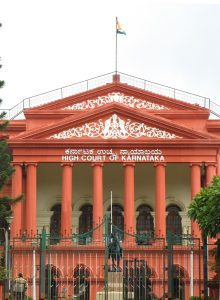
A petition before the Delhi High Court seeking proactive, round-the-clock monitoring of alleged unlawful content on social-media platforms has drawn sharp responses from two of the world’s largest intermediaries — Google LLC and Meta Platforms. Their submissions revive one of the oldest and most consequential questions in internet law: how much responsibility should a platform bear for content posted by its users, and where does that responsibility end? For a CLAT aspirant, this dispute is a compact, high-value case study in intermediary liability, the “safe harbour” doctrine, and the constitutional balance between free speech and content regulation.
What the Petition Asks For
The underlying petition seeks a direction compelling platforms to proactively monitor content circulating on their services and take down material that is allegedly unlawful — even without a specific complaint, URL, or takedown order pointing to that content. In their responses, Google and Meta have told the court that such an exercise is “impossible” given the “huge volume” of content uploaded every minute across billions of users worldwide. Meta has gone further, stating that it “would not be able to comply” with an order requiring it to actively monitor and take down content in the absence of specific URLs or a court or government order identifying the offending material.
Both companies argue that being compelled to pre-screen and adjudicate the lawfulness of content before it is published would effectively convert them into a “super censor” — a private, unaccountable arbiter deciding, at scale and in advance, what millions of citizens may or may not say online. This framing is deliberate: it shifts the debate from a narrow compliance question to a much larger one about the separation of adjudicatory power from private commercial entities.
The Legal Architecture: Section 79 and “Safe Harbour”
The core of the platforms’ defence rests on Section 79 of the Information Technology Act, 2000, which provides the statutory basis for what is commonly called “safe harbour.” Under this provision, an intermediary — a website, app, or platform that merely hosts, transmits, or provides access to third-party content — is not held liable for that content, provided it meets certain due-diligence conditions and does not itself initiate, select, or modify the transmission.
Safe harbour exists because intermediaries are structurally different from publishers. A newspaper selects, edits, and takes responsibility for everything it prints. A social-media platform, by contrast, hosts content generated by potentially billions of independent users without prior review. Treating a platform as if it had the same editorial control and responsibility as a newspaper would either force it to shut down open publishing entirely or compel invasive, error-prone pre-screening of everything posted — undermining the basic architecture of the open internet.
The IT Rules, 2021 and “Reasonable Efforts”
The specific due-diligence conditions that intermediaries must satisfy are elaborated in the Information Technology (Intermediary Guidelines and Digital Media Ethics Code) Rules, 2021. Under these Rules, intermediaries are required to make “reasonable efforts” to ensure they do not host, store, or publish unlawful content. Crucially, “reasonable efforts” is a standard of diligence, not a guarantee of perfection — it does not require platforms to pre-screen or pre-certify every piece of content before it goes live.
The Rules build in a structured takedown mechanism instead: once an intermediary receives “actual knowledge” of unlawful content — through a court order or a notification by an appropriate government authority — it must act expeditiously, typically within a prescribed period, to disable access to that content. This is a reactive, notice-based framework rather than a proactive, monitoring-based one. It is this very distinction that Google and Meta are relying on to resist the petition’s demand for pre-emptive, unprompted surveillance of their platforms.
Shreya Singhal v Union of India (2015): The Doctrinal Anchor
No discussion of intermediary liability in India is complete without Shreya Singhal v Union of India (2015), a landmark Supreme Court judgment that remains the doctrinal spine of this entire area of law. In that case, the Supreme Court struck down Section 66A of the IT Act — which criminalised sending “offensive” messages through communication services — as unconstitutionally vague and violative of the freedom of speech and expression under Article 19(1)(a), holding that it did not fall within the reasonable restrictions permitted under Article 19(2).
Equally significant, though less discussed outside legal circles, is what the Court did to Section 79 and the associated intermediary rules. The Court “read down” these provisions, clarifying that an intermediary’s obligation to act arises only upon actual knowledge — meaning a court order or a notification by the appropriate government agency — and not merely upon receiving a private complaint or a unilateral claim from any individual that certain content is unlawful. This was a deliberate safeguard: if platforms had to act on every private complaint alleging illegality, they would face overwhelming incentives to take down content pre-emptively to avoid liability, leading to over-censorship of lawful speech. By requiring a court or government determination, Shreya Singhal placed the power to adjudicate legality where it constitutionally belongs — with courts and accountable authorities — not with private companies acting under threat of liability.
Why “Actively Monitor” Is the Crux
The Supreme Court’s broader position, reaffirmed across subsequent jurisprudence and reflected in the platforms’ current submissions, is that intermediaries “cannot be called upon to actively monitor” user content. This principle does substantial constitutional work. Proactive monitoring at platform scale would necessarily rely on automated systems and algorithms to make front-line judgments about legality — judgments that are inherently contextual, fact-specific, and often contested even among human judges and lawyers. Outsourcing that determination to private technology companies, operating under the shadow of potential liability, creates a structural bias toward excessive removal: platforms would rationally over-block borderline or even entirely lawful content simply to avoid risk, chilling legitimate expression on a mass scale.
This is precisely the “super censor” concern that Google and Meta have raised before the Delhi High Court. Their argument is not merely a practical one about volume and feasibility — though that argument is real, given the scale at which global platforms operate — it is also a constitutional argument about who should hold the power to decide what speech is unlawful in a democracy: independent courts and lawfully empowered government authorities, or privately-owned technology companies acting defensively to limit their own legal exposure.
The Free Speech vs Content-Moderation Balance
This case sits squarely within the ongoing global tension between two legitimate public interests: protecting individuals and society from genuinely unlawful online content (defamation, incitement, child-safety violations, misinformation with real-world harm) and protecting the free flow of information and expression that is essential to a functioning democracy. Indian law, following Shreya Singhal, has tried to resolve this tension by keeping the adjudicatory function with courts and government notifications while asking platforms only to act diligently once informed — rather than asking platforms to pre-judge legality on their own initiative across the entirety of their user base.
The current petition, by seeking proactive monitoring without specific notices, effectively asks the court to shift that balance — from a reactive, notice-and-takedown model toward a pre-emptive, platform-policed model. How the Delhi High Court resolves this will have significant implications for how intermediary liability is understood in India going forward, and will likely be read alongside Shreya Singhal as the next major precedent in this space.
Key Takeaways for Revision
- Section 79, IT Act, 2000: statutory basis for “safe harbour” — intermediaries not liable for third-party content if due-diligence conditions are met.
- IT Rules, 2021: intermediaries must make “reasonable efforts” (not pre-screen everything); act on “actual knowledge” — a court order or government notification.
- Shreya Singhal v Union of India (2015): struck down Section 66A (Article 19(1)(a) violation); read down Section 79 so “actual knowledge” = court/government order, not private complaints.
- “Super censor” argument: proactive monitoring would force platforms to pre-adjudicate legality of all content — a role reserved for courts and government, not private companies.
- Core doctrine: Supreme Court holds intermediaries “cannot be called upon to actively monitor” user content.
The CLAT Angle
This story is exam-gold because it compresses several distinct testable doctrines into one live dispute. First, it tests knowledge of the statutory scheme — Section 79 of the IT Act as the source of safe harbour, and the IT Rules, 2021 as the delegated legislation fleshing out due-diligence obligations. A Legal Reasoning passage might describe a platform being sued for a user’s post and ask which provision protects it — the answer traces to Section 79’s conditional immunity.
Second, it tests case law application: Shreya Singhal (2015) is one of the most frequently cited judgments in CLAT Legal Reasoning and GK because it simultaneously touches free speech (Article 19), the “chilling effect” doctrine, and the “actual knowledge” standard for intermediaries. Expect questions that give a fact pattern — a private individual emailing a platform demanding takedown without a court order — and ask whether the platform is obligated to act. Under Shreya Singhal, mere private complaint does not constitute “actual knowledge”; only a court order or government notification does.
Third, this dispute is a live illustration of balancing competing rights — free expression against the state’s/society’s interest in curbing unlawful content — a recurring theme CLAT tests through hypotheticals about censorship, defamation, and platform regulation. Students should remember the analytical sequence: (1) is the intermediary a passive host or an active publisher? (2) did it meet its due-diligence/reasonable-efforts obligation? (3) did it act on actual knowledge as defined by courts? Mastering this three-step framework allows a student to resolve almost any Legal Reasoning question built around platform liability, content takedown, or the “super censor” debate.
Test Yourself — Daily Quiz
Practice Quiz — 10 CLAT-Style Questions
Click an option to reveal the answer and explanation.