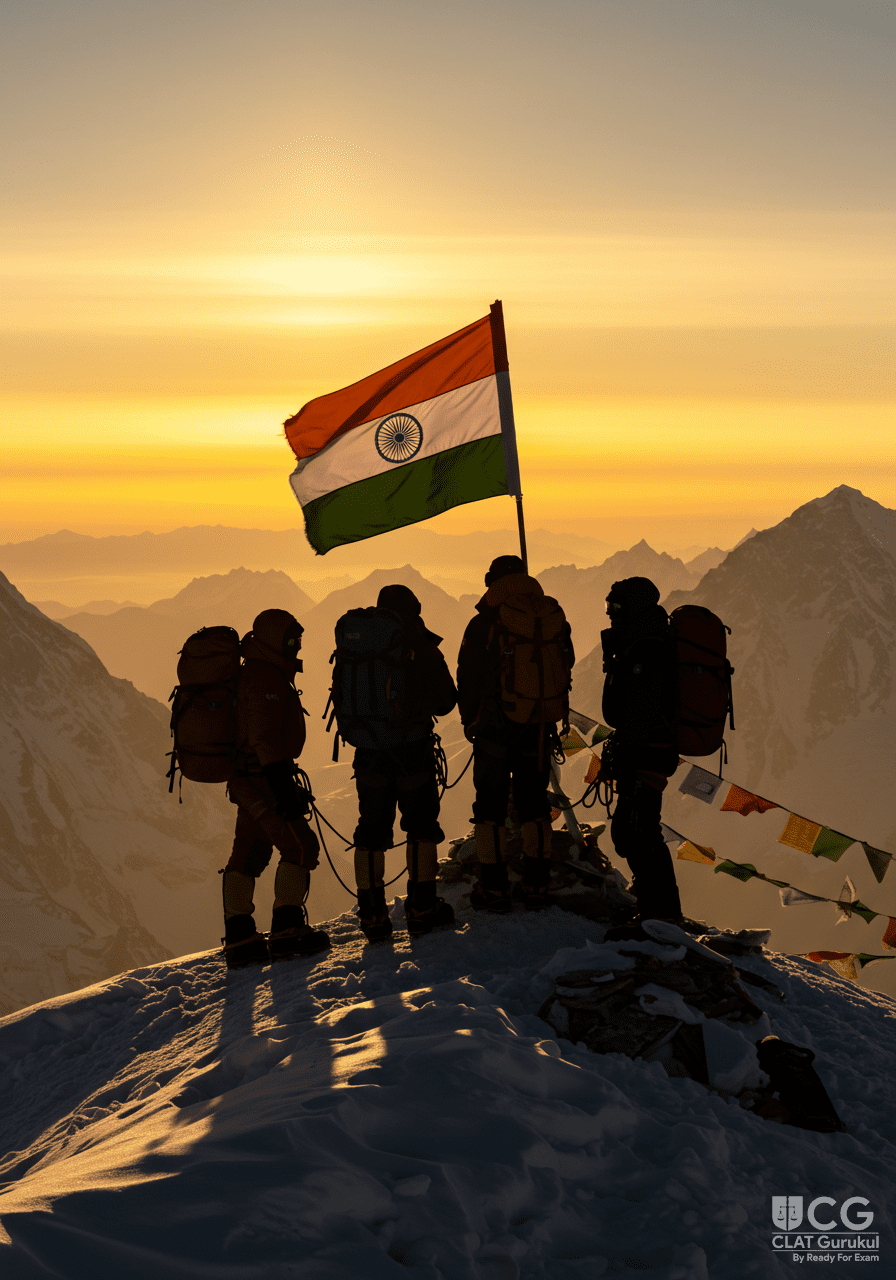
Major Abhilasha Barak — the Indian Army’s first woman combat helicopter pilot and currently a UNIFIL Engagement Team Commander in southern Lebanon — has been awarded the United Nations Military Gender Advocate of the Year 2025, the highest individual peacekeeping honour for advancing the Women, Peace and Security agenda mandated by UNSC Resolution 1325 (2000).
PM Modi announced the award on 7 June 2026, calling it a moment of national pride. Major Barak, who trained at the Officers Training Academy Chennai and was commissioned in September 2018, hails from an Army family and made history as the Army’s first woman combat helicopter pilot. Since June 2025 she has served with the United Nations Interim Force in Lebanon (UNIFIL) as Engagement Team Commander and Gender Focal Point in the Indian Battalion’s Sector East. Within six months, she has carried out 539 gender-focused field activities — the highest number ever recorded within the mission — and led all-women patrols during periods of heightened tensions. UN Under-Secretary-General for Peace Operations Jean-Pierre Lacroix said her work is “inspiration to young Indians, especially our daughters”.
📜 Constitutional / Statutory Anchor
UN Security Council Resolution 1325 (2000) — the foundational resolution of the Women, Peace and Security (WPS) Agenda, urging women’s participation in conflict prevention, peacekeeping and post-conflict reconstruction. UNSC Resolution 425 (1978) — created UNIFIL after Israel’s first invasion of Lebanon; mandate expanded by Resolution 1701 (2006). UN Charter Chapter VI — pacific settlement of disputes; Chapter VII — enforcement action against threats to peace. Articles 14 and 15 of the Indian Constitution — equality and non-discrimination on the ground of sex; the constitutional anchor for women in the armed forces. Secretary, Ministry of Defence v. Babita Puniya (2020) 7 SCC 469 — Permanent Commission for women on a par with men.
The institutional significance is layered. India is the largest cumulative troop-contributor to UN peacekeeping in history — over 2,50,000 personnel across more than 50 missions since 1948 — and Major Barak’s award validates the Indian Army’s recent inductions of women into combat arms. Domestically, the constitutional foundation runs through Babita Puniya (2020), where the Supreme Court directed grant of Permanent Commission to women Short Service Commission officers and struck down the “physiological limitations” stereotype. The Court’s reasoning under Articles 14 and 15(1) made gender-based exclusion in service conditions unconstitutional — a domestic mirror to the UN’s WPS Agenda.
🎯 Key Facts at a Glance
- Award: UN Military Gender Advocate of the Year 2025, announced 5 June 2026.
- Officer: Major Abhilasha Barak — Army’s first woman combat helicopter pilot, commissioned Sept 2018 (OTA Chennai).
- Deployment: UNIFIL since June 2025; Engagement Team Commander + Gender Focal Point, Sector East.
- Output: 539 gender-focused field activities in six months — mission record.
- Mandate basis: UNSC Res 1325 (2000); UNIFIL under UNSC Res 425 (1978) + Res 1701 (2006).
- Domestic anchor: Babita Puniya (2020) 7 SCC 469.
The comparative dimension is rich. UNSC Resolution 1325 is operationalised globally through National Action Plans on WPS — India does not yet have one (a long-standing demand of civil society), but Major Barak’s award resets the political case for one. Lebanon’s UNIFIL has been continuously deployed since 1978, making it one of the UN’s longest peacekeeping engagements. India has contributed troops to UNIFIL since 1998, and currently fields one of the largest contingents. Together with Lt. Col. Aparna Joshi, who received the same award in 2023, Major Barak is the second Indian Army officer in three years to be conferred this distinction — an unprecedented run.
⚖️ CLAT Angle
Expect Current Affairs questions on UNSC Res 1325, the WPS Agenda’s four pillars (participation, prevention, protection, relief & recovery), and India’s UN peacekeeping footprint. A Legal Reasoning passage may test Babita Puniya (2020)‘s reasoning under Articles 14 and 15(1), and Justice Chandrachud’s rejection of the “physiological limitations” argument. Cross-reference Air India v. Nergesh Meerza (1981) and Anuj Garg v. Hotel Association of India (2008) — both on sex-based service-condition discrimination. The UN Charter’s Chapters VI and VII distinction is a perennial CLAT-favourite.
The road ahead: pressure on the Government of India to release a National Action Plan on WPS, expansion of women officers in combat arms beyond the recent permanent-commission cohort, and continued engagement with peacekeeping operations under the WPS framework. Major Barak’s deployment also brings a quiet diplomatic dividend — Indian peacekeepers in Lebanon are seen by both Israeli and Lebanese sides as neutral, a posture India guards carefully.
💡 Why This Matters for CLAT 2027 Aspirants
Layer this on prior CLAT-PYQ threads: gender-equality jurisprudence (Babita Puniya, Anuj Garg, Nergesh Meerza), UN peacekeeping (UNSC mandate sources, Chapter VI vs VII), and the WPS Agenda. Memorise UNSC Resolution 1325 (2000) as the foundational WPS resolution, UNIFIL under UNSC 425 (1978) → 1701 (2006), and the India peacekeeping figure of 2,50,000+ personnel since 1948.
📝 Test Yourself — 10-Question Quiz
Take the interactive quiz below to reinforce these concepts:
Practice Quiz — 10 CLAT-Style Questions
Click an option to reveal the answer and explanation.